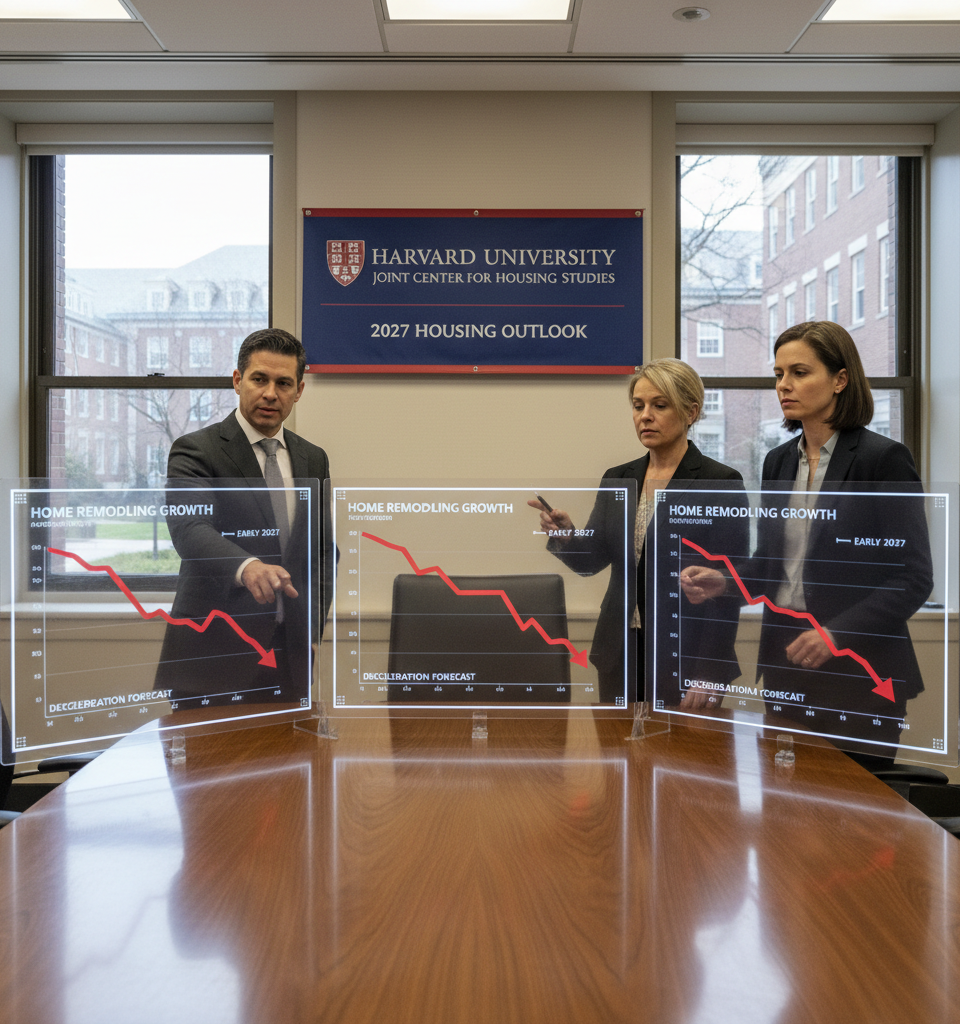
Cambridge, MA – The robust expansion in the home remodeling sector is set to experience a significant slowdown by early 2027, with growth rates dropping below general inflation levels, according to a new report from Harvard University's Joint Center for Housing Studies (JCHS). This revised outlook suggests a tempering of the dynamic market that has seen remarkable activity in recent years, largely driven by pandemic-era homeowner investments and strong housing appreciation.
Context and Background
The remodeling market has been a surprising source of economic resilience in the post-pandemic landscape, as homeowners, flush with equity and facing higher interest rates that discouraged new home purchases, opted to invest in their existing properties. This trend has been further fueled by an aging housing stock requiring upgrades and a continued desire for customized living spaces. The JCHS's Leading Indicator of Remodeling Activity (LIRA) has consistently tracked positive, albeit sometimes volatile, growth, making this deceleration forecast a noteworthy development for the industry and the broader economy.
Key Details from the JCHS Report
The JCHS report indicates that while spending will continue its upward trajectory, the pace will diminish significantly. The precise figures for the slowdown were not released in the preliminary summary, but the emphasis on growth falling "below overall inflation" suggests that real, inflation-adjusted spending will likely see a contraction or stagnate. This implies that while the nominal amount spent on remodeling might still increase, its purchasing power in terms of materials and labor will be eroded. This trend is expected to materialize fully by the first quarter of 2027, following a period of more moderate, yet still positive, growth through late 2026.
Industry and Market Impact
This projected slowdown will undoubtedly ripple through the vast home remodeling ecosystem. Contractors, material suppliers, interior designers, and related service providers may need to adjust their business models and growth expectations. Companies that have benefited from the recent boom could face reduced demand, potentially leading to increased competition for projects, pressure on profit margins, and a re-evaluation of staffing levels. The deceleration could also influence investment decisions within the construction and home improvement retail sectors, shifting focus from expansion to efficiency and market share retention. Homeowners might find less upward pressure on remodeling costs, though skilled labor shortages could persist in certain trades.
Expert Perspective
Experts suggest several factors could contribute to this anticipated cooling. Rising interest rates, while initially prompting homeowners to improve rather than move, may eventually tighten credit availability for larger projects. Furthermore, the significant investments made over the past few years could mean that many immediate renovation needs have been addressed, leading to a natural tapering of demand. Chris Herbert, Managing Director of the JCHS, commented recently that "the exceptional growth rates we've seen were unsustainable in the long term. This normalization reflects a broader cooling in the housing market and a return to more typical economic cycles." Economists also point to potential shifts in consumer confidence and disposable income as contributing elements.
What's Next: Future Implications
Looking ahead, the market will likely transition from a growth-driven environment to one focused on stability and strategic adaptation. Remodelers may need to diversify their service offerings, focus on niche markets, or emphasize energy efficiency upgrades and aging-in-place modifications, which remain evergreen needs regardless of broader economic cycles. Policy decisions regarding housing affordability, interest rates, and trade tariffs could also play a role in shaping the precise trajectory of the remodeling sector beyond 2027. Stakeholders will be closely monitoring quarterly LIRA updates from the JCHS for further insights into this evolving market segment.