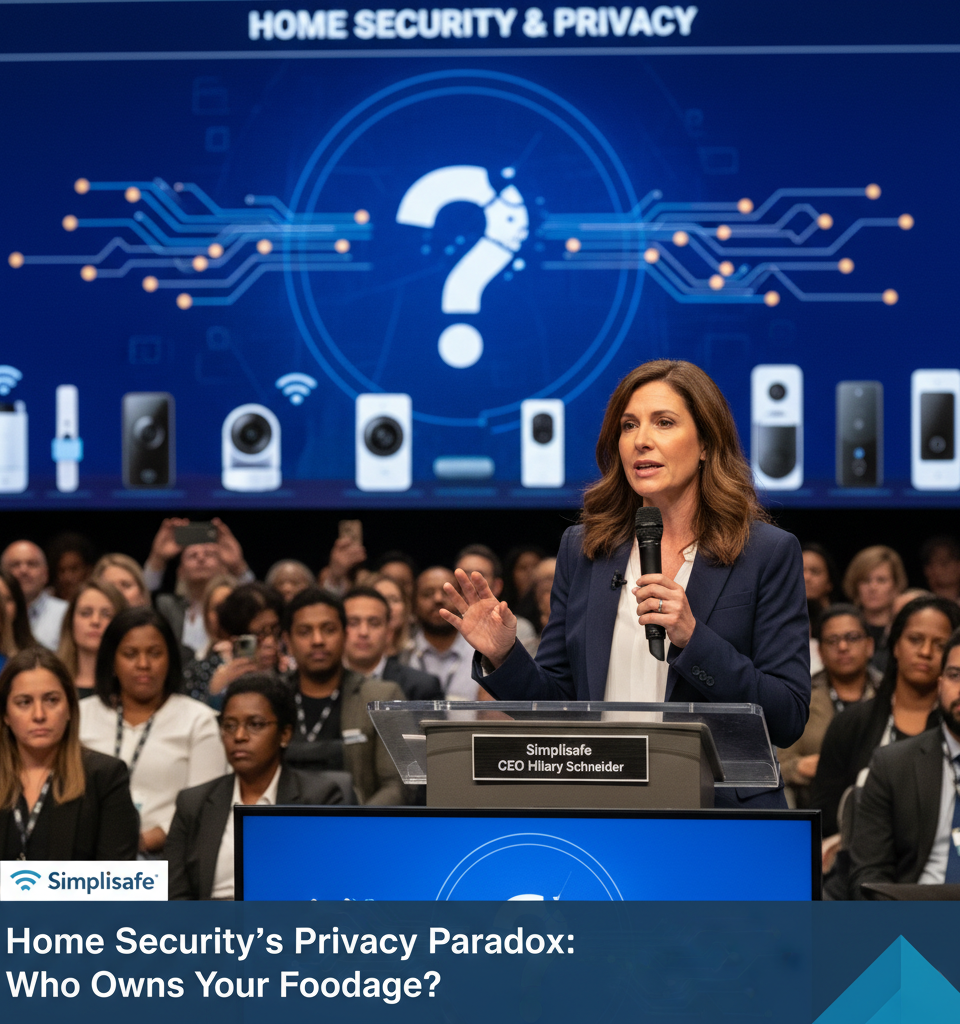
San Francisco, CA – [Date] – The burgeoning home security industry, valued at an estimated $56 billion globally in 2023, is grappling with a fundamental question: who owns the vast troves of video footage captured by devices installed in millions of homes? This pressing concern was recently articulated by SimpliSafe CEO Hilary Schneider, who publicly stated the industry's imperative to clearly define data ownership. Her remarks underscore an escalating debate among consumers, policymakers, and tech companies about privacy, surveillance, and the ethical implications of always-on monitoring in residential spaces.
Historically, home security systems focused on intrusion detection and alarm response, with surveillance capabilities being secondary. However, the rise of affordable, connected cameras and smart home integration has shifted the paradigm. These systems now offer constant monitoring, often stored in the cloud, raising unprecedented questions about access, use, and control of personal data. The lack of standardized regulations and clear corporate policies has created a 'wild west' scenario, where the fine print of user agreements often dictates the fate of sensitive home recordings.
Schneider's statement is particularly significant given her leadership at SimpliSafe, a major player in the DIY home security market. Her admission signals a growing awareness within the industry that consumer trust hinges on transparency regarding data practices. While companies typically claim ownership or a broad license to user data for service provision and product improvement, the specifics often remain opaque. This ambiguity can lead to anxieties, as one surveillance expert quoted in an earlier report aptly put it, calling it "inherently a little creepy" to have such powerful monitoring technology without clear boundaries on data use or ownership. The sheer volume of data is staggering: a single household with multiple cameras could generate terabytes of footage annually, posing immense storage and security challenges.
This debate extends beyond individual homeowner concerns, impacting the broader regulatory and competitive landscape. Governments, particularly in Europe with GDPR, and increasingly in the U.S. with state-level privacy laws like CCPA, are scrutinizing data collection and ownership more closely. Companies that fail to adapt to these evolving privacy expectations risk not only regulatory penalties but also significant reputational damage and loss of market share. Innovators who can offer robust, transparent, and user-centric data ownership models may gain a significant competitive edge in a market projected to reach over $100 billion by 2030.
Industry analysts and privacy advocates generally concur that clearer policies are urgently needed. Dr. Sarah Chen, a leading cybersecurity ethicist at Stanford University, commented, "The default should be that the homeowner owns their data, with companies acting as trusted custodians, not owners. Any deviation from this needs explicit, informed consent and robust justification." She emphasizes the need for strong encryption, strict access controls, and transparent data deletion policies. The potential for data breaches, misuse by law enforcement without warrants, or even commercial exploitation of this highly personal footage presents significant societal risks.
Looking ahead, expect to see increased pressure from consumer advocacy groups and legislators for the home security industry to standardize its approach to data ownership. This could manifest in several ways: voluntary industry-wide codes of conduct, explicit legislation defining digital property rights for smart home data, or even new technological solutions like decentralized storage or end-to-end encryption that puts more control directly in the hands of users. Companies like SimpliSafe are likely to experiment with more user-friendly privacy dashboards and clearer legal language, aiming to rebuild and solidify trust in an increasingly surveilled world. The question of who owns your footage is no longer a niche technicality; it's a front-and-center issue demanding an industry-wide answer.