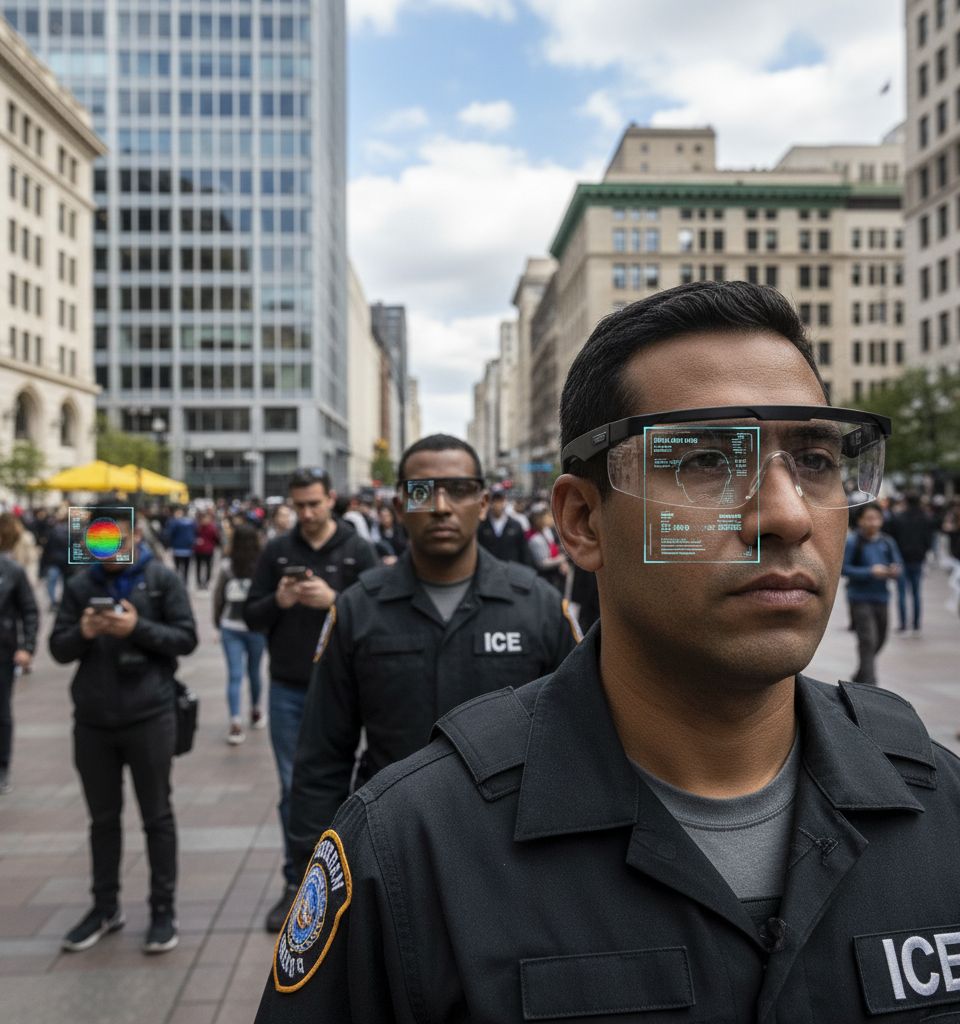
WASHINGTON D.C. – The Department of Homeland Security (DHS) is reportedly pursuing the development of sophisticated smart glasses for Immigration and Customs Enforcement (ICE) agents, a move that could fundamentally alter surveillance practices at the U.S. border and internally. Journalist Ken Klippenstein first revealed details of the initiative, suggesting these devices would enable agents to identify individuals, including both non-citizens and U.S. citizens, from a distance by capturing video and cross-referencing it with biometric data such as facial recognition and walking gait. Budget documents reviewed by Klippenstein indicate the DHS aims for a deployment of these 'ICE Glasses' by September 2027, marking a significant advancement in real-time intelligence gathering capabilities. This initiative comes amidst a broader push by government agencies to integrate advanced technologies into law enforcement operations. The prospect of ICE agents utilizing facial recognition and gait analysis in wearable devices raises immediate and profound questions about privacy, civil liberties, and the scope of government surveillance within the United States. Critics argue that such technology could lead to widespread, indiscriminate monitoring, potentially eroding fundamental rights and exacerbating existing concerns regarding data collection and algorithmic bias in law enforcement without proper oversight. Key details from the budget documents suggest the 'ICE Glasses' would incorporate cutting-edge artificial intelligence to process visual data and compare it against extensive databases. The project reportedly focuses on the ability to identify "illegal aliens" from a distance, minimizing direct interaction while maximizing intelligence collection. While specific funding allocations for this project were not immediately detailed, the target deployment by late 2027 implies a substantial investment in research, development, and procurement. The program's development is reportedly spearheaded by undisclosed internal DHS innovation units, underscoring the agency's commitment to leveraging emerging tech. Within the industrial and technological landscape, this development highlights the expanding market for advanced surveillance hardware and software, particularly within the defense and security sectors. Companies specializing in AI-driven biometric identification, augmented reality wearables, and secure data transmission stand to benefit significantly from government contracts. This push for sophisticated surveillance technology by a major federal agency could also influence other domestic law enforcement entities, potentially creating a ripple effect where local police departments seek similar solutions, leading to a broader normalization of such tools nationwide. Experts in technology ethics and civil liberties have voiced considerable alarm over the reported program. "The deployment of 'ICE Glasses' represents a perilous step towards ubiquitous surveillance, where every individual's movements and appearance could be cataloged and analyzed without consent or probable cause," stated Dr. Elena Petrov, a leading researcher in digital privacy at the American Civil Liberties Union. "The potential for misidentification, data breaches, and the weaponization of such technology against marginalized communities is immense and demands immediate public scrutiny and robust legislative oversight." Concerns also extend to the lack of clear guidelines for data retention, access, and accountability. The future implications of the 'ICE Glasses' project are far-reaching. Should the DHS successfully deploy these devices, it could set a precedent for the adoption of more advanced, real-time biometric surveillance tools across various federal and state agencies. The debate surrounding this technology will undoubtedly intensify, encompassing legal challenges, public protests, and demands for greater transparency from the DHS. Upcoming congressional hearings or public statements from the agency could provide further clarity on the scope, funding, and ethical safeguards (or lack thereof) associated with this controversial initiative. The coming years will be crucial in determining how government agencies balance national security interests with fundamental individual rights in an increasingly technologically advanced world. Ultimately, the development of 'ICE Glasses' underscores a critical juncture where technological innovation intersects with civil liberties. As the 2027 deployment target approaches, sustained public engagement and rigorous oversight will be essential to ensure that such powerful surveillance capabilities are not deployed without profound consideration for their societal impact.
Homeland Security Explores 'ICE Glasses' for Biometric Surveillance, Raising Privacy Concerns
Key Takeaways
Read this first — then go as deep as you need.
Discussion
Loading comments...
Enjoying this article?
Get more like it delivered to your inbox — free.
This article was compiled by GlobalSell News from publicly available reporting and has been edited for clarity and length. For full details, read the original source.