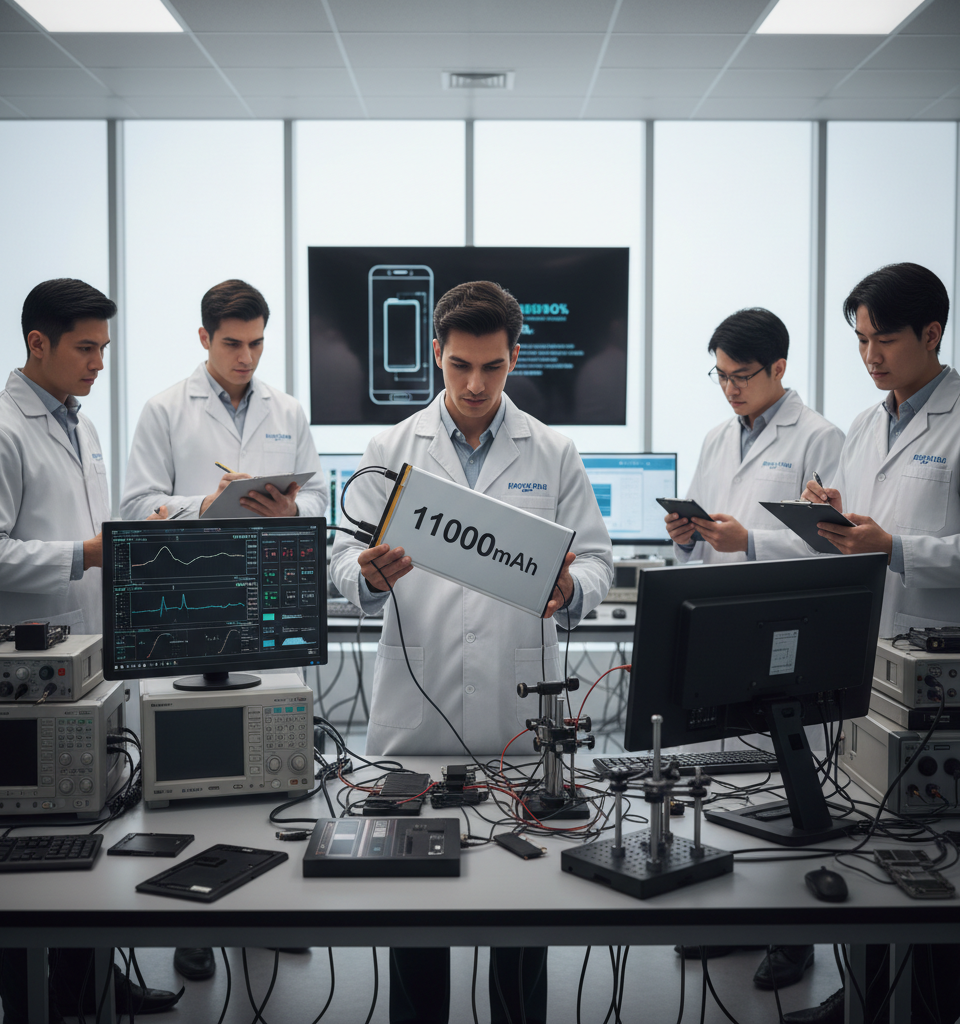
Honor is reportedly engaged in internal testing of an exceptionally large 11,000mAh battery, a development that could herald a major shift in smartphone endurance. This speculative maneuver by the technology giant suggests a proactive approach to enhancing device longevity, a persistent demand from consumers in an increasingly mobile world. Should these tests prove successful and lead to commercial implementation, it would position Honor at the forefront of battery technology in the fiercely competitive smartphone market.
The potential integration of an 11,000mAh battery represents a substantial leap in capacity, dwarfing the typical 4,500mAh to 5,500mAh batteries found in many flagship smartphones today. This move could directly address one of the most common complaints among smartphone users: insufficient battery life. For consumers who rely heavily on their devices for work, entertainment, and communication throughout the day, such an increase in power could translate to multiple days of usage on a single charge, dramatically altering user experience and device dependence.
The Quest for Extended Endurance
The smartphone industry has long grappled with the delicate balance between sleek design, powerful performance, and robust battery life. While advancements in processor efficiency and display technology have somewhat mitigated power consumption, battery capacity has remained a critical bottleneck. Honor's reported exploration of an 11,000mAh unit underscores a strategic intent to differentiate its product line by offering unparalleled endurance, potentially carving out a niche with users prioritizing uptime over ultra-thin profiles or extreme processing power alone. This could be particularly appealing to power users, avid gamers, and professionals who frequently travel or work remotely, where access to charging facilities may be limited.
Historically, manufacturers have adopted various strategies to improve battery performance, including optimizing software, integrating more efficient chipsets, and developing faster charging technologies. However, a significant increase in raw battery capacity, as Honor is reportedly investigating, offers a more fundamental solution to the enduring power drain challenge. This approach suggests a willingness to potentially compromise on device thickness or weight in favor of substantial, tangible benefits for the end-user.
Implications for the Smartphone Market
Should Honor successfully integrate such a large battery into future smartphones, it could trigger a ripple effect across the industry. Rival manufacturers might be compelled to reconsider their own battery strategies, potentially leading to a new era of much larger battery capacities becoming standard. This could, in turn, accelerate innovation in other areas, such as more efficient battery materials or faster, safer charging mechanisms designed to handle increased energy storage.
Furthermore, the introduction of a device with an 11,000mAh battery could redefine expectations for flagship smartphones. Consumers might begin to view extended battery life as a premium feature, similar to high-resolution displays or advanced camera systems. This shift in consumer priorities could influence future product development cycles and marketing strategies for all major players in the mobile technology sector, pushing the envelope on what constitutes a truly 'all-day' or even 'multi-day' device.
Potential Design and Technological Hurdles
Integrating an 11,000mAh battery into a smartphone would not be without significant engineering challenges. Such a large cell would inherently increase the device's size and weight, potentially clashing with current market trends favoring slim and lightweight designs. Honor would likely need to innovate in terms of internal layout, material science, and thermal management to ensure the device remains ergonomic, safe, and performs optimally. Furthermore, the charging times for such a large battery, even with advanced fast-charging solutions, could become considerably longer, necessitating further technological advancements in this area.
The long-term safety and degradation characteristics of such large-capacity batteries would also be a critical design consideration. Ensuring stability and longevity across thousands of charge cycles without compromising user safety will be paramount. Honor's reported internal testing would undoubtedly be scrutinizing these aspects thoroughly before any potential public announcement or product launch. The outcome of these tests could dictate not just the feasibility, but also the eventual form factor and market positioning of any device featuring this ground-breaking battery technology.