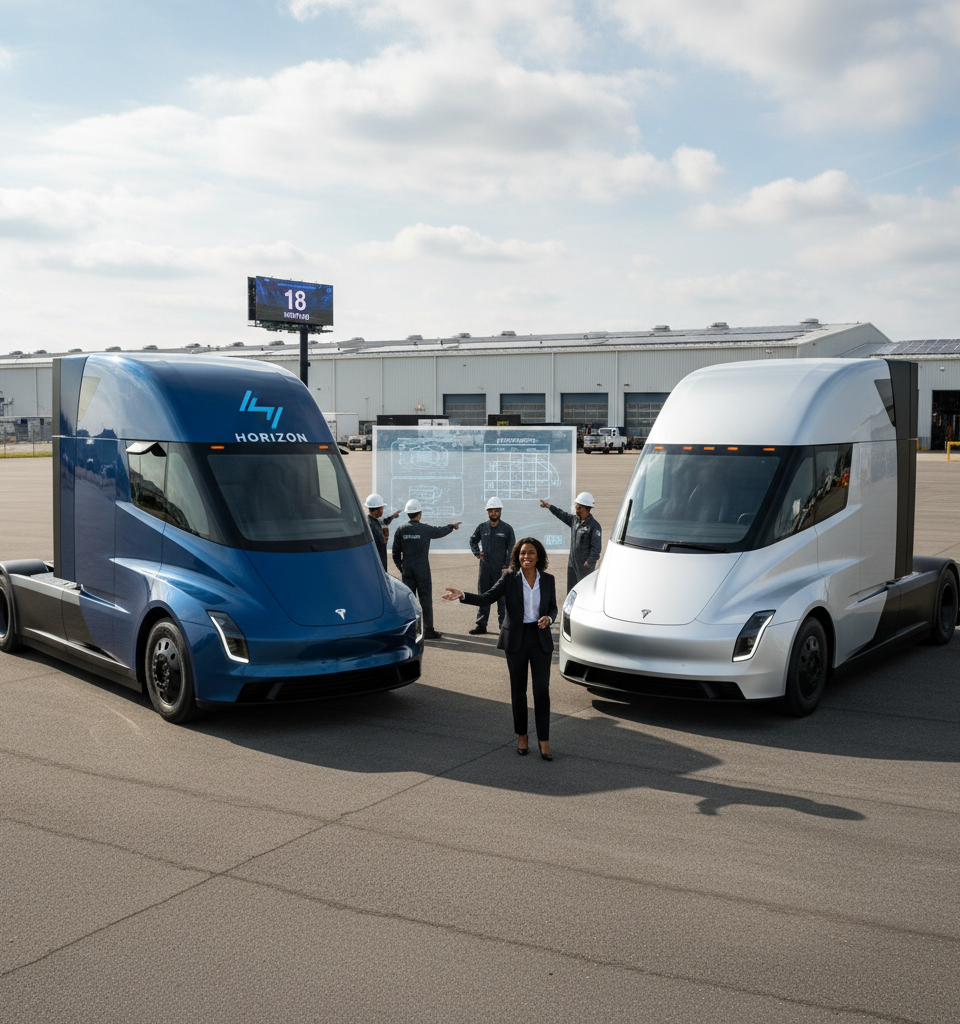
Horizon, a prominent player in the electric vehicle sector, is poised to enter the heavy-duty trucking market with the anticipated production of a Class 8 battery-electric tractor within the next 18 months. This significant development marks a strategic expansion for the company, which currently specializes in Classes 3 through 7 battery-electric trucks. The forthcoming Class 8 offering is specifically designed to rival established and emerging competitors, most notably the Tesla Semi.
Strategic Market Expansion
Horizon's venture into the Class 8 segment signifies the company's ambition to capture a larger share of the rapidly evolving electric commercial vehicle market. The heavy-duty trucking sector, traditionally dominated by internal combustion engine vehicles, is increasingly becoming a focal point for electrification due to environmental regulations, operational cost efficiencies, and advancements in battery technology. By extending its product line, Horizon aims to leverage its existing expertise in electric propulsion systems and charging infrastructure to address the demanding requirements of long-haul and regional-haul operations.
Competing in the Heavy-Duty Arena
The decision to develop a Class 8 battery-electric tractor places Horizon in direct competition with high-profile entrants like the Tesla Semi. While technical specifications and performance metrics for Horizon's upcoming model have not been fully disclosed, the company's existing portfolio suggests a focus on robust design and operational reliability. The Class 8 segment is critical for logistics and supply chain operations, where downtime can lead to substantial financial losses. Consequently, any new entrant must demonstrate compelling performance, range, payload capacity, and charging solutions to gain market acceptance.
The Evolving Landscape of Electric Trucking
The market for battery-electric trucks is experiencing accelerated growth, driven by global efforts to reduce carbon emissions and corporate sustainability initiatives. Companies across various industries are increasingly exploring electric alternatives for their fleets to comply with stricter emission standards and meet their environmental, social, and governance (ESG) targets. The successful deployment of Class 3-7 vehicles has provided Horizon with valuable insights into fleet operator needs, charging infrastructure challenges, and the economic benefits of electric powertrains, which it aims to apply to its Class 8 endeavor.
Production Timeline and Implications
The proposed 18-month production timeline indicates Horizon's confidence in its R&D capabilities and manufacturing readiness. Bringing a Class 8 electric truck to market within this timeframe would position Horizon as a significant contender, potentially ahead of some other developing projects in the heavy-duty electric vehicle space. The move could also stimulate further innovation and competition within the industry, ultimately benefiting fleet operators with a wider array of choices and potentially more advanced technologies.
Future Outlook
Looking ahead, the success of Horizon's Class 8 battery-electric tractor will hinge on several factors, including its ability to secure sufficient battery supply, establish a competitive charging ecosystem, and deliver on performance promises. The heavy-duty trucking industry has distinct requirements regarding range, towing capacity, and rapid charging, which differ significantly from lighter-duty applications. Horizon's ability to meet these rigorous demands while offering a compelling total cost of ownership will be crucial for its long-term success in challenging the market dominance of internal combustion engines and emerging electric rivals like the Tesla Semi.