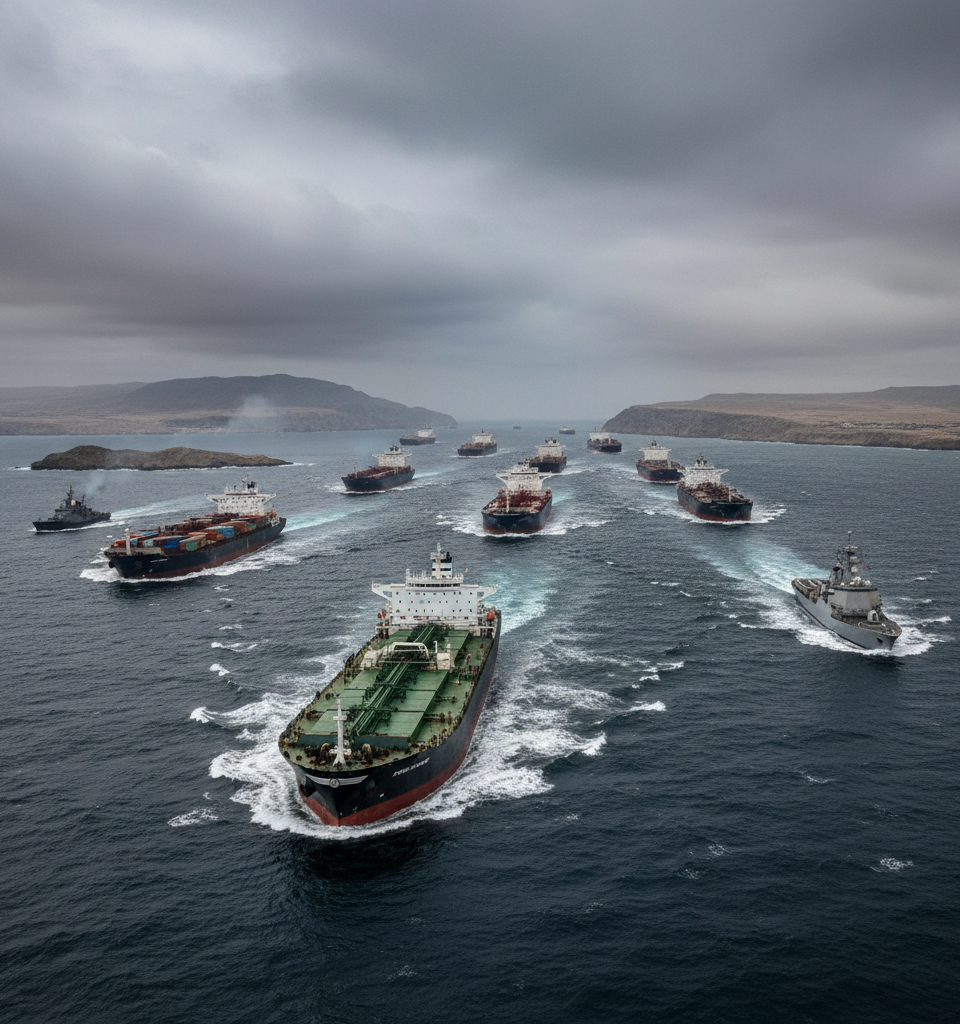
London, UK – The ongoing conflagration in the Persian Gulf, specifically the first month of the conflict involving Iran, has triggered a massive reorientation of global shipping, with an estimated 34,000 vessel routes diverted from the strategically vital Strait of Hormuz. Data compiled by the supply chain visibility platform project44 reveals a rapid and reactive shift by maritime operators, underscoring the profound and immediate impact of geopolitical instability on international trade arteries.
This dramatic redirection not only highlights the acute vulnerability of global supply chains to regional conflicts but also foreshadows a sustained period of elevated shipping costs, extended transit times, and potential disruptions to the delivery of critical goods. The Strait of Hormuz, a narrow chokepoint between the Persian Gulf and the Gulf of Oman, is paramount to global energy markets, with approximately one-third of the world's seaborne crude oil passing through its waters daily. Any impediment to passage through this strait inevitably sends ripples across financial markets and real economies worldwide.
Project44's analysis, which tracked vessel movements in the immediate aftermath of the conflict's onset, indicates that the diversions were not isolated incidents but a widespread and coordinated effort by shipping companies to mitigate risk and ensure the safety of their crews and cargo. While specific details on diverted cargo types were not immediately available, it is safely assumed that oil and gas tankers, along with container ships carrying a diverse range of manufactured goods, constitute a significant portion of affected transits. The report signals that the maritime industry is not merely reacting to immediate threats but establishing new, albeit longer and more expensive, transit patterns.
The economic ramifications of these diversions are substantial. Longer routes translate directly into increased fuel consumption, higher operational costs for shipping lines, and subsequently, elevated freight rates for shippers. These additional costs are ultimately passed down to consumers, contributing to inflationary pressures on a global scale. Industries reliant on just-in-time inventory management, from automotive manufacturing to electronics, face heightened risks of delays and potential production halts. The insurance market is also experiencing significant upheaval, with war risk premiums for vessels transiting the region skyrocketing, adding another layer of expense to maritime operations.
Industry experts are watching these developments with deep concern. Dr. Eleanor Vance, a senior maritime economist at the Institute for Global Shipping Studies, commented, “The scale of these diversions is unprecedented in recent memory outside of the immediate aftermath of major natural disasters. What’s particularly alarming is the consistency of these actions, suggesting a fundamental reassessment of risk in a vital global chokepoint. This isn't a temporary blip; it's a re-engineering of established trade lanes.” She further elaborated, “The Suez Canal has absorbed some of this redirected traffic, but that comes with its own limitations and costs. We’re witnessing a systemic shock.”
Looking ahead, the long-term implications are still unfolding. Should the geopolitical tensions in the region persist or escalate further, the re-routed shipping lanes may become the new, albeit less efficient, normal. This could accelerate investment in alternative transportation methods, deeper analysis of supply chain resilience, and even a re-evaluation of manufacturing locations closer to end markets. Furthermore, the increased traffic in alternative routes, such as around the Cape of Good Hope, could place new strains on infrastructure and services in those regions.
The global community, including international shipping organizations and national governments, is now grappling with how to ensure the security of critical trade routes while navigating an increasingly volatile geopolitical landscape. The 34,000 diverted routes serve as a stark reminder of trade's fragility when confronted by conflict, emphasizing the urgent need for diplomatic solutions and robust contingency planning within the global supply chain architecture.
Impact on Energy Markets
While specific figures are yet to be fully compiled, the redirection of oil and gas tankers away from Hormuz is expected to exert upward pressure on commodity prices. Energy markets thrive on stability, and the perception of risk in a region that handles such a significant volume of global energy supply inevitably triggers speculative trading and precautionary purchasing. Consumers worldwide may feel the pinch at the pump as a direct consequence.
Technological Response
Supply chain visibility platforms like project44 are playing a crucial role in providing real-time data and analytics during this crisis. Their ability to track vessel movements, identify disruptions, and optimize rerouting strategies has become indispensable for logistics managers working to maintain the flow of goods under challenging conditions. The reliance on such technology is likely to grow as companies seek greater resilience in their supply chains.
Policy Implications
Governments and international bodies are likely to revisit policies regarding maritime security, escort operations, and diplomatic engagements to de-escalate regional tensions. The economic cost of sustained disruption through the Strait of Hormuz is simply too high for the international community to ignore, potentially spurring renewed efforts towards conflict resolution in the Middle East.