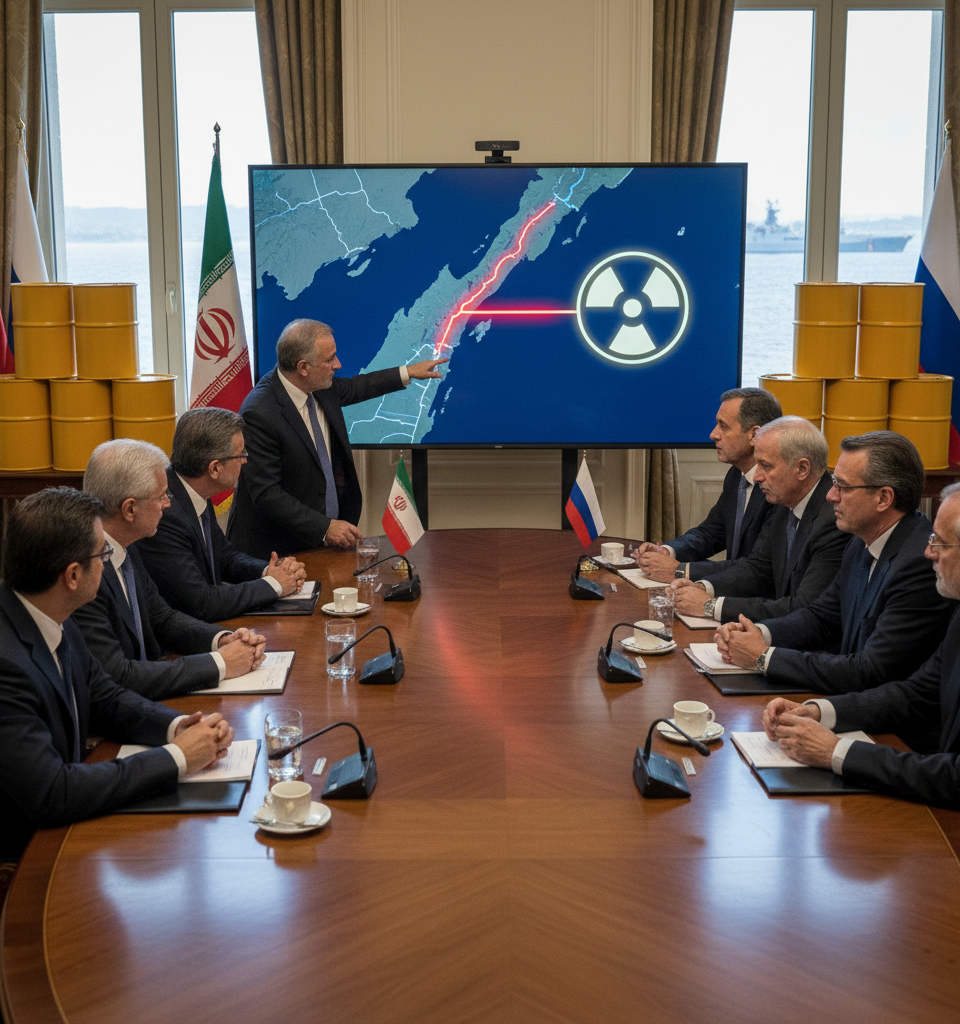
WASHINGTON D.C. / TEHRAN – A significant diplomatic deadlock has emerged, obstructing progress toward a comprehensive peace agreement, as Iran's control over the vital Strait of Hormuz and its burgeoning uranium stockpiles remain intractable sticking points. U.S. negotiators have unequivocally demanded the immediate and unconditional reopening of the strategic waterway to all maritime traffic. However, Iranian officials have countered, asserting that access would only be restored following the finalization of a comprehensive peace deal, a posture that has amplified global geopolitical tensions and raised concerns across international shipping and energy markets.
Historical Context and Geopolitical Significance
The Strait of Hormuz, a narrow chokepoint between the Persian Gulf and the Arabian Sea, is arguably the world's most strategically important oil transit channel. Approximately 20% of the world's petroleum liquids and a significant portion of its liquefied natural gas pass through this strait daily. For decades, control over this waterway has been a flashpoint, reflecting the broader geopolitical tug-of-war in the Middle East. Iran's historical threats and occasional actions to restrict passage have consistently sent tremors through global energy markets, underscoring the immense leverage Tehran perceives in its ability to dictate terms on this critical artery.
Key Demands and Divergent Positions
The core of the current impasse lies in two non-negotiable positions. The United States and its allies emphasize the right to freedom of navigation, viewing any obstruction of the Strait as an act of aggression and a direct threat to global economic stability. In contrast, Iran frames its control over the Strait as a sovereign prerogative and a bargaining chip in broader negotiations, particularly relating to the lifting of sanctions and the resolution of its contentious nuclear program. Iranian officials have reportedly linked the Strait's reopening directly to progress on its uranium enrichment levels, which, according to the International Atomic Energy Agency (IAEA), have once again surged beyond the caps set by the defunct 2015 nuclear accord, now approaching weapons-grade purity.
Impact on Global Markets and Energy Security
The prolonged closure or even the threat of closure of the Strait of Hormuz carries severe implications for global energy security and international trade. Oil prices have historically reacted sharply to tensions in the region, with past disruptions leading to spikes of 10% or more within days. Beyond crude, the Strait is a crucial route for refined petroleum products and other goods, affecting supply chains worldwide. Shipping insurance premiums for vessels traversing the area have reportedly seen a sustained increase of 25-50% in recent weeks, adding millions of dollars to operating costs for maritime transporters and indicating a heightened perception of risk among underwriters.
Expert Analysis and Strategic Implications
Security analysts and Middle East experts largely concur that Iran's current stance is a calculated move to exert maximum pressure. Dr. Sarah Chen, a senior fellow at the Council on Foreign Relations, notes, "Tehran is effectively weaponizing its geography and its nuclear program in tandem. This linkage signals a strong desire for comprehensive relief from economic sanctions and a recognition of its national security interests." Experts suggest that Iran believes the international community's reliance on the Strait will compel concessions on its nuclear program and sanction relief, painting a high-stakes scenario where diplomatic breakthroughs are urgently needed to avert further escalation.
Diplomatic Avenues and Future Outlook
Diplomatic efforts are reportedly intensifying behind the scenes, involving various intermediaries attempting to bridge the chasm between U.S. and Iranian demands. One proposed pathway involves a phased agreement where a partial reopening of the Strait could be tied to an initial, limited lifting of sanctions, potentially followed by broader concessions as trust is incrementally rebuilt. However, the deep-seated mistrust and the magnitude of the concessions demanded by both sides make a swift resolution unlikely. The upcoming G20 summit or a specially convened UN Security Council meeting are viewed as potential platforms where high-level discussions could occur, offering a glimmer of hope for de-escalation.
Implications for Regional Stability
The standoff also has profound implications for regional stability. Neighboring Gulf states, heavily reliant on the Strait for oil exports, view Iran's actions with alarm. Any prolonged closure could trigger a surge in oil prices globally, impacting energy importers and potentially exacerbating economic woes in vulnerable nations. The situation underscores the precarious balance of power in the Middle East and the urgent need for a diplomatic solution that respects international maritime law while addressing Iran's security and economic imperatives.
The Path Forward: High-Stakes Negotiations
The coming weeks will be critical as international powers, led by the U.S., explore every diplomatic avenue to compel Iran to reconsider its position. The resolution of this two-pronged crisis—maritime access and nuclear proliferation—will define the region's geopolitical landscape for years to come. Failure to achieve a breakthrough risks further destabilization, potentially triggering unforeseen economic impacts and a spiraling cycle of geopolitical brinkmanship that no party ultimately desires. The global community watches anxiously as negotiations unfold.