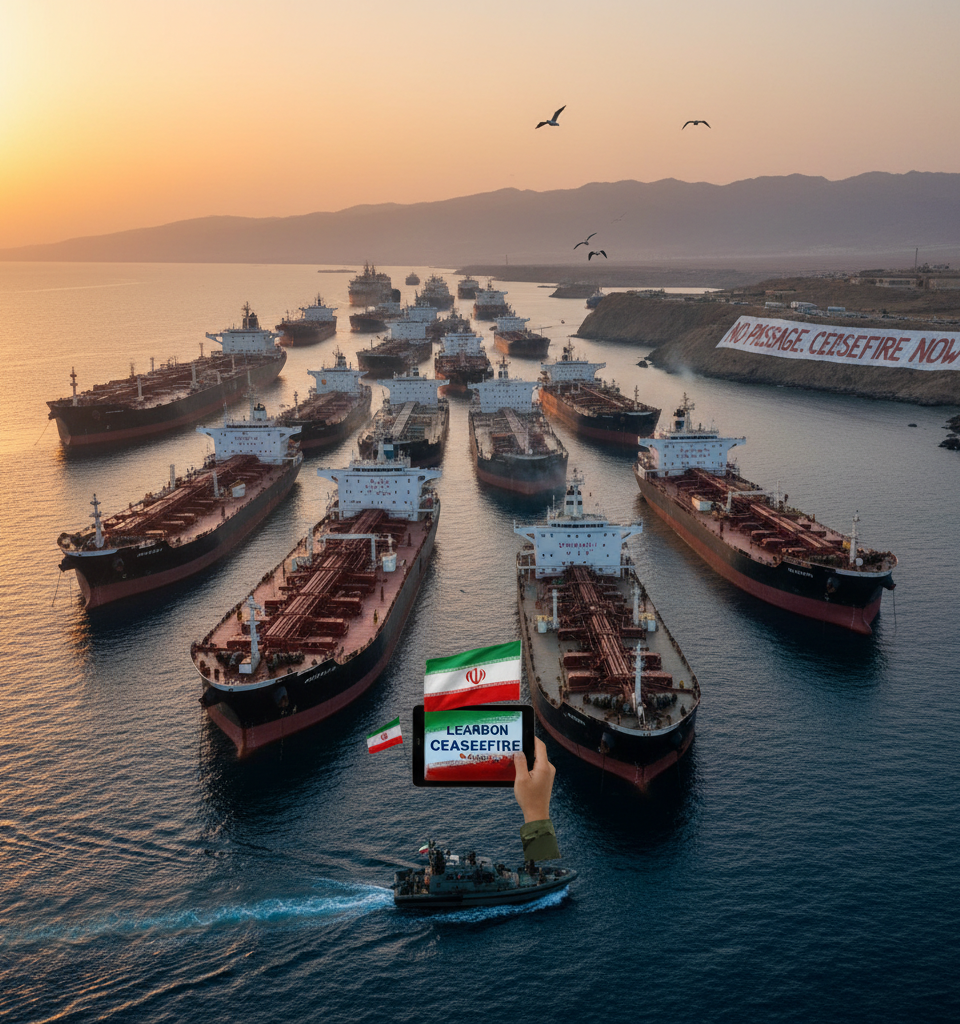
Shipping activity through the Strait of Hormuz, a chokehold for global oil supplies, continues to register near-zero levels amidst stalled peace negotiations between Iran and the United States. The critical maritime artery, which typically sees a significant portion of the world’s seaborne oil pass through it daily, remains largely dormant as diplomatic efforts to resolve the regional standoff falter. The primary sticking point, according to sources close to the negotiations, is Iran's insistence on a ceasefire in Lebanon as a precondition for accepting a broader agreement that would see the strait reopened and an existing truce with the U.S. extended by two months.
Geopolitical Tensions and Economic Impact
The current stalemate underscores the deep-seated complexities of Middle Eastern geopolitics, where intertwined conflicts and regional alliances frequently dictate the pace of international diplomacy. The Strait of Hormuz, linking the Persian Gulf with the Arabian Sea, is strategically vital. Its closure or severe restriction of traffic has immediate and profound implications for global energy markets, leading to increased oil prices and heightened supply chain anxieties. The ongoing disruption is not just a commercial inconvenience but a significant economic pressure point, impacting countries reliant on oil imports and exports through the region. This situation is further exacerbated by the volatile security landscape, with past incidents in the strait demonstrating its susceptibility to escalation.
Iran's Stance and Regional Dynamics
Tehran's demand for a ceasefire in Lebanon injects a new layer of complexity into already fraught discussions. This condition links the free flow of international commerce and a bilateral truce extension directly to the resolution of a separate, albeit regionally connected, conflict. Such a stance suggests Iran's leveraging of its strategic position over the Strait of Hormuz to achieve broader political objectives within the region. The move highlights Iran's perceived influence over various proxies and conflicts, positioning the Lebanese situation as integral to any comprehensive de-escalation deal with the U.S. This linkage complicates the U.S. diplomatic strategy, which presumably seeks to compartmentalize regional issues to achieve specific outcomes, such as the reopening of the strait.
U.S. Engagement and Diplomatic Challenges
The United States, for its part, has been engaged in sustained efforts to secure the reopening of the Strait of Hormuz and de-escalate tensions in the Persian Gulf. The proposed two-month truce extension indicates a desire to create a window for more substantive peace talks. However, Iran's new precondition presents a significant diplomatic hurdle. It forces Washington to consider its strategy in Lebanon in conjunction with its broader engagement with Tehran, potentially expanding the scope of negotiations beyond the immediate maritime concerns. The U.S. administration likely faces pressure from international partners and the energy sector to restore normalcy to the strait, making Iran's demands a critical test of diplomatic resolve and flexibility.
International Repercussions and Future Outlook
The continued restriction of traffic through Hormuz carries steep international repercussions, impacting not only oil prices but also global trade routes and insurance premiums for shipping. Major economies, particularly those in Asia and Europe heavily dependent on Middle Eastern oil, are closely monitoring the situation, facing potential economic headwinds if the impasse persists. Analysts suggest that the current scenario points to potentially prolonged negotiations, as both sides appear resolute in their positions. The immediate future of the Strait of Hormuz, and crucially, global energy stability, hinges on the ability of U.S. and Iranian negotiators to bridge this significant gap and find common ground that addresses both maritime security and regional political demands.
Upcoming developments are expected to focus on shuttle diplomacy and potential backchannel communications as international actors seek to mediate a path forward. The next steps will likely involve intensive discussions aimed at decoupling, or at least strategically linking, the various regional issues to facilitate a breakthrough. Without a shift in either Iran's demands or the diplomatic approach by the U.S., the critical Strait of Hormuz is poised to remain a bottleneck, underscoring the delicate balance of power and influence in one of the world's most volatile regions.