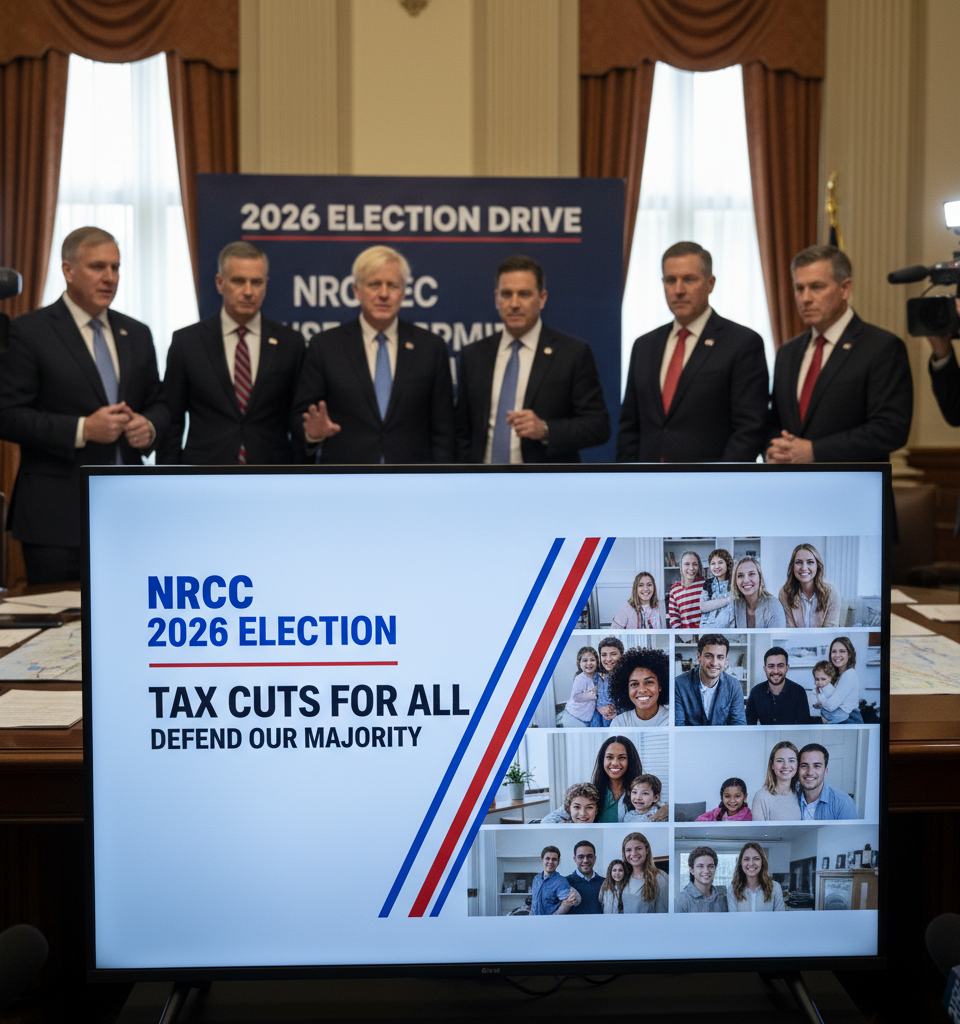
WASHINGTON D.C. — The National Republican Congressional Committee (NRCC), the House Republican campaign arm, has officially launched its opening salvo for the 2026 election cycle, prominently featuring tax cuts as a central tenet of its messaging. A new national advertisement, released this week, highlights economic policies enacted last year, aiming to galvanize support and defend the party's razor-thin majority in the House of Representatives. This early strategic maneuver underscores the critical importance Republicans are placing on economic performance and fiscal policy as they prepare for a challenging electoral landscape.
This aggressive PR offensive is not merely a preemptive strike but a calculated effort to frame the upcoming election around economic prosperity and fiscal responsibility. The Republican Party, having secured a narrow House majority in the last cycle, understands that its tenure is perpetually under scrutiny. By re-emphasizing tax cuts, they are invoking a classic Republican playbook, aiming to connect favorable economic conditions (or the promise of them) directly to their legislative agenda. This strategy is particularly pertinent given the current economic climate, characterized by fluctuating inflation and consumer sentiment, setting the stage for a robust economic debate leading into 2026.
The newly released ad content specifically touts the benefits of the tax cuts passed last year, framing them as direct relief for American families and businesses. While the specifics of the ad's claims are still under analysis, early indications suggest a focus on increased disposable income, job growth, and overall economic stimulation. Republican strategists believe that by highlighting tangible financial benefits, they can sway undecided voters and energize their base. Anecdotal evidence cited in initial campaign materials points to modest improvements in localized economies and small business growth, though broader economic impacts are still debated among experts.
Economists and political analysts are keenly observing the potential impact of this strategy on various sectors. While some industries, particularly those with high capital expenditure, may benefit from corporate tax reductions, the direct impact on average American households from the previous year's cuts requires closer examination. Small businesses, a key demographic for both parties, are often cited as major beneficiaries, potentially seeing reduced operational costs and increased investment capacity. The ad's narrative aims to connect these corporate gains with broader job creation and wage increases, a connection that will be fiercely contested by political opponents.
Expert analysis suggests that while tax cuts are a perennial favorite for Republican campaigns, their efficacy in securing votes heavily depends on the broader economic context and how effectively the benefits are perceived by the public. Dr. Evelyn Reed, a political economist at Georgetown University, commented, “The challenge for Republicans will be to demonstrate a clear, direct line between these tax policies and tangible improvements in the everyday lives of voters. In an environment of persistent inflation, the 'more money in your pocket' argument needs to resonate deeply to be effective.” Other analysts point to historical precedents where tax-focused campaigns have yielded mixed results, contingent on overall voter sentiment towards economic fairness and public services.
Looking ahead, the early launch of this campaign ad signals the intensity of partisan campaigning expected for the 2026 cycle. Both parties are already ramping up fundraising efforts and crafting their messages. Democrats are expected to counter these tax cut claims by focusing on social programs, income inequality, and potential increases to the national debt, framing Republican tax policies as beneficial primarily to corporations and the wealthy. The coming months will likely see a barrage of economic data highlighted by both sides, transforming the economic debate into a central pillar of the congressional elections. Future legislative battles in the current Congress, particularly on fiscal spending and budgetary allocations, will also undoubtedly influence the potency of these early campaign messages.
Future Implications
The House majority remains precarious, with predictions of a mere handful of seats separating the parties. This emphasis on tax cuts may also presage future legislative attempts to either extend or expand these policies should Republicans solidify their control. Conversely, a strong Democratic showing could signal a reversal of some of these tax reforms. The battle for the House will not only decide partisan control but also significantly shape future U.S. economic policy.
Conclusion
As the 2026 election cycle officially kicks off, the GOP's early focus on tax cuts underscores a deliberate attempt to define the electoral conversation around economic issues. The success of this strategy will hinge on their ability to convincingly link their legislative achievements to the financial well-being of American voters, all while navigating a complex economic environment and intense scrutiny from their political rivals.