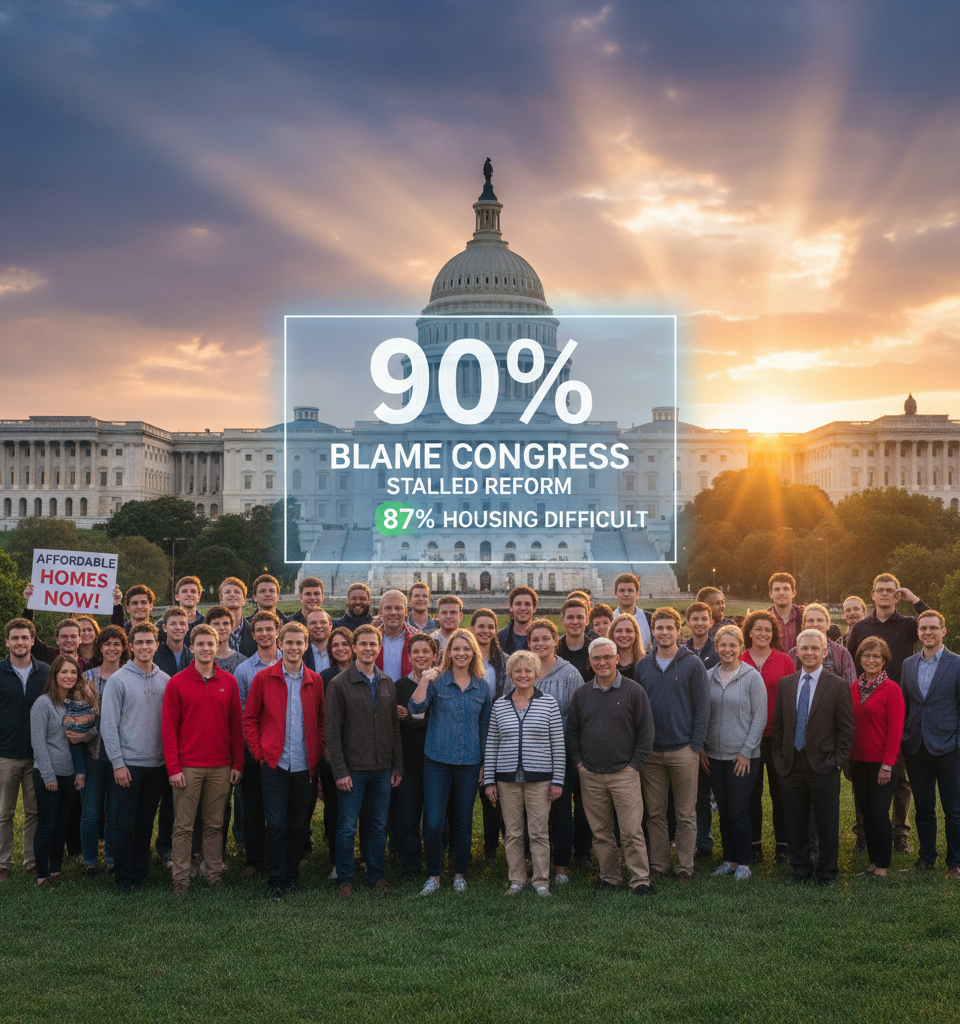
A recent bipartisan survey highlights a stark reality for American homebuyers: an overwhelming 87% of voters believe that purchasing a home has never been more difficult. The findings, released this month, underscore a deepening national concern over housing affordability and availability, with a substantial majority (85%) expressing a desire for congressional intervention. This pervasive sentiment emerges at a critical juncture, as a significant housing reform bill, lauded for its potential to alleviate market pressures, remains stalled in Congress.
Context and Background
The current housing crisis is not an overnight phenomenon but rather the culmination of years of underbuilding, rising interest rates, and soaring material costs, exacerbated by the lasting economic impacts of the COVID-19 pandemic. Median home prices across the United States have surged by over 40% since early 2020, far outpacing wage growth and pushing homeownership further out of reach for millions of Americans, particularly first-time buyers and those in lower to middle-income brackets. The historical context reveals that while housing market fluctuations are normal, the current confluence of high prices, limited inventory, and elevated mortgage rates presents an almost unparalleled challenge. The demand for housing reform is therefore not merely economic but also socio-political, reflecting a fundamental aspect of the American dream slipping away for many.
Key Details and Congressional Inaction
The poll, conducted by a non-partisan research firm, specifically indicates that support for congressional action transcends political divides, with 89% of Democrats, 84% of Republicans, and 82% of independents agreeing on the necessity for legislative solutions. A central piece of legislation, the Affordable Housing and Homeownership Act, introduced with bipartisan backing, aims to expand tax credits for developers building affordable housing, streamline permitting processes, and offer down payment assistance to qualifying buyers. Despite its broad appeal and the palpable public demand, the bill faces significant headwinds, primarily due to disagreements over funding mechanisms and concerns about federal overreach. Its current status in the legislative queue suggests a protracted battle, frustrating both constituents and proponents of market-based solutions.
Industry and Market Impact
For the real estate and construction sectors, the implications of this widespread sentiment and congressional inertia are profound. Homebuilders grapple with elevated material costs and labor shortages, making it challenging to increase inventory at price points accessible to the average buyer. Developers are also affected by stringent local zoning regulations and lengthy approval processes, which inflate project costs and timelines. Mortgage lenders, while benefiting from stable demand for refinancing at higher rates, face a dwindling pool of eligible first-time homebuyers. The lack of movement on comprehensive housing reform risks perpetuating a cycle of scarcity and unaffordability, further widening the wealth gap and stifling economic mobility. The long-term impact could lead to a less dynamic housing market, characterized by fewer transactions and reduced household formation.
Expert Perspective
Economists and housing policy experts largely concur that the current situation is unsustainable. "The data clearly shows that housing affordability is a top-tier issue for voters across the political spectrum," states Dr. Eleanor Vance, a senior economist specializing in urban development. "The legislative branch's inability to pass meaningful reform is not just a political failure; it's an economic one that actively harms household balance sheets and dampens overall economic growth." She further emphasizes that while monetary policy plays a role, structural issues in housing supply and demand require targeted legislative solutions, such as incentivizing construction and addressing exclusionary zoning practices, to restore balance.
What's Next
The path forward for housing reform remains uncertain. Advocates are intensifying lobbying efforts, urging lawmakers to prioritize the Affordable Housing and Homeownership Act or similar bipartisan measures. There is growing discussion about incorporating elements of the stalled bill into broader budgetary legislation or as standalone provisions in must-pass bills to bypass gridlock.
While an immediate breakthrough appears unlikely, the overwhelming public consensus revealed in the poll is expected to amplify pressure on Congress as the mid-term elections approach. Housing affordability is poised to remain a dominant campaign issue, forcing candidates to articulate concrete plans for addressing the crisis, potentially leading to renewed legislative efforts in the next session. Without meaningful action, the dream of homeownership may continue to recede for many, with significant socio-economic ramifications for the nation.