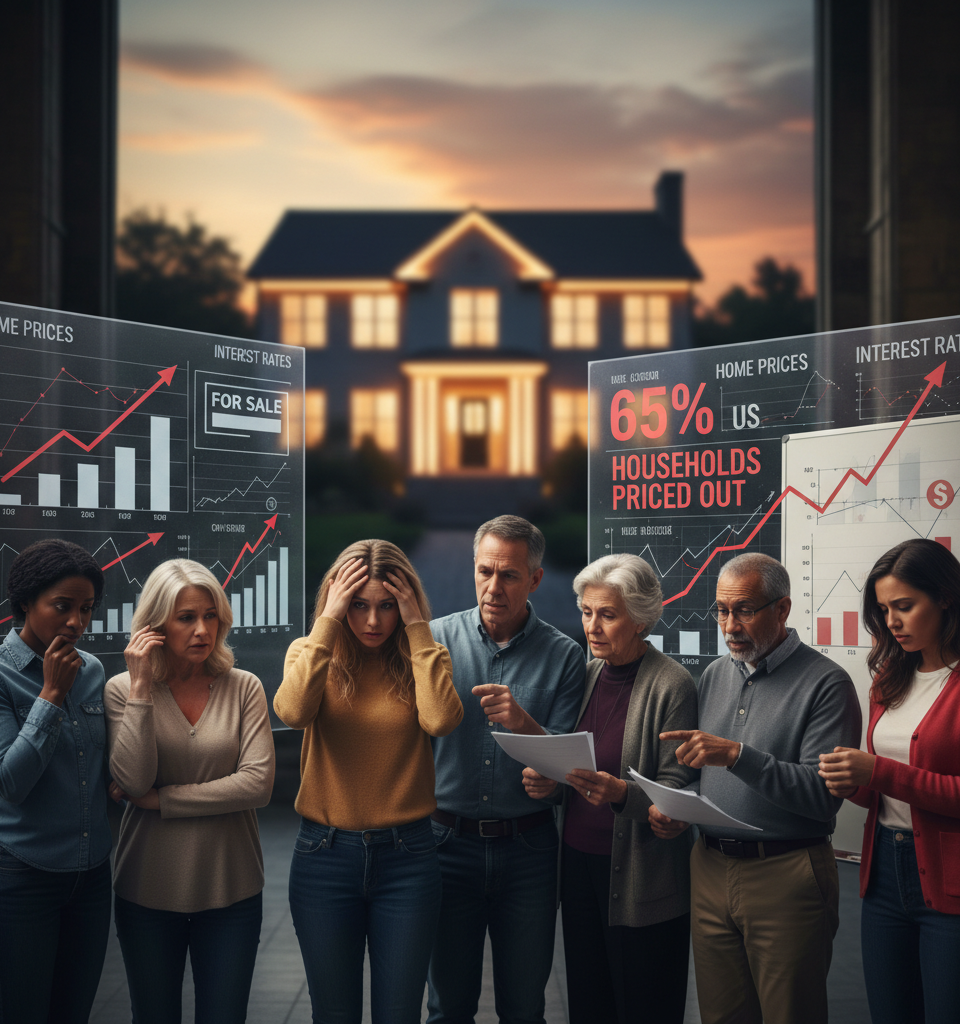
The United States is grappling with a deepening housing affordability crisis, highlighted by recent data indicating that nearly two-thirds of American households are effectively priced out of the market for a median-priced new home. This alarming statistic underscores a growing disparity between household incomes and the accelerating costs of homeownership, leaving millions of aspiring homeowners on the sidelines.
The Widening Affordability Gap
This crisis is not a new phenomenon; however, its scale has intensified significantly in recent years. Historically, homeownership has been a cornerstone of American prosperity and wealth building. Yet, the current economic climate, characterized by stubbornly high inflation, elevated interest rates, and a constricted housing supply, has pushed this fundamental aspiration further out of reach. The median new home price has far outpaced wage growth across most sectors, creating an insurmountable financial hurdle for many.
Critical Economic Indicators
Several key factors contribute to this dire situation. Data from the National Association of Home Builders (NAHB) consistently reveals a wide gap between what many families earn and what is required to secure a home loan for a median-priced dwelling. Mortgage rates, which recently hovered around 7% for a 30-year fixed loan, have dramatically increased monthly payments, even for homes whose prices haven't skyrocketed as much. For example, a $400,000 home with a 3% interest rate carries a significantly lower monthly payment than the same home at a 7% rate, impacting purchasing power by hundreds, if not thousands, of dollars per month. This sharp increase in borrowing costs, combined with a persistent shortage of housing inventory, particularly in the entry-level and mid-range markets, exacerbates the problem.
Impact on the Broader Economy and Demographics
The ripple effects of this housing crisis are profound, extending beyond individual households to impact the broader economy and demographic trends. Young professionals and first-time homebuyers are particularly affected, leading to delayed family formation, increased rental demand, and heightened pressure on rental markets. Businesses in regions with unaffordable housing often struggle to attract and retain talent, potentially stifling economic growth. Furthermore, the inability to build home equity, traditionally a primary source of generational wealth, threatens to widen the wealth gap and reduce overall economic mobility.
Expert Commentary and Policy Challenges
Economists and housing policy experts generally agree that a multi-faceted approach is urgently needed. Dr. Jessica Smith, a senior housing economist at the Brookings Institution, recently stated, "We need to deploy every available tool in the policy arsenal — from supply-side interventions to targeted affordability programs. Relying on market corrections alone will simply not be enough to solve a problem of this magnitude." Experts advocate for policies that incentivize new construction, particularly of affordable and mid-priced homes, streamline regulatory processes, and explore financial assistance programs for first-time buyers. The challenge lies in implementing these solutions at scale and overcoming local opposition to development.
Future Outlook and Potential Solutions
Looking ahead, without significant policy intervention, the housing affordability crisis is projected to worsen. Potential solutions range from federal initiatives promoting land use reform and construction innovation to local zoning adjustments that encourage diverse housing types, such as accessory dwelling units (ADUs) and multi-family developments. Furthermore, exploring innovative financing mechanisms and expanding down payment assistance programs could provide relief for struggling households. The upcoming legislative sessions at both federal and state levels are expected to feature robust debates on these critical issues, as the pressure builds from an increasingly disenfranchised segment of the population.
The complexity of the housing affordability challenge demands a concerted effort from policymakers, developers, and communities to ensure that the dream of homeownership remains a realistic aspiration for a broader spectrum of American households. The current trajectory is unsustainable, threatening long-term economic stability and social equity.