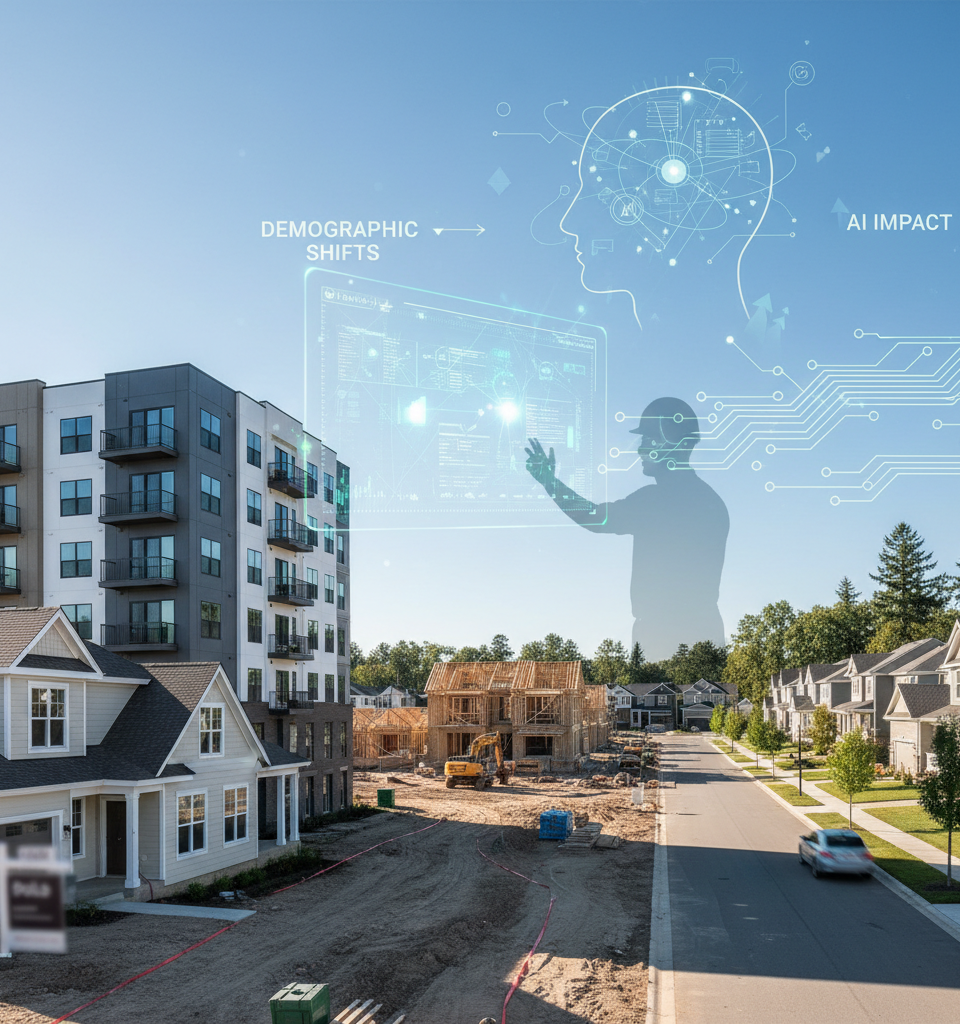
For high-end buyers and sellers in exclusive Southern California markets like Malibu and Bel Air, understanding shifts in national housing dynamics is paramount, as these trends invariably ripple through luxury segments. Changes in population growth and demographic composition could reshape investment strategies and demand profiles for trophy properties, while technological advancements in real estate will redefine how these assets are marketed and managed.
Leading figures from prominent real estate and financial institutions—Cortland, Pulte, INVH, and Walker & Dunlop—recently gathered to analyze the significant forces reshaping the U.S. housing market. The executives' discussions, held ahead of significant market shifts, underscored the critical importance of evolving population growth rates, ongoing demographic transformations, and the rapidly increasing influence of artificial intelligence (AI) in the sector. Their insights provide a roadmap for understanding the complex interplay of factors that are poised to define the future of housing.
The Shifting Landscape of Demand
The core of the executive discussions revolved around population dynamics and demographic shifts. Participants emphasized that the traditional profile of homebuyers and renters is undergoing significant change, driven by various factors, including evolving household formations, delayed milestones like marriage and child-rearing, and the increasing diversity of the U.S. population. These changes are expected to necessitate adaptive strategies from developers, investors, and lenders alike, requiring a nuanced understanding of who will be seeking housing and what their preferences will entail.
One key area of focus was the critical role of population growth. While overall growth rates have moderated in some regions, specific metropolitan areas continue to experience robust expansion, particularly in Sun Belt states. This localized growth creates pockets of high demand and investment opportunities, but also presents challenges in terms of infrastructure and housing supply. Executives highlighted the need for strategic development that aligns with these migratory patterns, ensuring that housing stock meets the needs of incoming residents.
AI's Transformative Role
A significant portion of the dialogue centered on the burgeoning influence of artificial intelligence within the real estate industry. AI is no longer a futuristic concept but a rapidly integrating tool that is poised to revolutionize various facets of housing, from development and construction to sales, property management, and investment analysis. Executives from companies like Cortland and Pulte likely discussed how AI is streamlining design processes, optimizing construction timelines, and enhancing energy efficiency in new builds. For INVH, a major player in the single-family rental market, AI could offer unprecedented capabilities in property valuation, tenant screening, and predictive maintenance, leading to more efficient operations and improved resident experiences.
Walker & Dunlop, a leading provider of capital solutions, would likely have focused on AI's impact on financial modeling, risk assessment, and market forecasting. The ability of AI to process vast datasets and identify subtle market trends could provide a significant competitive advantage in deal sourcing and underwriting, enabling more precise and timely investment decisions. This technological integration is expected to enhance operational efficiencies, drive innovation in customer service, and unlock new avenues for data-driven strategic planning across the entire housing ecosystem.
Anticipating Future Market Implications
The confluence of demographic shifts and technological advancements is expected to create both opportunities and challenges. Executives noted that developers and investors who can effectively leverage AI-powered analytics to understand and predict demographic movements will be best positioned for success. This includes identifying underserved segments, tailoring housing products to specific generational or cultural preferences, and optimizing pricing strategies.
Looking ahead, the discussions suggested that the housing market will demand greater adaptability and innovation. Companies that embrace data science and AI will likely gain a significant edge in identifying emerging submarkets, optimizing asset performance, and responding swiftly to changing consumer demands. The insights shared by these industry leaders underscore a future where success in housing will be inextricably linked to understanding people and harnessing technology to meet their evolving needs.
The Road Ahead for Real Estate
The executives' assembly serves as a clear indicator that the industry is actively grappling with a future marked by complexity and rapid change. The emphasis on sustained population growth in certain areas, the diversification of housing demand across different demographic groups, and the integration of AI across all operational layers suggests a period of significant transformation. For stakeholders throughout the housing sector, from developers to financiers and property managers, staying attuned to these overarching themes will be crucial for navigating the evolving landscape and capitalizing on new opportunities that are expected to emerge from these foundational shifts.