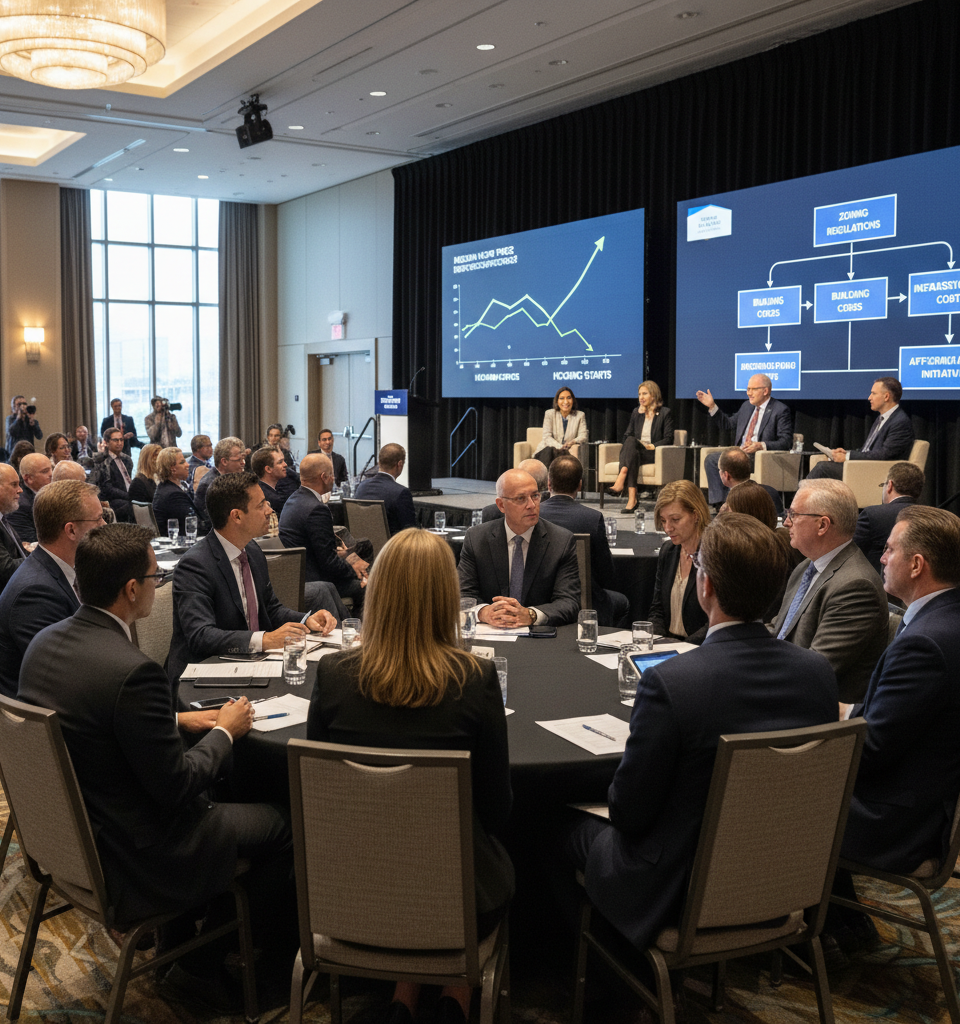
WASHINGTON D.C. — A pivotal national summit on housing supply recently brought together policymakers, industry leaders, and urban planning experts to dissect the persistent, multi-faceted complexities hindering housing affordability and access across the United States. The palpable consensus among attendees illuminated that the nation's severe housing shortage is less a simple supply-demand imbalance and more a Gordian knot of entrenched local regulations, community resistance, and a fundamental misunderstanding of market dynamics.
This crucial gathering arrives at a time when median home prices have soared by over 50% in the last five years in many metropolitan areas, pushing the dream of homeownership further out of reach for millions of Americans. The prevailing sentiment echoed journalist Jerusalem Demsas's incisive observation that “housing breaks people’s brains,” highlighting how efforts to address the crisis often falter due to deeply embedded local opposition and a widespread denial of the actual scarcity of housing units. This intellectual and political impasse represents a significant impediment to scalable, impactful solutions.
During the summit, several key themes emerged as primary drivers of the crisis. Foremost among them was the impact of restrictive zoning ordinances, with an estimated 75% of residential land in major U.S. cities still zoned exclusively for single-family homes. This effectively stifles the construction of denser, more affordable housing options like duplexes, townhouses, and multi-story apartment buildings. Data presented indicated that regulatory costs, primarily zoning and impact fees, can add upwards of $50,000 to the price of a new home in some markets. Furthermore, the politicization of development at the local level, characterized by protracted approval processes and frequent litigation from 'Not In My Backyard' (NIMBY) groups, significantly drives up development costs and extends project timelines, sometimes by several years.
For the broader real estate and construction industries, the implications are dire. Builders face escalating land costs, unpredictable regulatory environments, and labor shortages, making it increasingly difficult to meet demand for entry-level and mid-market housing. Investors, while initially benefiting from rising property values, now contend with slower transaction volumes and increasing market volatility as affordability issues deter potential buyers. The rental market, too, is feeling the strain, with average rents increasing by 15-20% year-over-year in many high-demand urban centers, pushing household budgets to their absolute limit. This also contributes to demographic shifts, as younger generations and lower-income families are forced out of vibrant economic centers.
Industry analysts and housing economists largely concur on the summit's findings. Dr. Emily Chang, a housing policy expert at the Metropolitan Institute, commented, “The summit clearly articulated that the primary bottlenecks are not capital or construction capacity, but rather the labyrinthine local approval processes and fundamental land use restrictions. Until communities are willing to embrace a more flexible and inclusive approach to zoning, the affordability crisis will only deepen.” She further emphasized the need for state and federal incentives to bypass or override local resistance where necessary, suggesting a potential federal role in streamlining permits for certain types of housing.
Looking ahead, the summit concluded with a call for stronger federal and state-level intervention to standardize zoning regulations and incentivize denser, transit-oriented development. Proposed legislative efforts include 'carrot-and-stick' approaches, offering federal infrastructure grants to localities that reform their zoning laws and potentially withholding funds from those that resist. Several states are already exploring legislation to limit local control over density requirements, aiming to fast-track affordable housing projects. The conversation marks a potential turning point, elevating the housing supply issue from a localized battle to a national economic imperative demanding coordinated governmental action and a fundamental shift in public perception.
Data Points & Statistics:
- Median Home Price Increase: Over 50% in many metros over 5 years.
- Single-Family Zoning: Approximately 75% of residential land in major U.S. cities.
- Regulatory Costs: Up to $50,000 added to new home prices in some markets.
- Average Rent Increase: 15-20% year-over-year in high-demand areas.
Expert Quote:
"The summit clearly articulated that the primary bottlenecks are not capital or construction capacity, but rather the labyrinthine local approval processes and fundamental land use restrictions. Until communities are willing to embrace a more flexible and inclusive approach to zoning, the affordability crisis will only deepen." — Dr. Emily Chang, Housing Policy Expert, Metropolitan Institute.