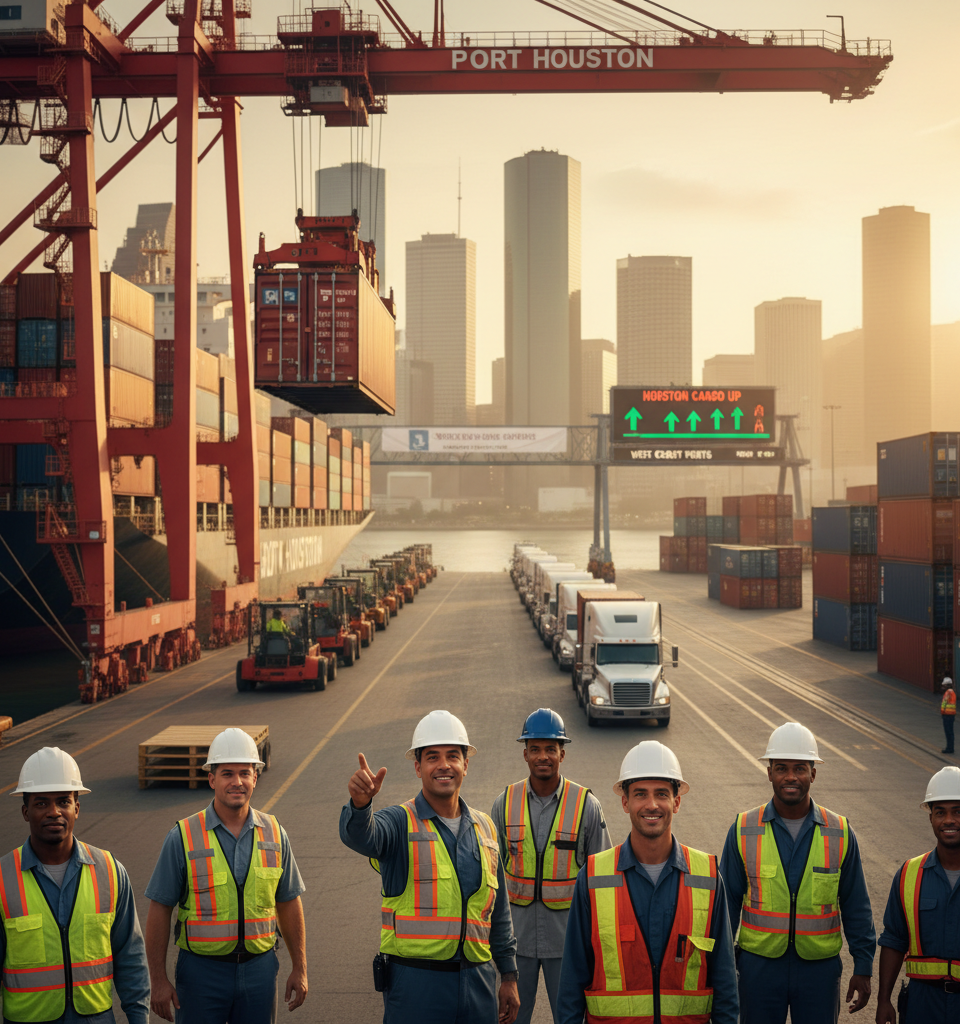
The Port of Houston has emerged as a significant beneficiary of the rebalancing in North American freight flows, registering an increase in cargo share even as overall import volumes show signs of softening. This reallocation of maritime traffic, particularly away from historically dominant West Coast ports, underscores a strategic shift by shippers seeking greater reliability and diversified routing options. According to recent insights from Flexport leaders, the landscape for import demand remains uneven across the continent, with Houston and several East Coast ports demonstrating resilience and growth.
Contextualizing the Shift in Port Dynamics
This trend is not entirely new but has intensified in recent months, reflecting a confluence of factors that have reshaped global logistics. For years, West Coast ports like Los Angeles and Long Beach served as the primary entry points for Asian imports, boasting superior transit times to much of the U.S. interior. However, a series of disruptions – including labor disputes, congestion, and the prolonged effects of the pandemic-induced supply chain chaos – prompted many shippers to explore alternative routes. The Suez Canal expansion and investments in East and Gulf Coast port infrastructure have also played a crucial role, enhancing their capacity to handle larger vessels and increased throughput. This strategic diversification aims to mitigate risks associated with over-reliance on a single gateway, ensuring more predictable supply chains.
Key Drivers and Data Points
The most recent data corroborates this movement. While specific percentage increases for Houston were not immediately available, reports indicate consistent growth in container throughput at the port. In contrast, major West Coast ports have reported year-over-year declines in container volumes. For instance, the Port of Los Angeles saw a 16% year-over-year decrease in loaded import containers in January, while the Port of Long Beach reported a staggering 21.5% drop. This divergence highlights a deliberate re-routing of cargo. Shippers are increasingly weighing the benefits of avoiding potential West Coast bottlenecks and leveraging the robust inland connectivity offered by Gulf and East Coast ports, despite potentially longer ocean transit times from Asia for certain regions.
Industry-Wide Ripple Effects
The ramifications of this shift extend beyond individual ports, impacting the entire logistics ecosystem. Warehousing and distribution networks are adapting, with new facilities emerging closer to these growing import hubs. Intermodal rail and trucking companies are adjusting their operations to accommodate increased volumes at Gulf and East Coast gateways, optimizing new drayage routes and rail schedules. This reallocation also influences pricing dynamics in the shipping industry, as carriers adjust capacity and service offerings to meet changing demand patterns. The shift underscores a broader trend towards supply chain resilience, where redundancy and flexibility are prioritized over sheer speed or lowest direct cost.
Expert Perspectives on Future Trends
Industry experts view this trend as a maturation of global supply chains post-pandemic. “What we’re seeing is not merely a transient blip but a fundamental re-evaluation of risk and efficiency by major shippers,” commented a supply chain analyst familiar with Flexport’s operations. “The investments made in infrastructure at Gulf and East Coast ports, coupled with the persistent labor uncertainties and operational challenges on the West Coast, have created a compelling case for diversification.” They emphasize that while West Coast ports will remain vital, their unchallenged dominance appears to be waning, giving way to a more distributed network that can better withstand future disruptions. This decentralization of import traffic is expected to be a lasting feature of the logistics landscape.
Looking Ahead: Implications for Supply Chains
The ongoing recalibration suggests that the Port of Houston and other East and Gulf Coast ports are poised to maintain, if not further expand, their enhanced cargo share in the coming quarters. Future developments will likely include continued investment in port infrastructure, automation, and inland rail connections to support sustained growth. Shippers will continue to monitor labor negotiations at West Coast ports closely, as any resolution or escalation could further influence routing decisions. The ultimate outcome will be a more resilient, albeit potentially more complex, global supply chain network designed to navigate a volatile geopolitical and economic environment more effectively. This strategic adaptation is crucial for businesses aiming to maintain consistent inventory levels and meet consumer demand without unexpected delays or cost surges.
Broader Economic Considerations
The economic implications of this shift are significant for regional economies. An increase in cargo volume translates to more jobs in port operations, logistics, warehousing, and transportation, boosting local economies in Houston and other growing port cities. Conversely, it poses economic challenges for regions traditionally reliant on high West Coast port activity. The competition among ports for market share is driving further innovation and efficiency improvements, yet it also highlights the need for a national, coordinated strategy for port development and infrastructure investment to ensure balanced growth and mitigate potential new bottlenecks in previously less-utilized corridors. This dynamic competition ultimately benefits the broader economy by pushing for more efficient and robust supply chain solutions.