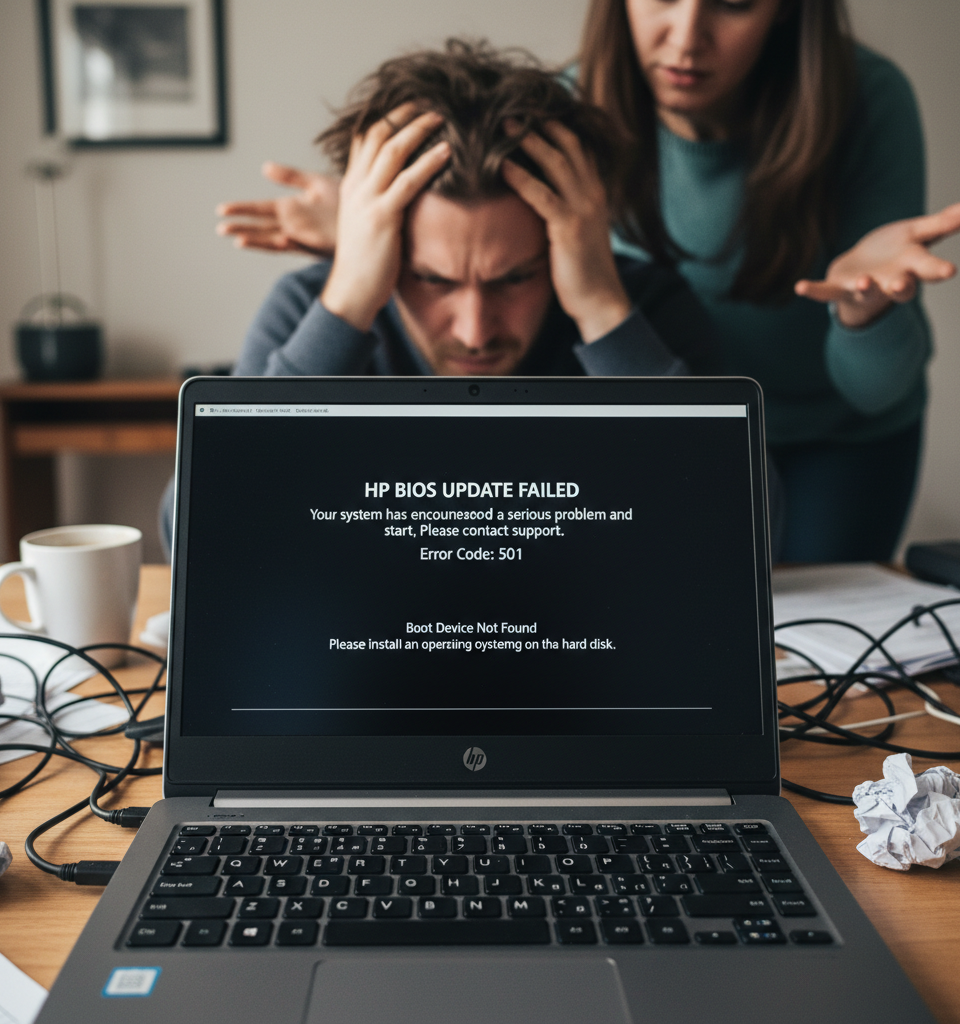
Numerous HP customers are reporting widespread issues after a recent critical BIOS update, distributed via Windows Update, allegedly rendered their premium laptops unbootable. The affected devices primarily include the ZBook Ultra G1a, a mobile workstation commanding prices upwards of £4,000, and the EliteBook X G1a. These updates were flagged as "critical," leading to their automatic application without requiring user intervention, a factor that has intensified user frustration and raised concerns regarding software deployment protocols.
The reports, emerging in recent days, highlight a significant disruption for professionals relying on these high-performance machines. The ZBook Ultra G1a, in particular, is marketed towards users requiring substantial computing power for demanding tasks, where system uptime and reliability are paramount. The unexpected failure of these devices due to a vendor-supplied update underscores the inherent risks associated with automatic critical software patches, particularly at the BIOS level, which is fundamental to a computer's operation.
Technical Fallout and User Impact
Complaints have surfaced across various online forums and support channels, with users detailing unsuccessful boot attempts post-update. A bricked BIOS effectively turns a laptop into an inert piece of hardware, necessitating specialized recovery procedures or, in many cases, hardware replacement. Given the substantial cost of the affected models, such as the ZBook Ultra G1a's £4,000+ price tag, the financial implications for individual users and businesses are considerable, extending beyond just the device's replacement cost to include potential losses from downtime and data inaccessibility.
The nature of the update being designated as "critical" implies that it was intended to address significant vulnerabilities or performance issues. However, its immediate aftermath suggests a severe oversight in the quality assurance or deployment process. The automatic nature of the update, bypassing user consent, is a point of contention, as it stripped users of the opportunity to back up data or manually delay the update, potentially mitigating the damage.
Broader Industry Implications
This incident casts a spotlight on the broader industry practices surrounding firmware updates pushed through operating system channels. While automatic updates are often lauded for improving security and system stability by ensuring users run the latest software, this scenario illustrates the critical importance of rigorous testing, especially for low-level system firmware like the BIOS. Any flaw in such an update can have catastrophic consequences, not just for the end-user but also for the reputation of the hardware manufacturer and the operating system provider facilitating the distribution.
Manufacturers often weigh the necessity of critical updates against the risks of widespread deployment. This reported incident with HP laptops may prompt a re-evaluation of how such critical updates are categorized, tested, and distributed, particularly for high-value professional-grade hardware. It could lead to a push for more robust pre-release testing cycles or perhaps a more nuanced approach to automatic application, especially for updates that touch core system functionality.
Path Forward and User Recourse
As affected customers grapple with inoperable devices, attention turns to HP's response and the potential remedies being offered. Users will undoubtedly be seeking immediate solutions, whether through expedited repair services, replacement units, or detailed instructions for BIOS recovery. The company's handling of this crisis will be crucial in restoring customer confidence and mitigating long-term brand damage. For those impacted, the immediate priority remains restoring their equipment to a functional state and recovering valuable data, if possible. The broader tech community will be observing closely to see how this situation evolves and what preventative measures may be adopted to avert similar occurrences in the future.