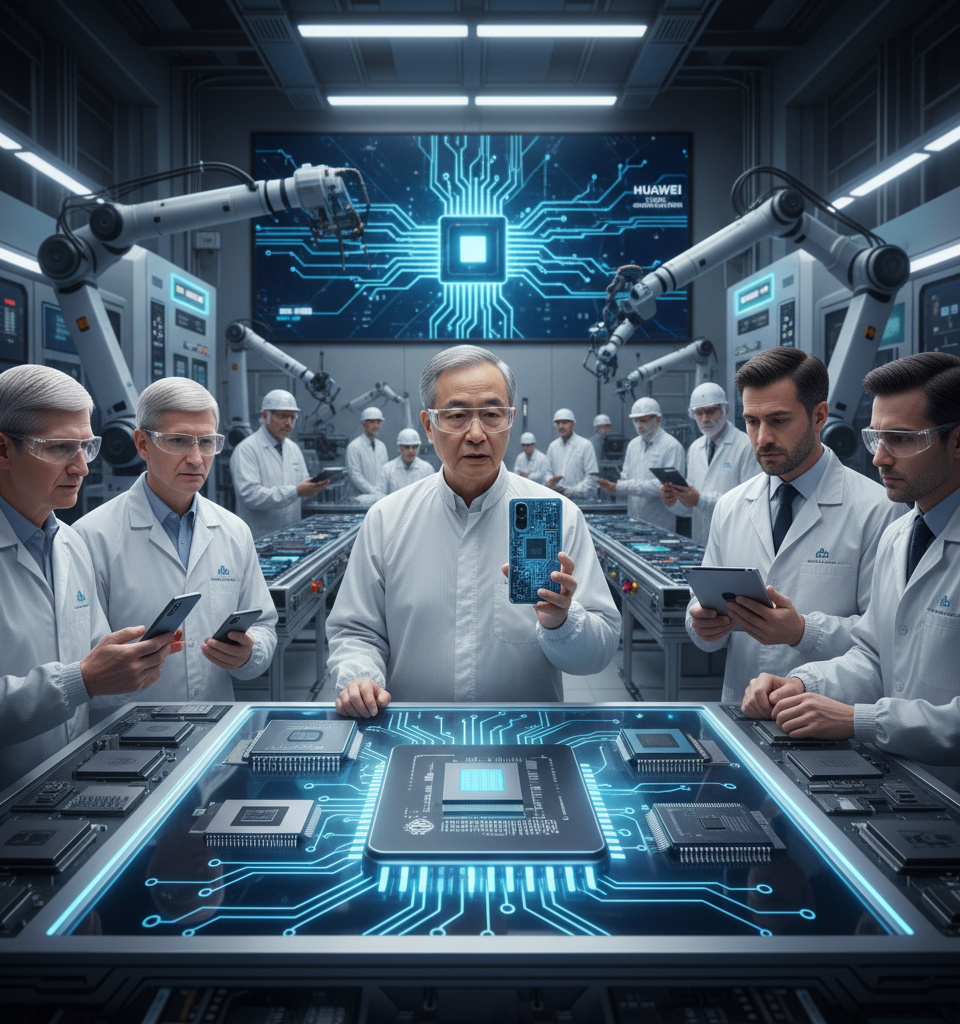
Huawei Technologies Co. is poised to unveil a new method for designing smartphone chips later this year, an innovation expected to bolster the company's capabilities in the highly competitive semiconductor market. The announcement, made on Monday, indicates Huawei's strategic maneuver to navigate U.S. trade restrictions while simultaneously escalating its rivalry with global tech titans such as Nvidia and Apple.
Navigating Sanctions and Striking Back
This impending launch comes amidst a backdrop of stringent American sanctions that have significantly impacted Huawei's access to crucial semiconductor manufacturing technologies. These restrictions, initiated by the U.S. government, have aimed to curb the company's influence in global 5G networks and its smartphone business. Despite these hurdles, Huawei has consistently demonstrated a tenacious resolve to innovate internally, pouring resources into research and development to overcome supply chain limitations. The new chip design methodology represents a pivotal step in this ongoing effort, potentially allowing Huawei to optimize performance and efficiency within its devices, even with constrained access to advanced fabrication facilities.
Technological Advancement and Market Implications
The reported "new way of designing chips" suggests a fundamental innovation rather than just an incremental upgrade. While specific technical details remain under wraps, such advancements typically involve breakthroughs in architecture, material science, or manufacturing processes that enable greater processing power, improved energy efficiency, or enhanced AI capabilities within a smaller footprint. For Huawei, this could translate into more competitive smartphone offerings that more effectively rival the high-performance devices from companies like Apple, which utilizes its own custom A-series chips, and indirectly, address the growing demand for AI-centric processing where Nvidia holds a dominant position in data centers.
Intensifying Industry Competition
This move is expected to further intensify competition within the global technology landscape. Huawei's reassertion in the chip design space directly challenges the market dominance of established players. While Nvidia primarily focuses on GPUs for data centers and gaming, its influence extends to AI processing, an area increasingly critical for high-end smartphones. Apple, on the other hand, is renowned for its tightly integrated hardware and software ecosystem, powered by custom-designed chips that deliver exceptional performance. Huawei's re-entry with enhanced chip capabilities could force competitors to accelerate their own innovation cycles, benefiting consumers with more advanced and efficient devices.
Expert Perspectives and Future Trajectory
Industry analysts are closely watching Huawei's developments, viewing them as a testament to the company's resilience and a potential inflection point in the tech cold war. Experts suggest that if Huawei's new design methodology proves effective, it could pave the way for greater self-sufficiency in its semiconductor supply chain, reducing its vulnerability to external pressures. This strategic independence would not only secure its domestic market share but also potentially open doors for renewed global expansion in areas not directly impacted by sanctions, such as specific enterprise solutions or IoT devices. The long-term implications could see the emergence of a more fragmented global semiconductor ecosystem, with regional champions exerting greater control over their core technologies.
Ahead of the Fall Launch
The planned unveiling this fall will be a critical moment for Huawei. The success of these new chips will hinge on their performance metrics and the company's ability to scale production, even with persistent manufacturing constraints. Should the new design deliver on its promise, it would significantly boost Huawei's standing in the consumer electronics market and bolster its broader technological ambitions. The industry will be scrutinizing the technical specifications and real-world performance of these upcoming chips, as they represent a crucial indicator of Huawei's capacity to innovate and compete effectively on the global stage despite formidable geopolitical challenges.