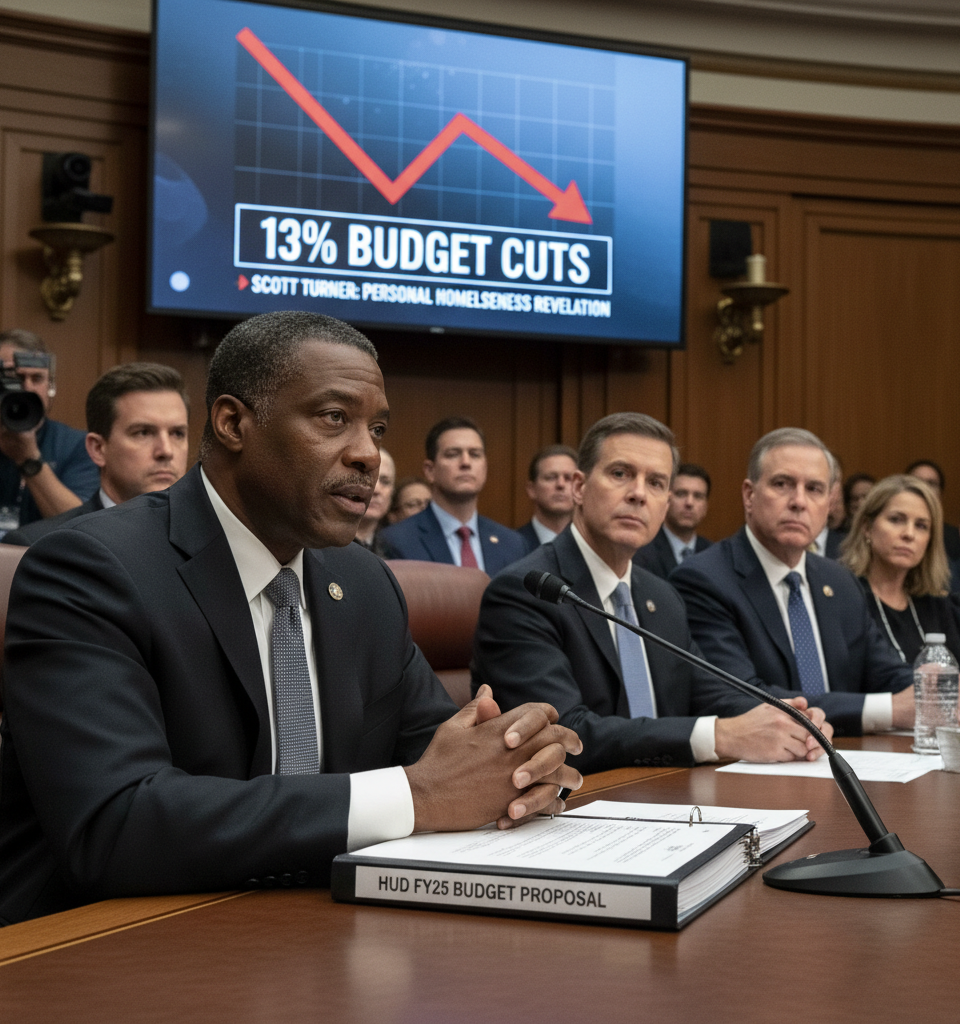
Housing and Urban Development (HUD) Secretary Scott Turner engaged in a contentious hearing on Capitol Hill this week, stoutly defending a proposed 13% reduction in the agency's budget. During a grilling session before the House Appropriations Committee, Turner underscored the necessity of these broad cuts, framing them as a critical step toward refocusing HUD's mission. The Secretary's testimony, marked by sharp exchanges with Democratic lawmakers, gained an unexpected emotional dimension when he candidly shared the personal plight of his homeless uncle, aiming to underscore his understanding of the issues even as he championed austerity measures.
This fiscal tightening comes at a time of escalating concerns over housing affordability and the persistent challenge of homelessness across the United States. Critics argue that such substantial cuts would disproportionately affect vulnerable populations, including veterans, the elderly, and low-income families, potentially exacerbating the very crises HUD is designed to mitigate. The proposed budget, part of a broader administration push for fiscal conservatism, seeks to streamline programs and reallocate resources, a strategy that has drawn intense opposition from advocacy groups and many members of Congress who view it as a dismantling of essential social safety nets.
Secretary Turner articulated that the 13% cut, estimated to be approximately $7 billion from HUD's current $53 billion budget, is not merely about cost-saving but about enhancing the efficiency and effectiveness of the agency. He stressed the importance of "right-sizing" HUD, indicating a move away from what he described as diffuse programming towards more targeted interventions. During the hearing, he stated, "I understand the human cost of homelessness, personally.
" Democrats, however, pushed back, questioning how fewer resources would lead to better outcomes for a population already facing severe hardship. Representative Alexandria Chang (D-CA) asserted, "These aren't just numbers; these are people's lives.
The proposed budget modifications could have significant ripple effects across the housing and real estate sectors. Reductions in rental assistance programs, such as Section 8 vouchers, could lead to increased housing insecurity and potential evictions for thousands of families. Furthermore, cuts to programs supporting affordable housing development might stall new constructions, further tightening already strained housing markets in major metropolitan areas. Real estate developers and community planning organizations reliant on HUD grants anticipate a challenging landscape, potentially forcing a reevaluation of project viability and timelines.
Industry experts have largely expressed skepticism regarding the efficacy of such deep cuts. Dr. Evelyn Reed, a senior fellow at the Center for Housing Policy, commented, "While efficiency is always laudable, a 13% reduction without clear, evidence-based alternatives for addressing homelessness and housing insecurity is profoundly concerning. It risks unraveling decades of progress and pushing more people into precarious living situations." Other analysts have pointed out that chronic homelessness often carries high societal costs in emergency services and healthcare, suggesting that upfront investments in stable housing are ultimately more fiscally responsible than reactive measures.
Looking ahead, the budget proposal faces a protracted and likely contentious battle in Congress. Lawmakers on both sides of the aisle are expected to scrutinize the cuts, with many Democrats promising to vigorously oppose reductions to core housing assistance programs. Public advocacy groups are mobilizing, preparing for campaigns to highlight the potential human impact of the proposed changes. The final outcome of the budget deliberations will not only shape the future of HUD but also significantly influence the landscape of housing stability and social welfare across the nation for years to come. Secretary Turner is scheduled for further hearings next month, where he is expected to provide more specific details on how the trimmed budget would be allocated.