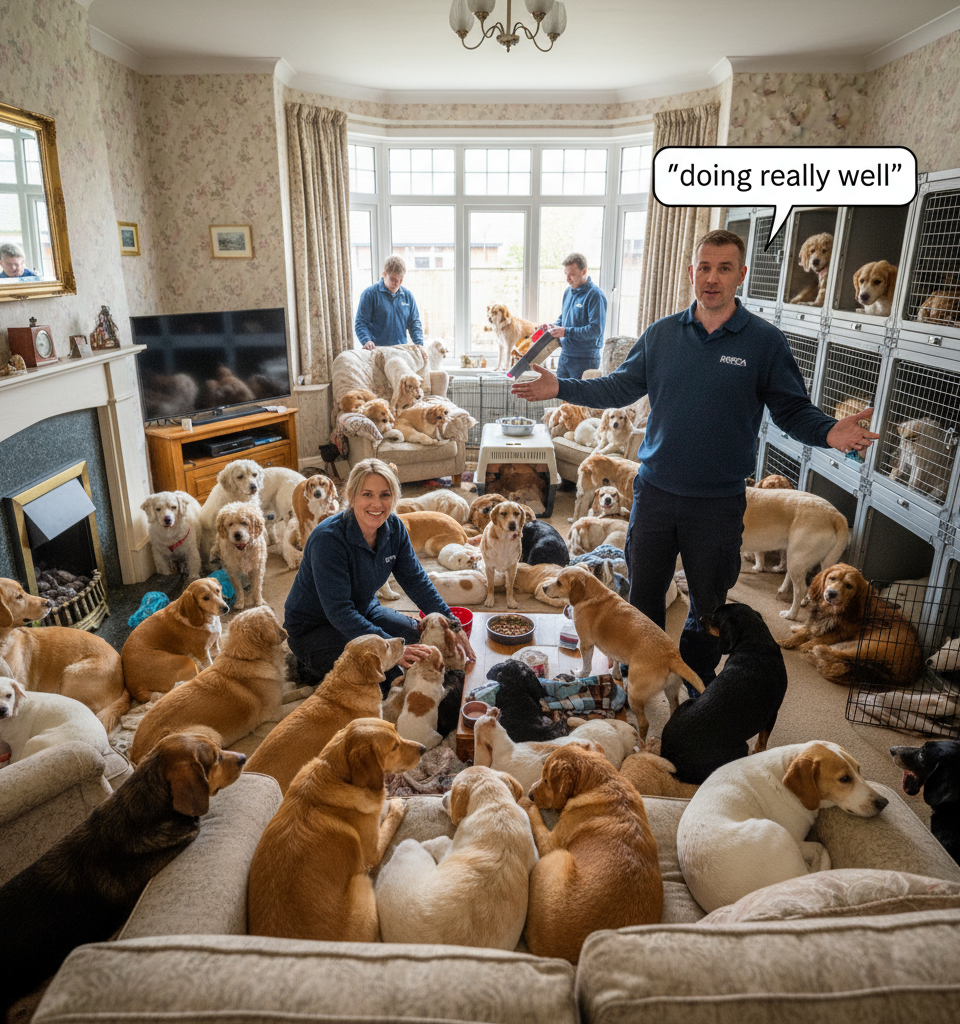
LONDON – Hundreds of dogs rescued from a single residential property earlier this year are now experiencing a remarkable recovery, the Royal Society for the Prevention of Cruelty to Animals (RSPCA) has confirmed. The animals, found during a January intervention, were reportedly in a distressing state, exhibiting conditions such as severe matting and crusted coats that necessitated immediate and comprehensive veterinary attention.
The initial discovery, made by RSPCA officers, highlighted a significant welfare challenge. The sheer volume of animals housed within a confined domestic space raised immediate concerns about sanitation, nutrition, and overall animal health. Such large-scale neglect cases often present complex logistical and ethical dilemmas for animal welfare organisations, requiring substantial resources for rescue, rehabilitation, and potential rehoming. This particular incident underscores the ongoing vigilance required to identify and address instances of animal cruelty and neglect across the United Kingdom.
Initial Condition and Intervention Details
Upon entering the property in January, RSPCA inspectors encountered a scene indicative of severe overcrowding and neglect. While the exact number of dogs has not been disclosed beyond "hundreds," the description of their living conditions painted a grim picture. Many of the dogs were found with "matted and crusted coats," a clear sign of prolonged lack of grooming and hygiene. Such conditions can lead to skin infections, discomfort, and restricted movement, significantly impacting an animal's quality of life. The RSPCA immediately initiated rescue protocols, ensuring the safe removal and preliminary assessment of each animal. This complex operation would have involved multiple teams, veterinary professionals, and transportation logistics to safeguard the welfare of the rescued dogs.
The immediate priority following rescue was the provision of urgent veterinary care. The described matting and crusting suggest a range of potential health issues, from parasitic infestations to severe skin conditions. Rehabilitation efforts would have included extensive grooming, medical treatment for any underlying health complaints, and a carefully managed diet to restore the animals' strength. The RSPCA's commitment to reporting the dogs as "doing really well" indicates that these intensive care efforts have yielded positive results, moving the animals from crisis to recovery.
Broader Implications for Animal Welfare
This case, while distressing, sheds light on the often-hidden issue of domestic animal hoarding and neglect. Such incidents typically stem from a complex interplay of factors, including mental health issues in owners, financial difficulties, or a lack of understanding regarding appropriate animal care standards. For the RSPCA and similar organisations, each large-scale rescue prompts a review of protocols and resource allocation. The successful rehabilitation of these hundreds of dogs will undoubtedly serve as a testament to the dedication of the charity's staff and volunteers.
The ongoing welfare of such a large group of animals also presents significant long-term challenges, particularly concerning rehoming. While the immediate health crisis has been addressed, finding suitable, loving homes for hundreds of dogs requires substantial public engagement and support. The RSPCA’s ability to achieve positive outcomes in such high-profile cases often relies heavily on public donations and volunteer efforts, highlighting the critical role of community support in animal welfare.
The Path Ahead for the Rescued Animals
Looking ahead, the focus for the RSPCA will shift towards the continued rehabilitation and, eventually, the rehoming of these dogs. This process is typically methodical, involving behavioural assessments, socialisation, and health checks to ensure each animal is ready for a new life. The positive update on their current condition suggests that many of these dogs are now on a clear path towards adoption. The RSPCA will likely issue further appeals for potential adopters or foster carers as the animals become ready for placement.
This incident serves as a powerful reminder of the responsibilities associated with pet ownership and the vital work performed by organisations like the RSPCA. The commitment to rescuing and rehabilitating such a large number of animals, transforming their initial dire circumstances into a story of recovery, underscores the profound impact of dedicated animal welfare efforts. The journey from rescue to a new, healthy life for these hundreds of dogs represents a significant achievement for all involved.