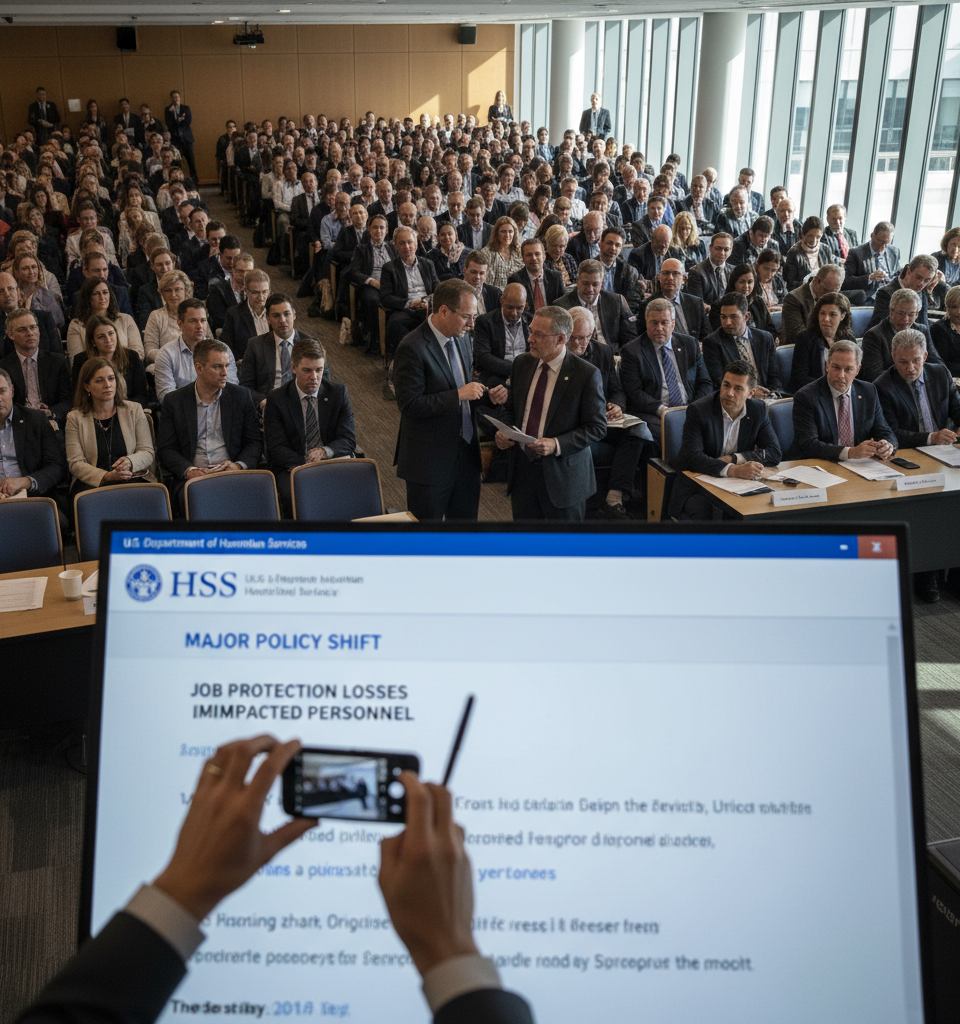
An internal email circulated recently among staff indicates that hundreds of employees within a key U.S. health department are set to lose critical job protections, sparking concerns over workforce stability and potential political influence over civil service. The communication outlines a significant shift in employment policy, anticipating that a substantial portion of the department's personnel, particularly those in policy-making or confidential roles, will transition to 'at-will' employment status, removing safeguards against arbitrary dismissal.
Context and Background
This impending change arrives amidst a broader national debate concerning the scope and independence of the federal civil service. Such moves to reclassify roles often stem from presidential administrations seeking greater executive control over government agencies, arguing for increased accountability and efficiency in implementing policy directives. Historically, job protections for federal employees were established to prevent politicization of the bureaucracy and ensure continuity of government functions regardless of changes in political leadership. The current development is reminiscent of past efforts to streamline or redefine federal employment, which have often met with resistance from unions and civil liberties advocates.
Key Details and Impact
The internal email, details of which surfaced this week, does not specify the exact department but indicates that the reclassification impacts roles deemed 'policy-determining' or 'confidential.' While the precise number of affected employees is still being finalized, initial estimates suggest hundreds of positions will be reclassified. This reclassification means employees could be dismissed without cause, a stark contrast to the standard federal employment protections that typically require a demonstrated reason for termination and often involve an appeals process. Critics argue that such changes could lead to a 'brain drain' of experienced professionals and make these crucial health agencies more susceptible to political pressures rather than evidence-based decision-making.
Industry and Market Implications
Beyond the immediate impact on federal employees, this policy shift could have broader implications for the public health sector. A less stable workforce within a health department could hinder long-term planning, research initiatives, and responsiveness to national health crises. In a landscape increasingly reliant on expert-driven public health programs, instability at the governmental level could ripple through state and local health initiatives, potentially affecting everything from disease surveillance to vaccination campaigns. The perceived politicization of expert roles might also deter top talent from entering federal service, ultimately diminishing the nation’s capacity to address complex health challenges.
Expert Perspective
Public administration experts and labor law specialists are closely watching these developments. Dr. Eleanor Vance, a professor of public policy at a prominent East Coast university, commented, "When you erode civil service protections, you risk compromising the institutional knowledge and independence that are vital for effective governance. Career civil servants provide continuity and expertise, especially in non-partisan areas like public health. Stripping these protections can foster an environment of fear and limit the ability of professionals to offer frank, evidence-based advice without fear of reprisal." She added that such moves could be challenged legally by employee unions, citing potential violations of established labor practices and statutory protections.
What's Next
The immediate next steps involve formalizing the reclassification process and notifying affected employees. It is anticipated that employee unions will likely mount legal challenges, potentially leading to protracted litigation. Furthermore, these changes are expected to draw scrutiny from congressional oversight committees, particularly those concerned with government efficiency and workforce management. The long-term implications could include a significant reshaping of the federal workforce model, impacting recruitment, retention, and the overall operational integrity of critical government agencies for years to come. The coming months will likely see intense debate and legal maneuvering as these policy changes unfold and their full impact becomes clearer.