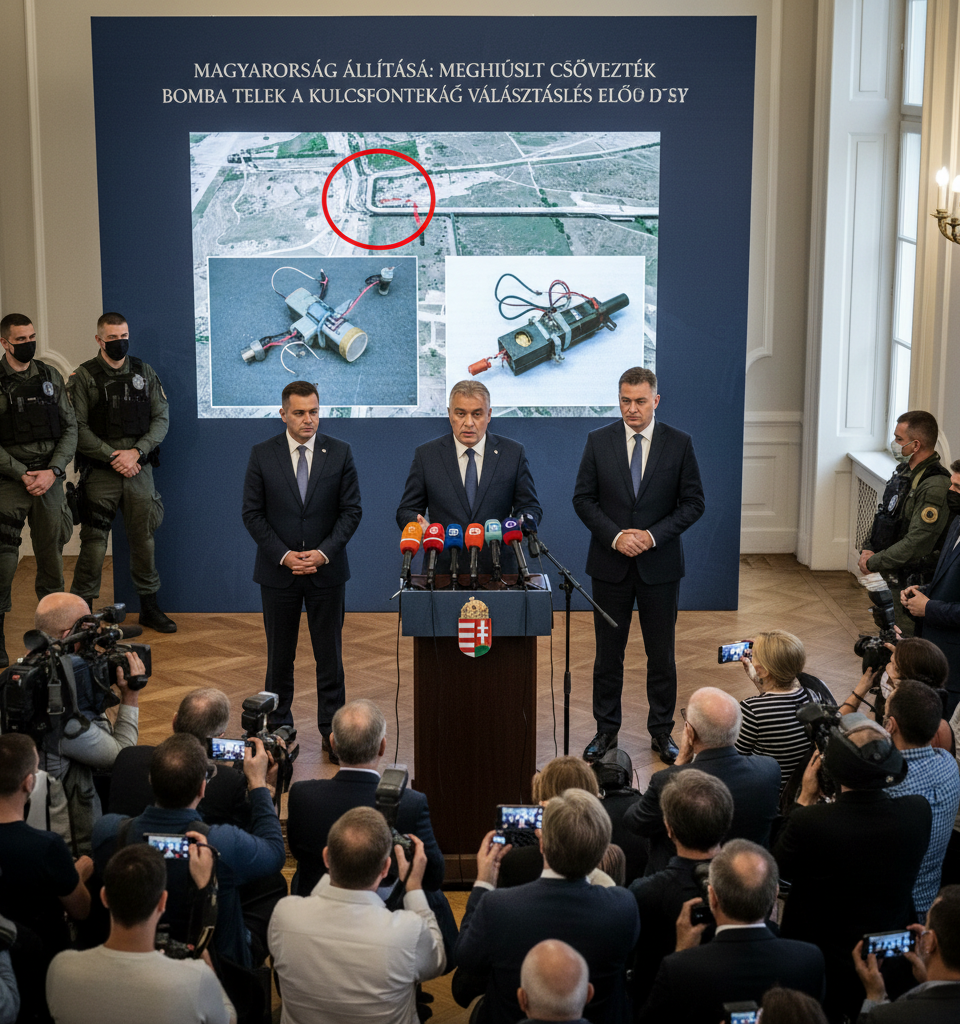
Budapest, Hungary – In a dramatic escalation of political tensions, Hungarian officials announced today they have foiled a plot to bomb a major gas pipeline just one week before the nation heads to the polls for a critical general election. The revelation, made by senior government figures, has immediately sparked accusations of foreign interference and domestic sabotage, casting a long shadow over the upcoming electoral process and raising serious questions about national security and energy infrastructure vulnerability.
The timing of this alleged plot is particularly sensitive, coming directly after government warnings of potential 'staged operations' designed to influence voters and destabilized the political landscape. Hungary, a key transit route for Russian gas to several European nations, has a long history of geopolitical maneuvering, and its upcoming election is seen as a bellwether for democratic stability in Central Europe. The incident evokes echoes of historical events where infrastructure attacks were used to create instability, underlining the gravity of the current situation.
While precise details surrounding the alleged plot remain scarce, government sources indicated that intelligence services had been tracking a group suspected of planning the attack for several weeks. No arrests have been publicly announced, nor have details regarding the alleged perpetrators' affiliations or motives been fully disclosed. However, unnamed sources within the interior ministry alluded to potential 'external actors' attempting to sow discord. The targeted pipeline is a critical artery, responsible for transporting an estimated 12 billion cubic meters of natural gas annually to Hungary and neighboring countries, underpinning regional energy supply.
The broader industry and market implications of such an attack, had it succeeded, would have been catastrophic. A disruption to this scale could have caused natural gas prices in the region to surge by an estimated 15-20% in the short term, leading to widespread energy shortages and economic instability. European energy security, already precariously balanced following recent geopolitical events, would have faced another severe blow. Energy companies, both state-owned and private, are now likely re-evaluating their security protocols for critical infrastructure across the continent.
Energy security analysts are weighing in, with many expressing concern over the heightened risk environment. Dr. Attila Kovacs, a geopolitical expert at the Budapest Institute for Strategic Studies, commented, "This alleged plot, regardless of its ultimate perpetrators, highlights the extreme vulnerability of energy infrastructure to both state-sponsored and non-state actors. It underscores the strategic importance of Hungary in European energy architecture and the potential for external forces to exploit internal political divisions." Other experts suggest that the incident could be used by incumbent parties to rally support or, conversely, by opposition forces to criticize the government's security apparatus.
Looking ahead, the immediate focus will be on the ongoing investigation and the integrity of the upcoming election. Security around critical infrastructure, particularly energy pipelines, is expected to be significantly tightened across Hungary and potentially other vulnerable European nations. International partners will be closely monitoring the situation, and NATO allies may offer assistance in intelligence gathering and security reinforcement. The incident is also likely to generate fierce debate on foreign influence in domestic politics, with both the government and opposition vowing to protect national sovereignty.
The allegations have already intensified the heated political rhetoric in Hungary. The ruling party has seized upon the news as evidence of threats against national stability, while opposition parties are demanding full transparency and an independent inquiry into the claims. The true extent of the plot and the identities of those behind it will be crucial in determining the long-term political fallout and its impact on Hungary’s energy policy for years to come. With the election just days away, the public awaits further clarification from authorities, hoping for stability amidst growing uncertainty.
Ultimately, this incident serves as a stark reminder of the multifaceted challenges facing European nations: safeguarding critical infrastructure, maintaining democratic integrity, and navigating complex geopolitical landscapes. The coming weeks will reveal much about Hungary's resilience and the true nature of the threats it faces.