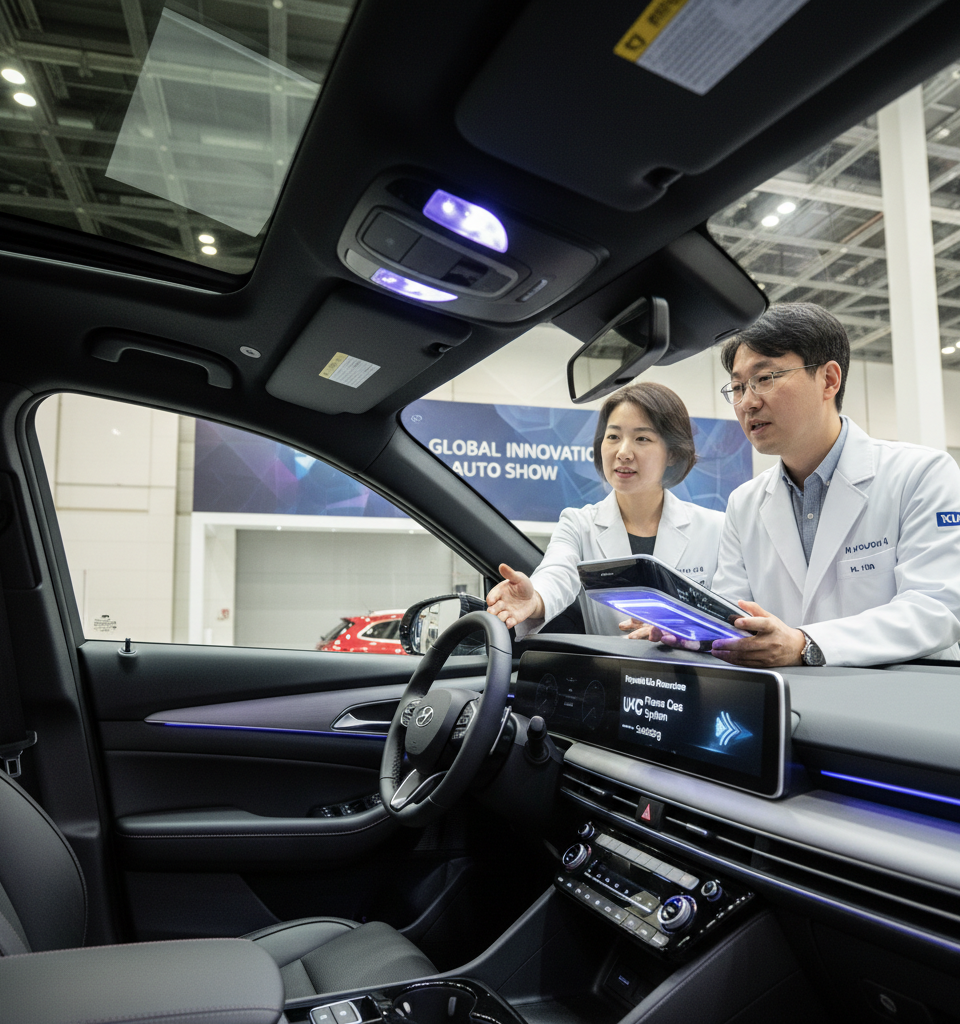
Hyundai and Kia have officially unveiled an advanced in-vehicle sanitization system, branded Plasma Care UVC, which leverages far-ultraviolet (far-UV) light to neutralize bacteria and viruses within a car's interior. This development is significant as it addresses a long-standing challenge in automotive hygiene: providing effective sterilization without posing a risk to occupants. The automakers assert that Plasma Care UVC is the inaugural system of its kind engineered for integration into production vehicles, allowing for continuous disinfection during journeys.
The introduction of an in-car sanitization system arrives at a time when public consciousness around health and hygiene remains elevated. While various after-market solutions for vehicle disinfection exist, the integration of a factory-installed system represents a notable shift towards proactive health features in automotive design. Traditional ultraviolet (UV) sterilization methods, particularly those utilizing UV-C light, are generally considered unsafe for direct human exposure due to potential skin and eye damage. This new system, however, aims to overcome such limitations by employing a specific wavelength of UV light.
According to Hyundai and Kia, the key differentiator of Plasma Care UVC lies in its use of far-ultraviolet light. Unlike traditional UV-C, which can be harmful, far-UV light operates within a narrower spectrum that is reportedly safe for human exposure while still effectively eradicating microorganisms. This technological breakthrough is crucial, enabling the system to operate continuously, meaning passengers and drivers can remain in the vehicle while the sanitization process is active. The companies did not disclose specific details regarding the exact wavelength or the regulatory approvals obtained for human safety, but emphasized its design for passenger presence.
The broader automotive industry has been exploring various health and wellness features in recent years, spurred partly by global health concerns. From advanced air filtration systems (like HEPA filters) to antimicrobial interior surfaces, manufacturers are increasingly incorporating technologies aimed at improving cabin air quality and overall hygiene. Plasma Care UVC positions Hyundai and Kia at the forefront of this trend, offering a potentially revolutionary solution that could reshape consumer expectations for vehicle interiors. Its successful implementation could set a new benchmark for in-car health technologies, prompting competitors to accelerate their own research and development in this area.
While specific analyses from independent industry experts were not cited in the initial announcement, the implications of such a system are considerable. The ability to disinfect a vehicle's interior in real-time, especially in shared mobility contexts (ride-hailing, car-sharing, public transit vehicles), could offer a significant public health advantage. Analysts are likely to scrutinize the system’s effectiveness, safety certifications, and eventual cost to consumers. The potential for reducing the transmission of airborne pathogens within confined spaces, such as car cabins, could be a powerful selling point.
Looking ahead, the successful deployment of Plasma Care UVC could pave the way for its integration across Hyundai and Kia's diverse vehicle lineups. Furthermore, it might inspire further innovations in automotive health technology, including more advanced sensor systems for detecting pathogens or allergens, and personalized disinfection zones within vehicles. The move signals a strategic emphasis by both automakers on leveraging cutting-edge technology not just for performance and connectivity, but also for occupant well-being and safety. Future announcements are expected to detail rollout plans, specific vehicle models slated for integration, and more in-depth technical specifications, including the science behind the system's human-safe operation.