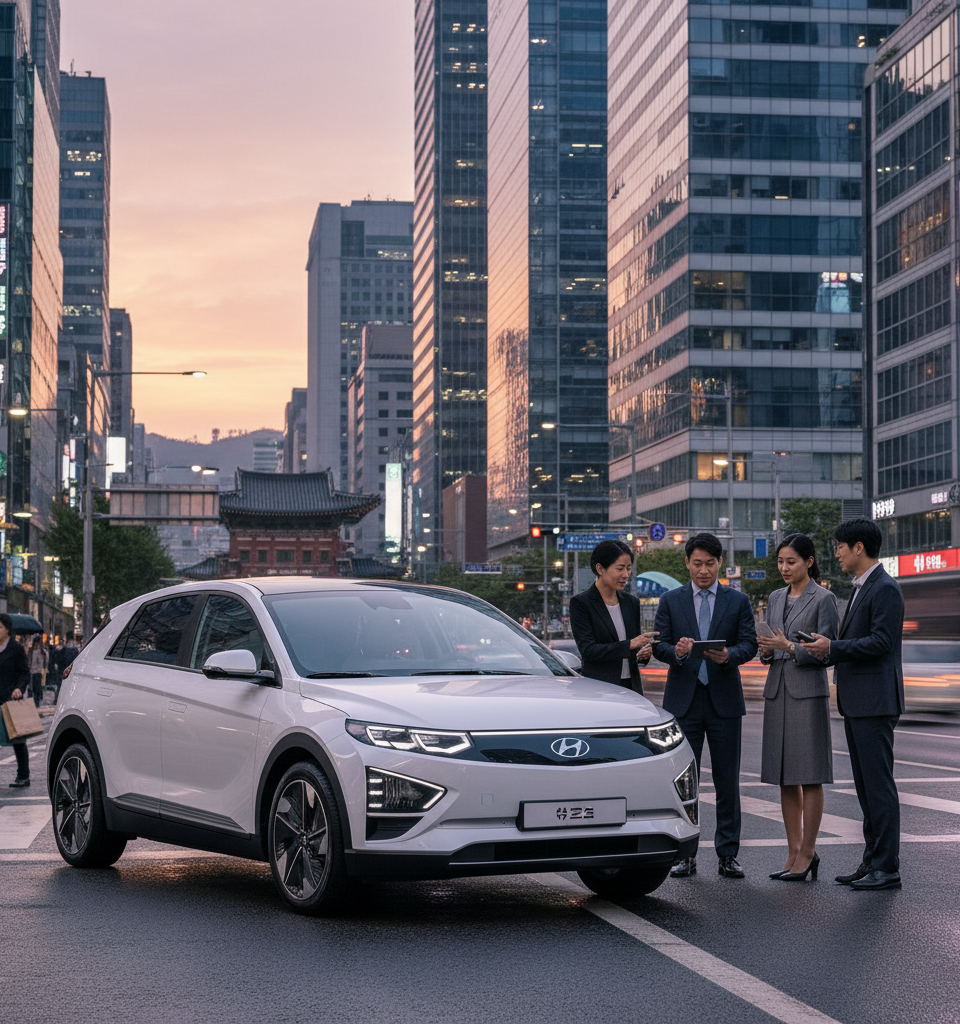
Contextualizing Hyundai's EV Offensive The Ioniq 3 doesn't emerge in a vacuum.
Hyundai has aggressively pursued electrification, with its Ioniq brand already boasting critical successes like the Ioniq 5 and Ioniq 6. This new entrant signals a distinct focus on the B-segment or compact SUV class, a market segment ripe for disruption as urban populations increasingly seek sustainable and economical mobility solutions. The global compact EV market is projected to grow at a compound annual growth rate (CAGR) exceeding 20% through the next decade, driven by stricter emissions regulations and evolving consumer preferences for smaller, more efficient vehicles. The Ioniq 3, with its projected range, enters a segment where range anxiety remains a significant barrier for mainstream adoption, positioning it as a potential frontrunner.
Specs, Features, and Market Positioning
While official specifications remain under wraps, industry insiders suggest the Ioniq 3 will leverage Hyundai's Electric Global Modular Platform (E-GMP), albeit in a probably more compact and cost-optimized variant. The promised 300-mile range underscores Hyundai's commitment to competitive performance, likely achieved through advancements in battery cell technology and aerodynamic efficiency. Early reports also highlight an emphasis on interior design, maximizing cabin space within a compact footprint—a critical factor for urban consumers who prioritize practicality and comfort. Its smart driving features, expected to include advanced driver-assistance systems (ADAS) and intuitive infotainment, will be standard in Hyundai's push to differentiate itself from a burgeoning field of rivals.
Navigating a Fiercely Competitive Landscape
The compact urban EV segment is rapidly becoming one of the most contested battlegrounds in the automotive industry. The Ioniq 3 will face formidable competition from established players such as Tesla's rumored smaller offering, Volkswagen's ID.2all-inspired production model, and a wave of new entrants from Chinese manufacturers like BYD and Nio, which are aggressively expanding into European and other global markets. Pricing will be paramount; analysts anticipate a starting price point for the Ioniq 3 in the range of €30,000-€35,000 (approximately $32,000-$37,000), positioning it squarely against these rivals. Its success will hinge not just on its technical merits but also on its ability to offer superior value and compelling design.
Expert Perspectives on Hyundai's Strategy
Automotive industry analysts view the Ioniq 3 as a crucial piece in Hyundai's long-term electrification puzzle. "Hyundai's existing Ioniq lineup has successfully established a premium perception," notes Sarah Jenkins, Senior Analyst at AutoFuture Insights. "The challenge for the Ioniq 3 will be to democratize that appeal without compromising on the brand's reputation for innovative technology and quality. A 300-mile range in a compact urban EV would be a significant differentiator, especially if they can hit an aggressive price point." Other experts believe that Hyundai's ability to vertically integrate battery production and supply chain management could give it a cost advantage over competitors heavily reliant on external suppliers, enhancing its pricing flexibility.
Implications for the Broader EV Transition
The introduction of the Ioniq 3 further signifies the accelerating shift towards electric vehicles globally. As more manufacturers introduce well-rounded, long-range, and affordable EVs, the market will likely reach a crucial inflection point, driving broader consumer adoption beyond early adopters. The potential for the Ioniq 3 to reach the U.S. market would also be a significant development, expanding choice in a segment currently dominated by fewer options. This increased competition is expected to drive down prices, improve charging infrastructure, and ultimately accelerate the global transition away from internal combustion engines.
What Lies Ahead for the Ioniq 3 Over the next 18-24 months, more concrete details regarding the Ioniq 3's design, final specifications, and production timelines are expected to emerge.
Hyundai's ability to scale manufacturing efficiently and effectively manage global supply chain challenges will be critical to its on-time delivery and competitive positioning. The brand's marketing strategy, particularly how it differentiates the Ioniq 3 in a crowded market, will also be closely watched. Ultimately, the Ioniq 3 represents Hyundai's unambiguous commitment to urban electrification, vying for a significant share of the future mobility landscape.