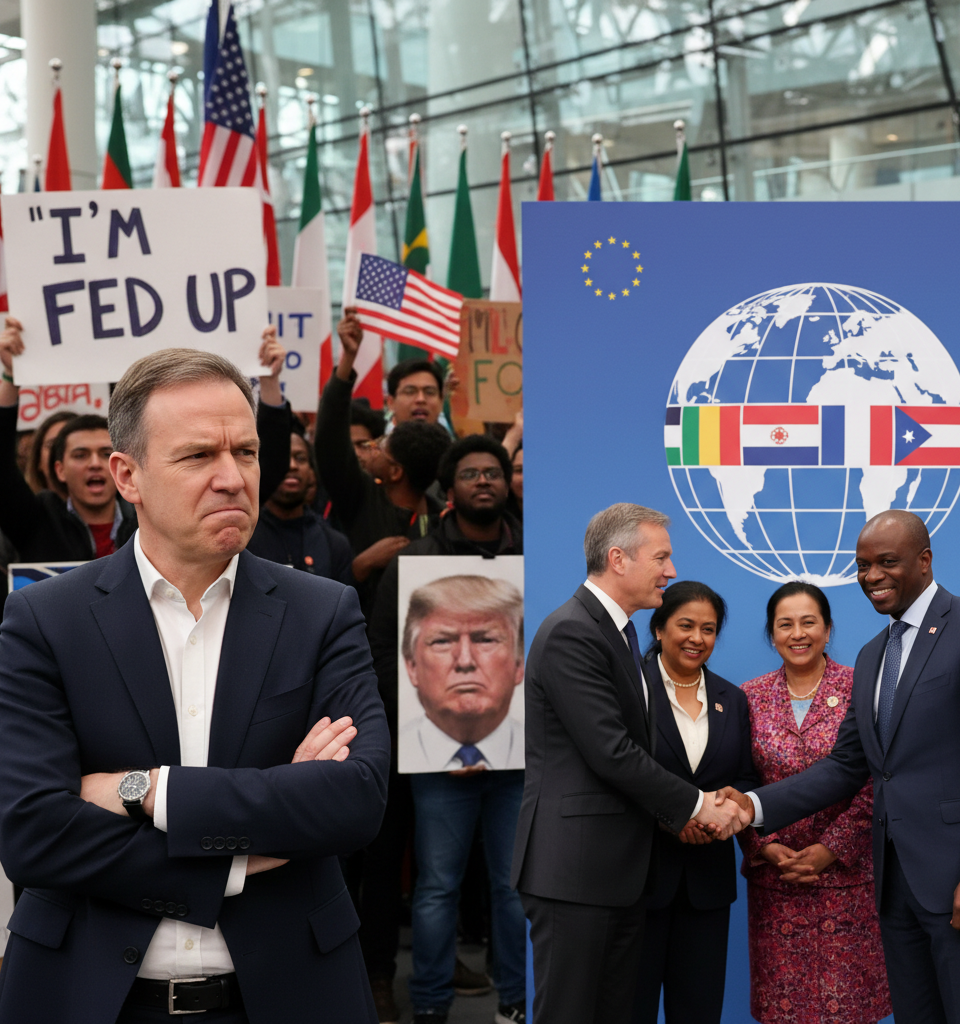
London is witnessing a notable shift in its geopolitical alignment as Prime Minister Keir Starmer's government actively cultivates closer diplomatic and economic ties with European nations and countries in the Middle East. This strategic pivot is understood to be a direct response to growing frustration within Westminster regarding the state of the Anglo-American 'special relationship,' particularly under the perceived influence of former President Donald Trump, whose potential return to office looms large. The move signals a broader re-evaluation of Britain’s international standing and its pursuit of robust partnerships beyond its traditional transatlantic ally.
The context for this reorientation is multifaceted. For decades, the 'special relationship' has been a cornerstone of British foreign policy, providing a framework for cooperation on intelligence, defense, and economic matters. However, recent years have seen growing divergences in strategic outlook and, crucially, a perceived lack of reciprocal commitment from Washington, especially during the previous Trump administration. Source within Whitehall, speaking anonymously due to the sensitivity of the diplomatic situation, suggest a sentiment of being 'fed up' with the perceived transactional nature of the US alliance, prompting a proactive search for more reliable and aligned partners elsewhere. This comes at a time when global power dynamics are shifting, requiring Britain to be agile and diversify its international engagements to safeguard its interests.
Deepening European Integration and Middle Eastern Outreach
The specifics of Starmer's diplomatic initiatives reportedly involve intensified bilateral meetings with key European leaders and a renewed focus on multilateral cooperation within the European political architecture, despite the UK's departure from the European Union. While details remain under wraps, observers point to increased diplomatic activity with Germany and France, alongside efforts to bolster collaboration on defense and security issues that transcend traditional alliances. Concurrently, the outreach to the Middle East is understood to be driven by a combination of economic opportunities, energy security considerations, and a shared interest in regional stability. This encompasses strengthened ties with Gulf states and a renewed dialogue on pressing geopolitical challenges in the Levant and North Africa. The aim is to create a more diversified portfolio of alliances that can withstand potential fluctuations in US foreign policy.
The implications of this strategic shift could be profound for global diplomacy. By reducing its perceived reliance on the United States, Britain might gain greater autonomy in its foreign policy decisions, potentially leading to more independent stances on international issues. For Europe, a more engaged and cooperative UK, even post-Brexit, could strengthen the continent’s collective voice on global stages. In the Middle East, enhanced British engagement could introduce a new dynamic, potentially influencing regional security architectures and economic development. This recalibration is not without its challenges, however, as forging deep, trust-based relationships takes time and sustained effort, especially in regions with complex political landscapes.
Economic and Security Repercussions
Economically, the pivot could lead to new trade agreements and investment opportunities in Europe and the Middle East, potentially offsetting any perceived disadvantages from a weakening US bond. British businesses, particularly those in defense, technology, and finance, could find new markets and partnerships. From a security standpoint, closer collaboration with European partners could enhance intelligence sharing and joint military exercises, strengthening regional defense capabilities. Similarly, deeper engagement with Middle Eastern nations could contribute to counter-terrorism efforts and promote stability in a volatile region. Analysts suggest that this diversified approach is a pragmatic response to an evolving world order where traditional alliances can no longer be taken for granted.
Looking ahead, the effectiveness of Starmer's strategy will hinge on several factors, including the sustained commitment of both the UK and its new partners, and the ability to navigate potential counter-pressures from Washington. Should former President Trump indeed return to the White House, the perceived need for this diversification would only intensify, making these nascent alliances all the more critical. The coming months are expected to see a continuation of high-level diplomatic engagements and the gradual unveiling of more concrete initiatives as Britain seeks to forge a new path in its international relations, demonstrating a clear intent to move beyond the shadow of a potentially unreliable historic ally and embrace a more multipolar world. The UK’s global influence will increasingly be defined by the strength and breadth of these new partnerships.