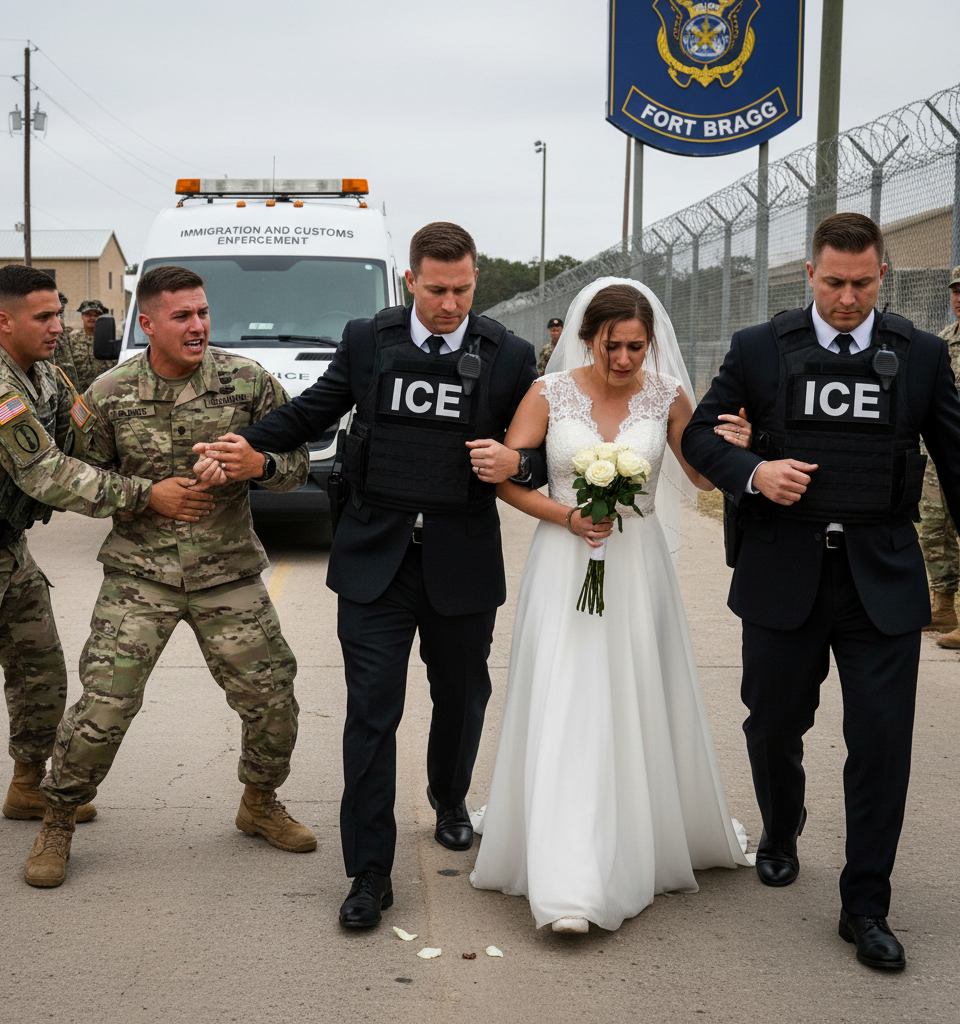
FORT BRAGG, N.C. – In a move that has drawn widespread condemnation and raised significant questions regarding federal agency jurisdiction on military installations, Immigration and Customs Enforcement (ICE) agents detained the 22-year-old wife of an active-duty Army staff sergeant last Wednesday. The new bride, who arrived in the U.S. as a toddler and had been residing with her husband at Fort Bragg, was taken into custody just as the couple was preparing for his imminent overseas deployment. This incident underscores the increasing tension between immigration enforcement directives and the unique circumstances of military families, particularly those with members who have long-standing ties to the U.S. but lack formal citizenship.
This high-profile detention is not an isolated event but rather indicative of a broader trend where immigration enforcement has increasingly intersected with the lives of military families. While exact figures are difficult to ascertain due to privacy concerns, advocacy groups report a growing number of undocumented spouses and family members of U.S. service members facing deportation proceedings. The unwritten historical convention often afforded a degree of deference to military families, particularly in cases where a service member is preparing for deployment. However, the current political climate and more aggressive enforcement policies appear to be eroding these informal protections, leading to heightened anxiety and disruption within military communities.
The detained spouse, whose identity has been withheld for privacy reasons, reportedly held DACA (Deferred Action for Childhood Arrivals) status, though its validity at the time of detention is under review. According to her legal representation, she had lived in the U.S. for approximately two decades, having been brought to the country by her parents at a very young age. Her husband, an Army staff sergeant with an unblemished record and multiple combat deployments, reportedly expressed profound distress and bewilderment over his wife's apprehension, emphasizing the critical timing given his impending departure for an active combat zone. The couple had just completed processing for on-base housing, signaling their intent to establish a stable home environment before his deployment.
The detention has sent ripples through the defense community and beyond, raising concerns about military readiness and morale. Organizations like the American Civil Liberties Union (ACLU) and various veterans' advocacy groups have swiftly condemned the action, arguing that such enforcement measures undermine the stability and peace of mind crucial for service members. "When a soldier is deployed, their primary focus must be their mission, not the fear that their family's lives are being upended by their own government," stated a spokesperson for Military Families United. The financial and emotional toll on military families dealing with immigration issues can be substantial, often involving thousands of dollars in legal fees and months, if not years, of uncertainty.
Immigration law experts highlight the complex interplay of federal jurisdiction. While military bases generally operate under federal authority, the presence of ICE agents conducting civil immigration enforcement on a defense installation without explicit prior coordination or under specific exigent circumstances raises questions about inter-agency protocols and established norms. "There's a long-standing understanding that military installations aren't typically scenes for routine civil arrests, especially involving the dependents of service members," commented Dr. Eleanor Vance, a professor of constitutional law at Georgetown University. "This incident suggests a possible deviation from those informal, but crucial, agreements."
Looking ahead, the case is expected to proceed in immigration court, where the spouse's legal team will likely argue for her release and challenge the merits of her detention and potential deportation. Pressure is mounting on lawmakers to address the vulnerabilities of military families facing immigration challenges, with some suggesting legislative solutions such as expanded parole-in-place programs or a clearer pathway to citizenship for spouses of service members. The Pentagon has yet to issue a comprehensive statement, but sources indicate internal discussions are underway regarding clearer guidelines for ICE operations on military installations to prevent similar future incidents from impacting military readiness and family welfare. The outcome of this specific case could set a significant precedent for how immigration enforcement agencies interact with military communities nationwide.
The broader impact could extend to recruitment and retention efforts within the armed forces. As the military strives to attract and retain talent in an increasingly challenging landscape, policies that destabilize the families of service members may prove counterproductive. The detention of a soldier's spouse on a military base sends a chilling message to potential recruits and their families who might have undocumented ties, forcing them to weigh patriotic service against family separation risks. This incident demands a national conversation to balance national security interests, immigration enforcement, and the unwavering support owed to those who serve.
Ultimately, this case serves as a stark reminder of the human cost at the intersection of immigration policy and military service. The emotional distress and disruption caused to the soldier and his family could have tangible effects on his ability to perform his duties effectively during deployment, underscoring the critical need for a compassionate and pragmatic approach to such complex situations. The incident highlights the urgent need for a review of policies that protect the unique circumstances of military families while upholding the integrity of the nation's immigration laws.