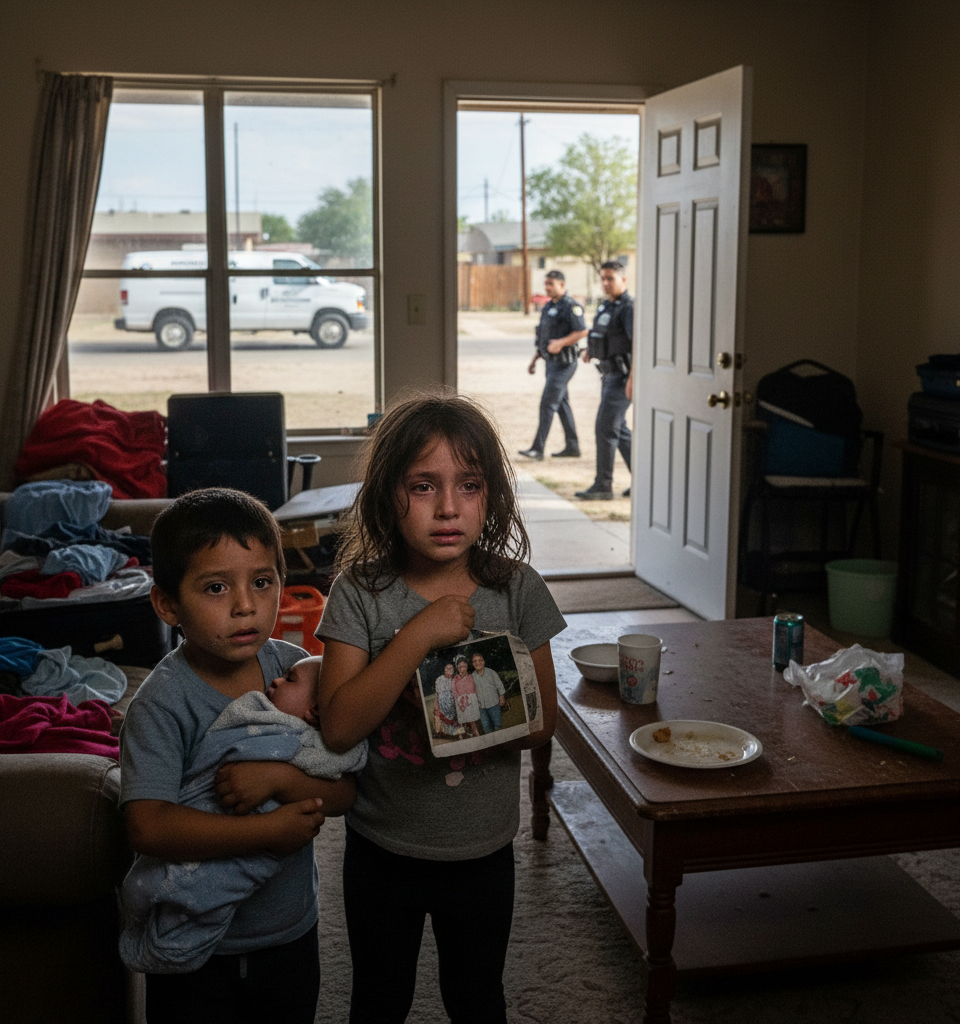
HOUSTON, TX – Across Texas, the ripple effects of escalated U.S. Immigration and Customs Enforcement (ICE) operations are profoundly reshaping the lives of countless families, leaving behind a stark landscape of emotional and financial turmoil. In a particularly poignant illustration, young Andrea García and her siblings have been forced to assume unprecedented responsibilities, effectively becoming de facto guardians for one another after their parents were apprehended by ICE agents in recent weeks. These detentions, part of a broader federal push, have left a void in hundreds of households, compelling minors to navigate the harsh realities of independent living, often with limited resources and profound emotional distress.
This escalating scenario is not new but has seen increased intensity under various administrations, highlighting the persistent tension between immigration enforcement and humanitarian concerns. Historically, critics argue that such enforcement tactics, particularly those targeting undocumented parents, carry significant collateral damage, destabilizing communities and placing undue burdens on American-born children. Data from the Migration Policy Institute indicates that as of 2022, approximately 4.1 million U.S.-citizen children live with at least one undocumented parent, making them acutely vulnerable to the consequences of deportation or detention. The current operations in Texas appear to be part of a strategic effort by federal agencies to enforce existing immigration laws, often emphasizing public safety and border security mandates.
Key details emerging from affected communities underscore a pattern of sudden and often disruptive apprehensions. In many cases, parents are detained during routine traffic stops or home visits, leaving children to witness the events. Community outreach organizations, such as Fiel Houston, report a significant uptick in requests for assistance from families experiencing such separations since early Q3 2023. These requests range from legal aid for detained parents to emergency childcare and financial support for left-behind children. The average cost for legal representation in immigration court can range from $5,000 to $15,000, a prohibitive sum for most affected families, further exacerbating their predicament.
The broader societal impact of these detentions is multifaceted. Beyond the immediate familial distress, there are significant implications for local economies and social services. Businesses reliant on immigrant labor, particularly in sectors like agriculture, construction, and hospitality, face potential labor shortages. Concurrently, social services, including schools and child protective agencies, are grappling with an increased demand for support and intervention. School districts have reported a rise in student absenteeism and mental health crises among children whose parents have been detained, posing new challenges for already stretched resources. The potential for a generation of children to grow up without parental guidance due to these detentions represents a long-term societal cost that is difficult to quantify.
Immigration law experts and child welfare advocates have voiced strong criticisms regarding the human cost of these operations. Dr. Elena Ramirez, a professor of sociology at the University of Houston, notes, "While the government has a mandate to enforce laws, the methods employed often overlook the profound psychological and economic damage inflicted upon U.S.-citizen children. We are effectively creating a cohort of children who are prematurely aged by responsibility and trauma." These experts advocate for more humane enforcement policies that prioritize family unity, such as alternative-to-detention programs for parents of U.S.-citizen children and more robust support systems for affected families post-detention.
Looking ahead, the future remains uncertain for many of these families. Advocacy groups are pushing for legislative changes that would offer more protections for parents of U.S.-citizen children, potentially including pathways to legal residency or a halt to detentions and deportations for parents with no serious criminal record. Community efforts are also intensifying, with grassroots organizations stepping up to provide legal, financial, and emotional support. The ongoing legal battles for detained parents can span months or even years, leaving children in a prolonged state of limbo. The outcome of these cases will not only determine the fate of individual families but also shape the national discourse on immigration enforcement and its human consequences.
The human stories behind these statistics serve as a powerful reminder of the intricate and often painful intersection of immigration policy and everyday life. The resilience shown by children like Andrea García is inspiring, yet it underscores a profound systemic failing that places unimaginable burdens on the youngest and most vulnerable members of society.
Economic Strain and Community Response
The economic ramifications extend beyond individual families. A recent study by the Center for American Progress estimated that deporting all undocumented workers could reduce U.S. GDP by $4.7 trillion over a decade. While ICE operations are targeted, the fear they instill leads to decreased economic activity within immigrant communities, impacting both undocumented and legal residents. Local businesses report reduced consumer spending, and many informal economy workers are increasingly hesitant to seek employment or engage in public life due to fear of apprehension.
Future Policy Debates
The ongoing debate surrounding immigration policy is expected to intensify, particularly as the 2024 election cycle approaches. Advocacy groups are actively lobbying lawmakers for comprehensive immigration reform that would address the plight of mixed-status families. Proposals include providing legal avenues for undocumented parents of U.S. citizens to adjust their status and the expansion of programs like family case management as an alternative to detention. Without significant policy changes, the profound and enduring effects on children like the Garcías are set to continue.