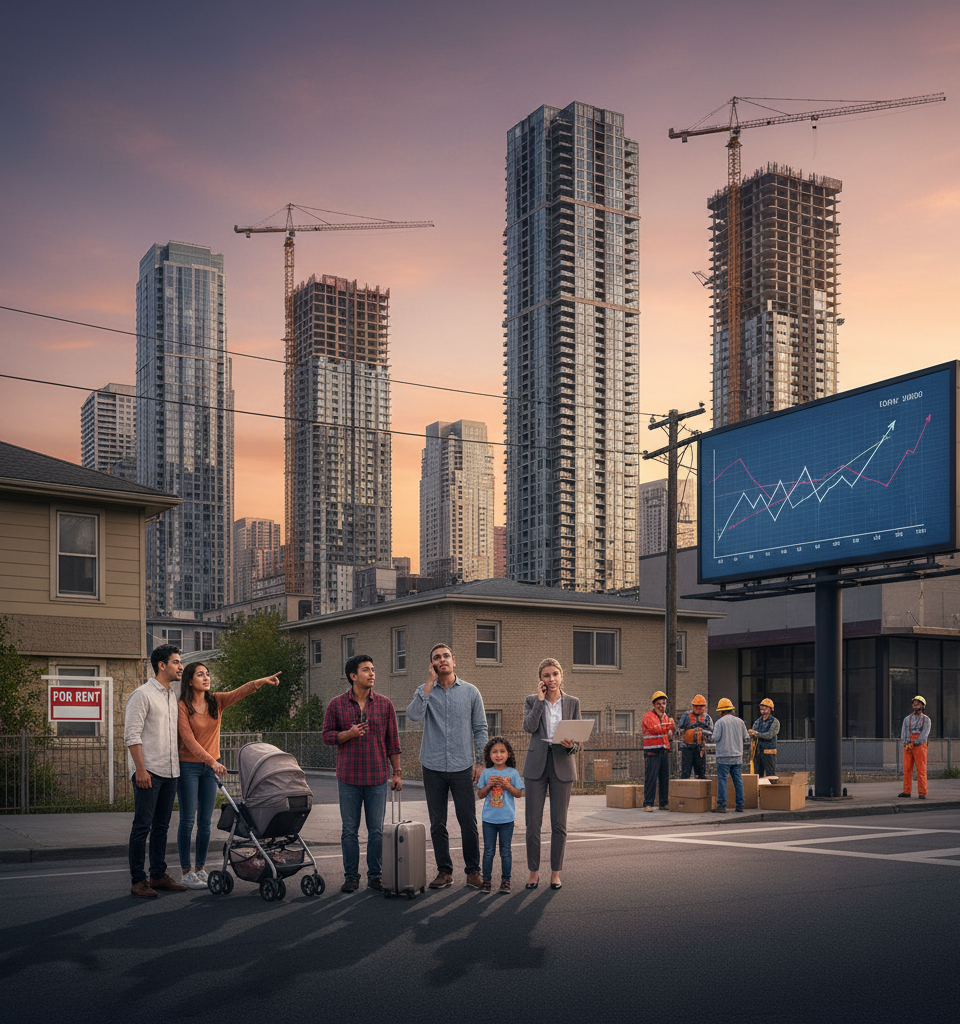
The housing market is currently navigating a period of profound transformation, driven by the dual forces of evolving immigration policies and persistent economic uncertainty. Builders across various regions are observing a tangible impact on sales figures, directly attributable to recent policy shifts. Concurrently, a growing skepticism among consumers regarding conventional 'dream home' marketing is reshaping demand, prompting a reevaluation of established industry approaches.
This confluence of factors suggests a challenging landscape for both developers and potential homeowners. The traditional pillars supporting housing demand and sales strategies are facing critical scrutiny, pushing the industry towards an adaptive stance in an increasingly unpredictable environment. The long-term implications for housing affordability, inventory levels, and construction strategies remain a key area of focus for market observers.
Policy Shifts and Market Repercussions
Recent modifications to immigration policies are emerging as a significant determinant in housing market activity. While specific policy details and their exact implementation mechanisms are still being fully understood, builders have begun to consistently report a downturn in sales that they link directly to these changes. The precise pathways through which immigration policy influences housing demand are multifaceted, often involving changes in labor availability for construction, shifts in the demographic makeup of potential buyers, and broader economic sentiment tied to national policies. This interconnectedness means that even subtle policy adjustments can have ripple effects throughout the housing ecosystem, affecting everything from entry-level homes to luxury properties.
The impact isn't uniform across all segments or geographies. Areas historically reliant on immigration for population growth and labor supply are likely to feel these effects more acutely. Developers in such regions are reportedly adjusting their project pipelines and sales forecasts, anticipating prolonged periods of slower absorption or altered buyer demographics. The nuanced nature of these policy impacts necessitates a flexible and informed response from the real estate and construction sectors.
Economic Uncertainty Fuels Consumer Skepticism
Beyond policy, the pervasive atmosphere of economic uncertainty is profoundly influencing consumer behavior in the housing market. Inflationary pressures, fluctuating interest rates, and broader concerns about economic stability are leading prospective buyers to exercise increased caution. This hesitancy is manifesting in a pronounced skepticism towards traditional marketing narratives that often emphasize aspirational 'dream home' concepts.
Consumers, particularly those contemplating significant financial commitments like home purchases, are increasingly prioritizing value, practicality, and long-term financial security over purely aesthetic or status-driven considerations. This shift forces builders and real estate agents to recalibrate their marketing messages, focusing instead on affordability, energy efficiency, and quantifiable returns on investment. The era of selling an idealized lifestyle may be giving way to a more pragmatic, data-driven approach to home sales, where transparent information about long-term costs and benefits is paramount.
Industry Adaptation and Future Outlook
In response to these seismic shifts, the housing industry is entering a period of necessary adaptation. Builders are exploring new construction models, potentially emphasizing smaller footprints, more sustainable materials, and layouts that cater to evolving household needs. There's also a growing recognition that successful engagement with consumers will require a deeper understanding of their economic anxieties and a more honest dialogue about the realities of homeownership in the current climate.
Looking ahead, the interplay between immigration policy and economic conditions will likely continue to shape the housing market for the foreseeable future. The industry’s ability to innovate, adapt its offerings, and communicate effectively with a more discerning consumer base will be critical. Market participants who can successfully navigate these complexities, offering solutions that align with both economic realities and shifting societal values, are likely to emerge stronger in what promises to be a continuously evolving landscape. The emphasis is moving from simply building homes to understanding and fulfilling the evolving needs of a new generation of homebuyers under unique pressures.