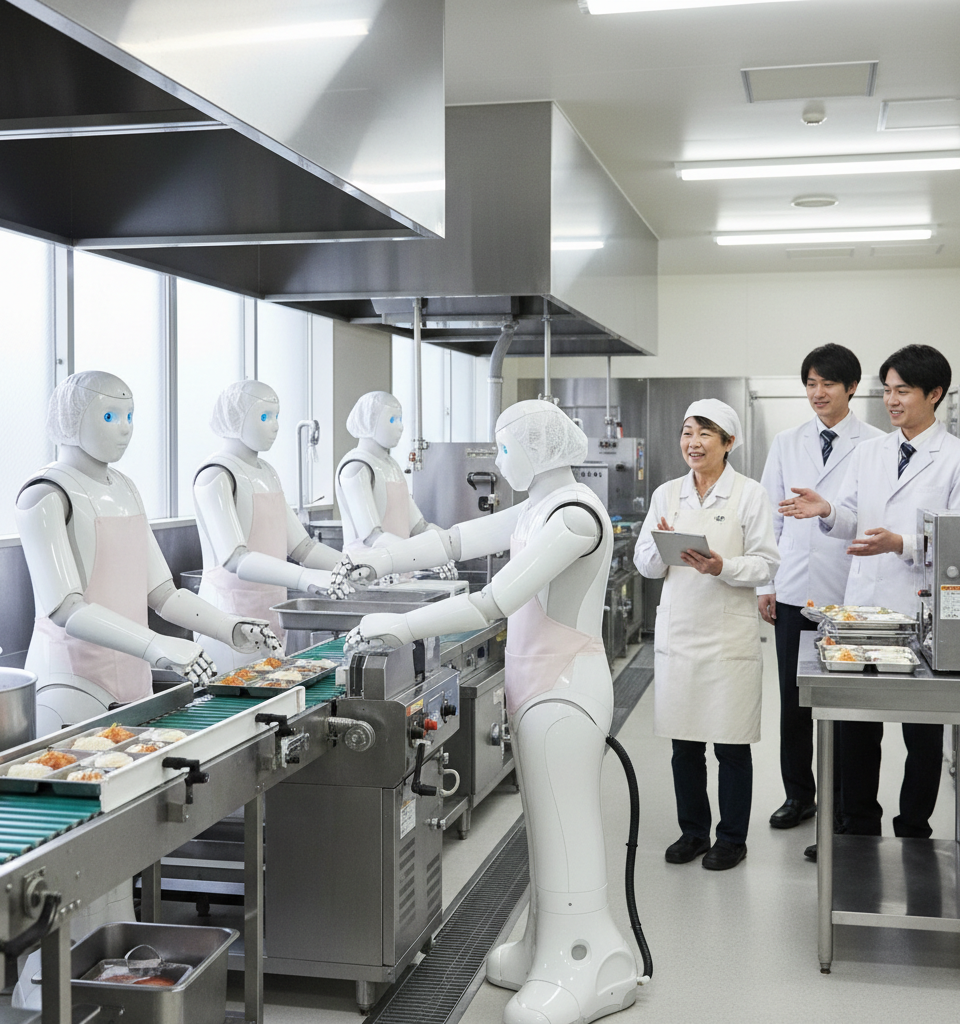
TOKYO – In a significant strategic pivot, Japan is accelerating the integration of physical artificial intelligence into its workforce, primarily to address acute labor shortages rather than to replace human workers. This initiative sees a marked transition of robotic solutions from controlled pilot programs into practical, real-world deployment across various sectors, reflecting a national effort to sustain economic productivity amidst demographic challenges.
The adoption of robotics is not merely an incremental technological upgrade but a fundamental response to Japan's long-standing demographic crisis, characterized by an aging population and declining birth rates. These factors have created severe vacancies in industries ranging from manufacturing and construction to healthcare and retail, with many jobs deemed undesirable by the shrinking human labor pool. The push for physical AI is therefore framed as a necessity, enabling the country to maintain essential services and industrial output that might otherwise falter.
Driving Forces Behind Robotic Adoption
The impetus behind this rapid adoption is multifaceted. Beyond the immediate need to fill vacant positions, there's a broader government initiative to future-proof the Japanese economy. Policymakers and industry leaders recognize that traditional methods of attracting labor are no longer sufficient. Immigration, while a potential avenue, faces cultural and social complexities, making technological solutions a more readily attainable and perhaps more palatable path for many stakeholders. This has led to substantial investments in research and development, fostering an ecosystem where robotic innovation can thrive and rapidly transition from laboratories to shop floors.
Key drivers include the imperative to sustain global competitiveness in manufacturing, where precision and efficiency are paramount. Furthermore, in the service sector, particularly in elderly care and logistics, robots are being deployed to perform repetitive or physically demanding tasks, thereby freeing human workers for more complex, empathetic, or supervisory roles. This approach reframes the role of automation not as a threat, but as a critical supportive force for the existing human workforce, allowing them to focus on tasks that truly require human intellect and emotional intelligence.
From Pilot to Widespread Deployment
The shift from pilot projects to widespread deployment signifies a maturing of robotic technologies and greater confidence in their reliability and cost-effectiveness. Early experimental phases allowed companies to identify bottlenecks, refine robot capabilities, and integrate them seamlessly into existing workflows. Now, with many of these initial hurdles addressed, the focus is on scaling these proven solutions. This includes developing user-friendly interfaces, enhancing robot-human collaboration, and establishing robust maintenance and support infrastructures that can sustain broad operational integration.
Industries seeing significant advancements include logistics, where autonomous mobile robots are streamlining warehouse operations, and manufacturing, where collaborative robots are working alongside humans on assembly lines. The construction sector, traditionally labor-intensive and facing some of the most acute shortages, is also beginning to embrace automation for tasks like precise material placement and hazardous inspections. In healthcare, while direct patient care remains predominantly human, robots are undertaking tasks such as medicine delivery, laundry services, and assisting with patient mobility, alleviating pressure on nursing staff.
Economic and Societal Implications
Economically, the widespread adoption of physical AI is expected to bolster productivity and potentially mitigate inflationary pressures stemming from labor scarcity. By automating lower-wage, undesirable jobs, Japan aims to free its limited human capital for higher-value-added activities, thereby elevating overall economic output per capita. This strategy could also lead to a restructuring of the job market, creating new opportunities in robotics engineering, maintenance, and AI development, while concurrently necessitating retraining programs for workers whose routine tasks are automated.
Societally, the integration of robots into daily life presents both opportunities and challenges. While the primary goal is to fill gaps, public perception and acceptance remain crucial. Early indications suggest a more favorable view in Japan compared to some Western nations, partly because the narrative is framed around solving a national crisis rather than job displacement. However, ethical considerations, data privacy, and the long-term impact on social interaction will undoubtedly be areas of ongoing discussion and policy development as these technologies become more pervasive.
The Path Forward: Innovation and Integration
The trajectory for Japan indicates continued aggressive investment in advanced robotics and AI. The government is expected to roll out further incentives and regulatory frameworks to smooth the integration process. This will likely include funding for research into more sophisticated human-robot interfaces, AI that can learn and adapt more independently, and technologies that enhance the resilience of robotic systems in diverse environments. The global robotics industry is keenly observing Japan's advancements, as the nation often serves as a bellwether for technological adoption in response to demographic shifts.
The push toward a robot-assisted economy represents a significant national endeavor to redefine work and productivity in an era of unprecedented demographic change. Japan's strategy is not about replacing human ingenuity, but rather augmenting it and ensuring that essential societal functions continue unimpeded, powered by the very machines that once seemed confined to science fiction. The coming years will undoubtedly showcase Japan as a leading example of how robotic innovation can serve as a vital solution to complex socio-economic challenges.