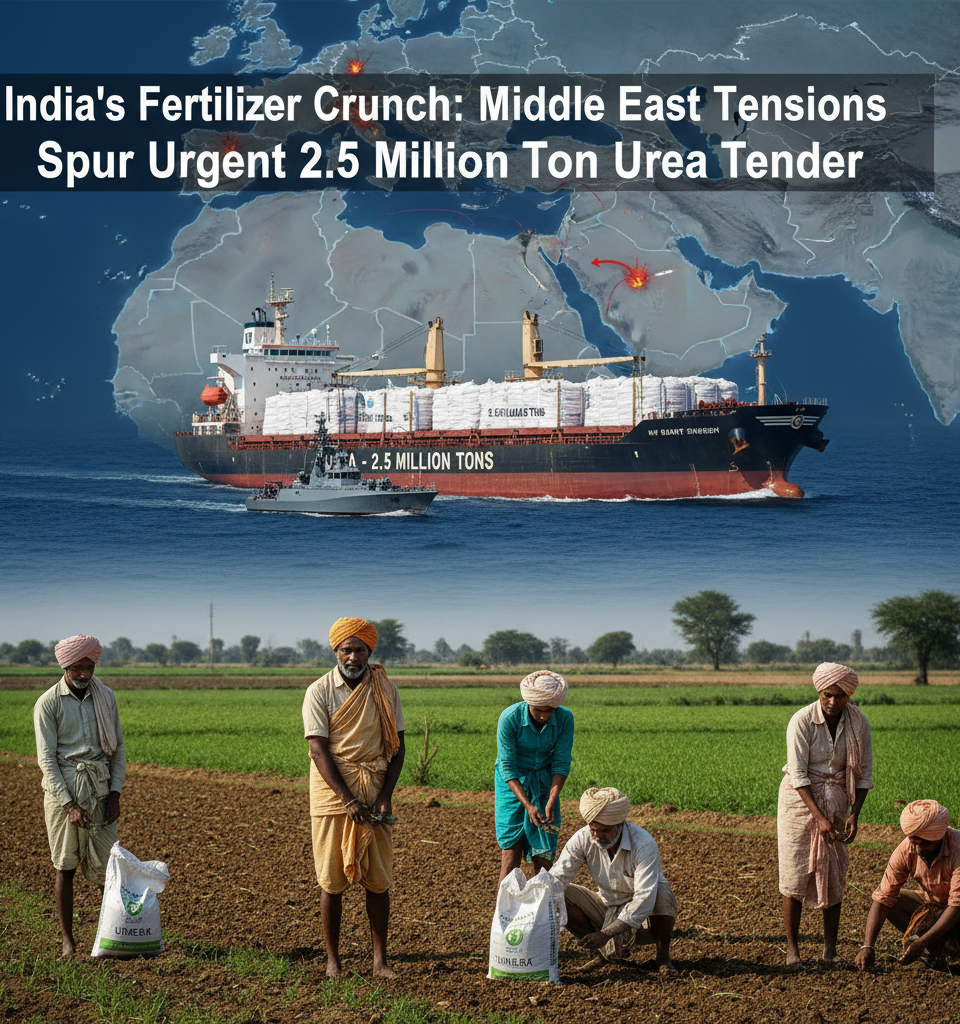
New Delhi, India – India, the world's most significant importer of urea, has issued an immediate tender for the procurement of approximately 2.5 million tons of the essential agricultural nutrient. This urgent move by the Indian government is a direct response to escalating geopolitical tensions in the Middle East, which have disrupted domestic fertilizer production and significantly constricted global supply chains. The tender's timing is critical, arriving just weeks before the commencement of the crucial monsoon sowing season, a period when Indian farmers heavily rely on a consistent and affordable supply of urea to ensure food security.
The Geopolitical Roots of a Domestic Shortage
This procurement drive underscores a burgeoning crisis in India's agricultural sector, heavily reliant on imported fertilizers to sustain its vast farming landscape. Historical data indicates that India often imports between 25% to 30% of its annual urea consumption. The current disruptions stem largely from shipping bottlenecks and production halts in key supplier nations, many of which are located in the Middle East and are directly or indirectly affected by recent conflicts. The Red Sea attacks, in particular, have inflated shipping costs and extended transit times, further straining an already tight market. Without sufficient urea, agricultural yields for staple crops like rice and wheat could face significant reductions, threatening the livelihoods of millions of farmers and potentially driving up food inflation.
Tender Details and Market Implications
The tender, issued by MMTC Ltd., a state-owned enterprise, seeks granular urea for delivery across various Indian ports throughout June and July. Industry sources indicate that bids are expected to close within the coming week, with prompt delivery being a primary consideration. The 2.5 million ton target represents a substantial portion of India's annual import requirement, which typically ranges from 7 million to 9 million tons. This large-scale procurement is expected to send ripples through the global fertilizer market, potentially pushing international urea prices higher. Historically, similar large Indian tenders have acted as a benchmark for world prices, and analysts predict a noticeable upward trend in the coming weeks.
Broader Industry and Economic Impact
The ripple effects of this supply crunch extend beyond agriculture. Fertilizer manufacturing is an energy-intensive process, and disruptions in natural gas supply—a key feedstock for urea production—can have cascading effects. Domestically, India's fertilizer industry is also facing challenges in securing adequate raw materials, exacerbating the reliance on imports. For the broader Indian economy, a surge in fertilizer prices translates into higher input costs for farmers, which could depress rural incomes and potentially lead to consumer price hikes for food items. This situation poses a significant challenge to the government's efforts to manage inflation and support agricultural growth.
Expert Perspectives on the Crisis
Agricultural economists and market analysts are closely monitoring the situation. Dr. Rakesh Kumar, an expert in agricultural commodity markets, stated, "This tender is a clear indicator of the severe stress on India's fertilizer supply chain. While the government's proactive steps are commendable, the underlying geopolitical instabilities remain a significant concern. We could see global urea prices increase by an additional 10-15% in the short term, putting pressure on developing nations that are also major importers." Other analysts highlight the need for India to diversify its fertilizer sourcing and invest more heavily in indigenous production capabilities to mitigate future shocks.
Looking Ahead: Mitigating Future Risks
The immediate focus remains on securing the urgently needed volumes of urea. However, the current crisis serves as a stern reminder of the vulnerabilities in India's agricultural supply chain. In the long term, strategic initiatives are likely to emerge, including potential government-to-government deals with stable suppliers, increased investment in domestic fertilizer plants, and exploration of alternative organic or nano-fertilizer technologies. The efficacy of this tender in attracting competitive bids and ensuring timely delivery will be a critical test, defining the resilience of India's agricultural sector in the face of persistent global headwinds. The coming monsoon season will be a crucial period to assess the impact of these supply challenges on crop yields and food security.