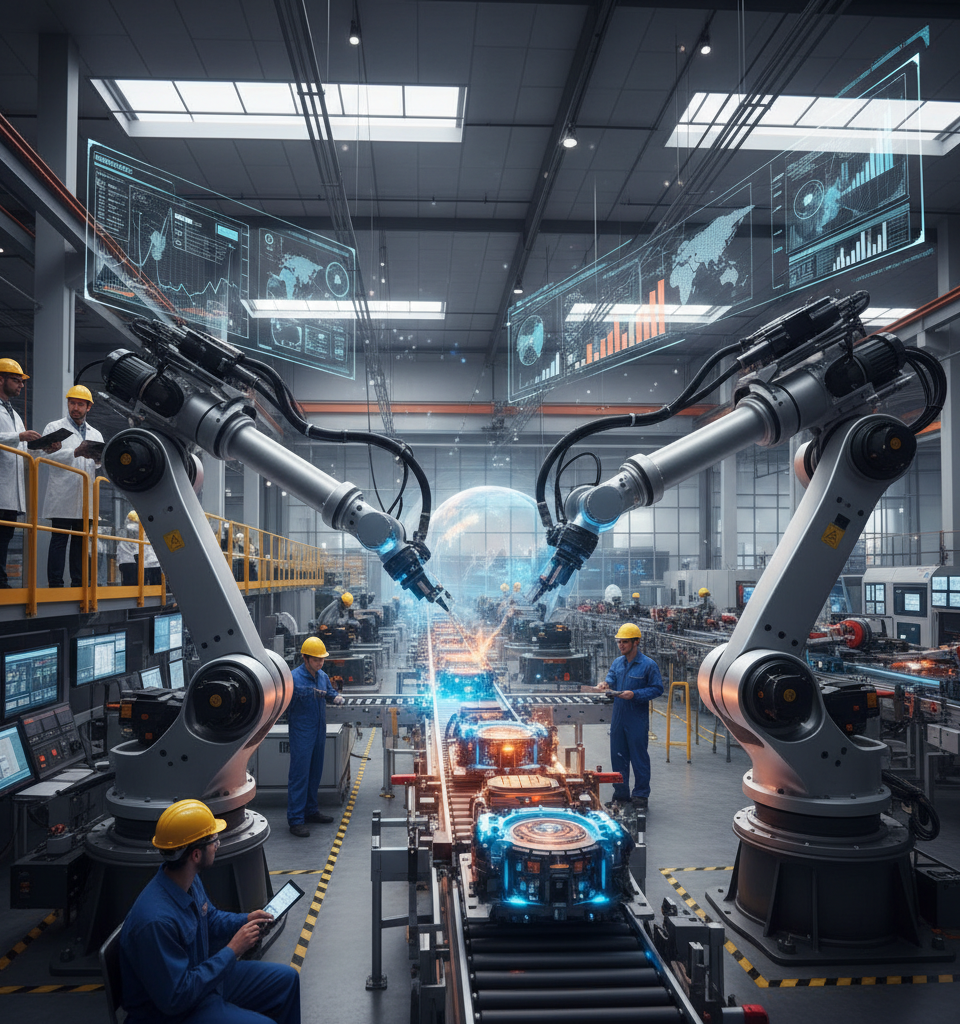
Global process industries are at a critical juncture, grappling with significant operational inefficiencies as market demands become increasingly volatile. This challenges the traditional fixed-capacity models of manufacturing. In response, a transformative wave of digital augmentation, rooted in artificial intelligence (AI), advanced automation, and sophisticated knowledge management systems, is emerging as the primary driver for re-engineering factory operations and enhancing overall plant resilience.
The Shifting Landscape of Manufacturing
The historical reliance on predictable production cycles has been fundamentally disrupted by global events, geopolitical shifts, and rapid consumer preference changes. This has created an urgent need for process industries – from chemicals and petrochemicals to pharmaceuticals and food and beverage – to pivot towards more agile and responsive manufacturing paradigms. The inability of legacy systems to adapt quickly is leading to missed opportunities, increased waste, and diminished competitive advantages. The current economic climate, marked by supply chain instabilities and fluctuating raw material costs, further exacerbates these pressures, demanding innovative solutions to maintain profitability and operational continuity.
Technological Pillars of Transformation
The core of this re-engineering lies in several synergistic technological breakthroughs. AI-enabled knowledge management platforms are empowering operators with real-time insights, predictive analytics, and proactive decision-making capabilities, effectively multiplying human expertise. Automation, extending beyond basic robotics to include advanced process controls and autonomous operations, is streamlining workflows, reducing human error, and ensuring consistent product quality. Furthermore, the integration of the Industrial Internet of Things (IIoT) provides a rich tapestry of data from sensors across plant floors, feeding into these AI systems for continuous optimization. Early adopters report potential efficiency gains of 15-25% in specific operational areas, coupled with a reduction in unplanned downtime by up to 20%.
Widespread Industry and Market Implications
The ripple effects of this technological shift are profound, impacting everything from raw material procurement to final product delivery. Enhanced operational flexibility means industries can more readily scale production up or down, adapt to new product formulations, and meet customized orders with greater efficiency. This responsiveness is critical in markets where consumer trends can shift quarterly, not annually. Moreover, digital augmentation is fostering a more sustainable manufacturing environment by optimizing resource consumption and minimizing waste, aligning with growing global environmental, social, and governance (ESG) mandates. The global market for industrial automation in process industries is projected to grow from an estimated $150 billion in 2023 to over $250 billion by 2028, reflecting this accelerated adoption.
Expert Commentary on the Paradigm Shift
Industry analysts emphasize that this isn't merely an upgrade but a fundamental paradigm shift. Dr. Evelyn Reed, a leading consultant in industrial technology, states, “The future of process manufacturing isn't about human versus machine; it's about the symbiotic integration of human intelligence augmented by AI. Companies embracing this will not only survive but thrive, setting new benchmarks for efficiency and adaptability.” She further notes that the investment in these technologies, while substantial initially, offers a compelling return on investment (ROI) within 3-5 years through reduced operational costs and increased output.
The Path Forward: Challenges and Opportunities
Looking ahead, the widespread adoption of these advanced technologies will require significant investment in infrastructure, cybersecurity, and upskilling the workforce. The transition will demand robust change management strategies to overcome resistance and ensure seamless integration. However, the opportunities are enormous: increased competitiveness, enhanced safety protocols, and the ability to innovate at an unprecedented pace. The next 5-10 years will see a sustained push towards fully autonomous operations in controlled environments, augmented reality (AR) for maintenance, and digital twin technology for predictive modeling and simulation, further solidifying the digitally augmented future of process industries. As global manufacturing complexities continue to mount, those process industries that strategically invest in AI, automation, and intelligent knowledge management will undoubtedly emerge as leaders, defining the next generation of resilient and hyper-efficient industrial operations.