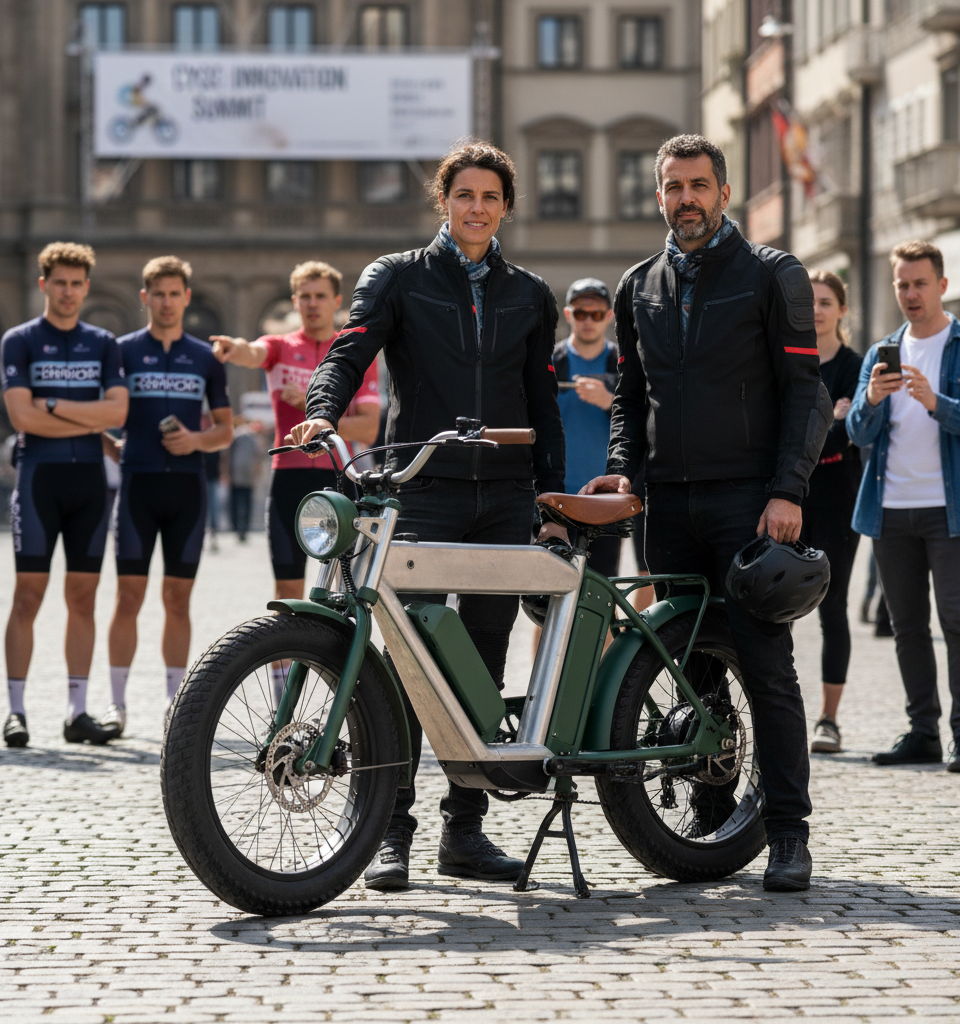
San Francisco, CA – Infinite Machine, a nascent e-bike manufacturer backed by prominent venture capital firm a16z, has officially unveiled its latest innovation: a behemoth 176-pound electric bicycle designed to emulate the power and feel of a moped. This bold entry into the micromobility market, intended to bridge the gap between traditional cycling and powered two-wheelers, is poised to reshape urban commuting but simultaneously ignite a contentious debate within the established cycling community regarding classification, safety, and the very essence of cycling.
The Evolving Landscape of Urban Mobility
The introduction of Infinite Machine's heavy-duty e-bike comes amidst a rapidly evolving urban transportation paradigm, where electric propulsion is increasingly challenging traditional vehicle ownership. For years, e-bikes have carved out a niche, offering eco-friendly and efficient alternatives for short to medium-distance travel. However, Infinite Machine's approach signals a departure from the lightweight, pedal-assist models dominating the market. This development is not merely an incremental upgrade but a strategic pivot towards a more robust, performance-oriented electric two-wheeler that targets a broader spectrum of commuters previously considering mopeds or light motorcycles. The venture capital infusion from a16z underscores the significant financial confidence in this disruptive strategy.
Key Features and Market Positioning
Infinite Machine's unnamed flagship model weighs in at an substantial 176 pounds, significantly heavier than most class 3 e-bikes, which typically range from 40 to 70 pounds. While specific technical specifications such as motor wattage and battery capacity have not been fully disclosed, the company emphasizes its design philosophy of replicating the 'moped feel,' indicating higher power outputs and a more substantial frame than conventional e-bikes. This positions the company directly against lightweight electric mopeds and scooters, aiming to capture consumers seeking more power and stability without the full regulatory burden of motorcycles. The brand is targeting urban dwellers seeking a blend of convenience, power, and a potentially lower barrier to entry compared to traditional motorized vehicles.
Industry Impact and Competitive Dynamics
The ripple effects of Infinite Machine's entry are expected to be substantial across the micromobility sector. Traditional e-bike manufacturers, particularly those focused on lighter, more pedal-centric designs, may face pressure to innovate or risk losing market share to these more powerful alternatives. Furthermore, established moped and scooter companies might see increased competition from a product that offers similar utility with a potentially different regulatory classification. This could spur further consolidation or diversification within the industry, as companies seek to adapt to shifting consumer preferences and technological advancements. The influx of venture capital into such a distinct product also signals a growing appetite among investors for novel solutions in personalized urban transport.
Expert Perspectives: A Redefinition or a Red Herring?
Industry analysts and cycling advocates are divided on the implications of Infinite Machine's heavy-duty e-bike. Dr. Eleanor Vance, a leading urban planning expert, notes, "This product pushes the boundaries of what constitutes an 'e-bike.' While it offers practical advantages in terms of power and stability for some commuters, it also challenges existing infrastructure and regulatory frameworks designed for lighter two-wheelers." Cycling organizations, such as the League of American Bicyclists, have expressed concerns, with a spokesperson stating, "Maintaining clear distinctions between bicycles, e-bikes, and motorized vehicles is crucial for rider safety, infrastructure planning, and preserving the integrity of cycling as a sport and activity." The increased weight and speed capabilities raise questions about lane shared between traditional cyclists and these new, heavier machines.
Regulatory Challenges and Future Outlook
The most significant hurdle for Infinite Machine and similar innovators will likely be navigating the complex and often fragmented regulatory landscape. In many jurisdictions, e-bikes are categorized into classes based on motor wattage, top speed, and pedal-assist functionality. A 176-pound vehicle that feels like a moped could fall into a gray area, potentially requiring different licensing, registration, or designated riding areas not currently available for traditional e-bikes. Infinite Machine will need to lobby vigorously for favorable classifications or risk limiting its market penetration. Looking ahead, the company plans an aggressive rollout, potentially targeting major metropolitan areas first. Their success will hinge not only on product acceptance but also on their ability to influence policy and educate consumers on the benefits and proper use of these hybrid micromobility solutions. The next 12-24 months will be crucial in determining whether Infinite Machine's innovation successfully redefines urban commuting or encounters significant roadblocks.