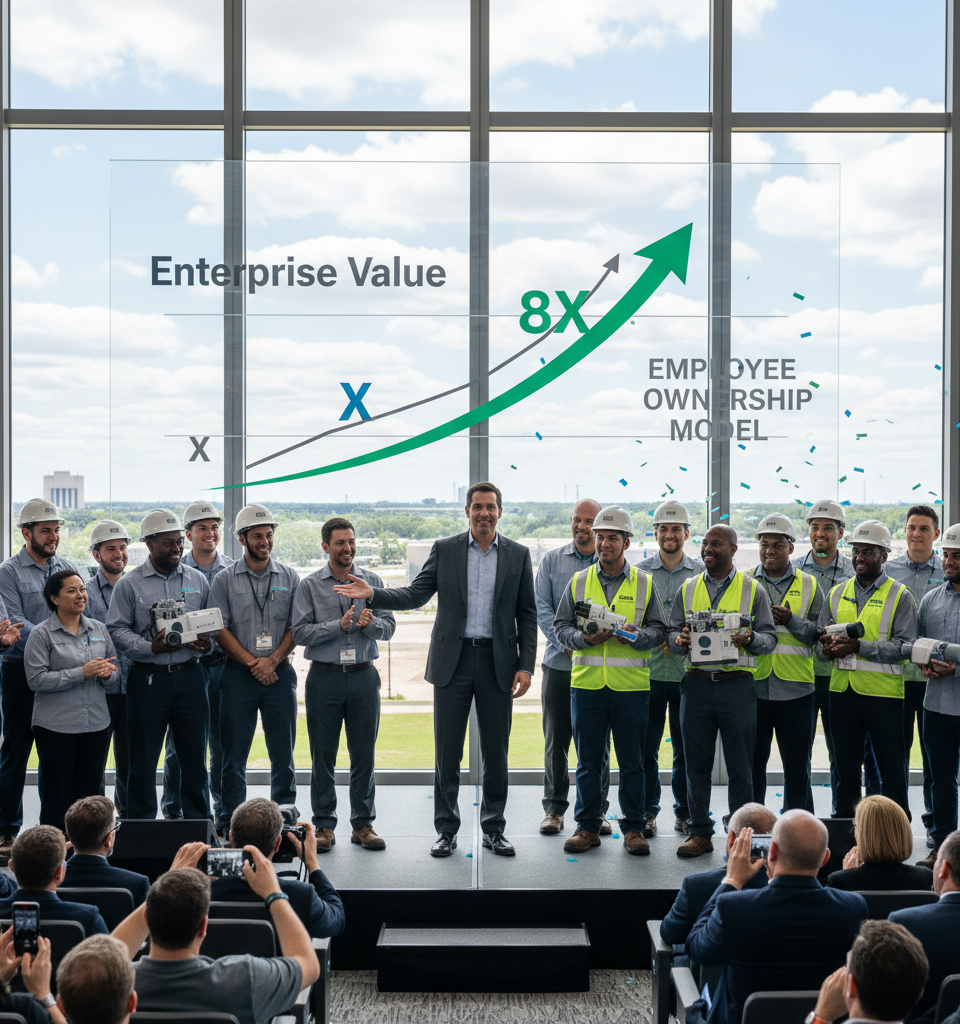
DAVIDSON, NC – [Date] – Ingersoll Rand, a global diversified industrial company, has demonstrated a compelling case for broad-based employee ownership as a catalyst for significant financial growth. Chairman and CEO Vicente Reynal recently revealed that a strategic initiative to place equity into the hands of over 21,000 employees worldwide has been directly linked to an astounding more than eightfold increase in the company's enterprise value. This bold move, implemented across the organization, is being hailed as a prime example of how shared ownership can cultivate a high-performance culture characterized by heightened accountability, operational speed, and disciplined execution.
The Strategic Rationale Behind Broad-Based Ownership
This deliberate shift towards widespread employee ownership, initiated by Reynal, marks a significant departure from traditional corporate structures where equity is often concentrated among senior leadership. The underlying philosophy was to transform every employee into a stakeholder, directly aligning individual success with the company’s overall performance. This approach is particularly noteworthy in the industrial sector, often perceived as more traditional and hierarchical. By democratizing equity, Ingersoll Rand aimed to unlock latent potential within its workforce, fostering a collective entrepreneurial spirit essential for driving innovation and efficiency in a competitive global market.
Detailed Impact and Cultural Transformation
The impact of this strategy has been multifaceted and profound. Beyond the remarkable financial metrics – an enterprise value growth exceeding 800% – the internal culture underwent a significant metamorphosis. Employees, now equity holders, demonstrated enhanced engagement and a greater sense of responsibility for the company's fiscal health and operational success. This ownership mentality translated into more proactive problem-solving, improved decision-making at all levels, and a stronger commitment to customer satisfaction. The emphasis on 'accountability, speed, and disciplined execution' became deeply embedded in daily operations, transcending mere corporate slogans to become tangible behaviors observed across manufacturing facilities, sales offices, and research centers globally.
Reshaping the Industrial Sector Landscape
Ingersoll Rand's success with its employee ownership model could serve as a powerful blueprint for the broader industrial sector and other capital-intensive industries. In an era where talent retention and productivity are paramount, this strategy offers a compelling alternative to conventional incentive programs. It suggests that empowering employees with tangible stakes in the company's future can yield far superior returns than traditional bonuses or stock options confined to top executives. Competitors are likely to scrutinize Ingersoll Rand's performance, potentially leading to a re-evaluation of their own compensation and ownership structures to cultivate similar levels of employee commitment and financial growth.
Expert Analysis on the Ownership Dividend
Financial analysts and corporate governance experts have largely lauded Ingersoll Rand's initiative. Dr. Eleanor Vance, a professor of organizational psychology at the Wharton School, commented, "Ingersoll Rand's case study brilliantly illustrates the 'ownership dividend.' When employees have skin in the game, their intrinsic motivation to contribute beyond their job description skyrockets. This leads to better decision-making, reduced waste, and ultimately, superior financial performance. It’s a powerful testament to the human capital as a strategic asset." Industry observers also note that this model fosters long-term thinking and reduces employee turnover, critical advantages in today's tight labor market.
The Path Forward: Sustaining Growth and Engagement
Looking ahead, the challenge for Ingersoll Rand will be to sustain this momentum and ensure that the spirit of employee ownership continues to permeate the organization as it grows and evolves. The company plans to reinforce its ownership culture through ongoing communication, financial literacy programs for employees, and mechanisms that allow for continued participation in company success. Reynal has indicated that this model is not a one-time event but a fundamental pillar of the company's long-term strategy, aiming to cement a legacy of shared prosperity and continuous high performance. Further acquisitions and business expansions are expected to integrate this ownership philosophy from the outset, ensuring consistency across all new ventures.
Broader Implications for Corporate Strategy
Ingersoll Rand’s strategic pivot underscores a broader trend towards stakeholder capitalism and the recognition that human capital is perhaps the most critical asset for modern enterprises. By effectively turning its workforce into a collective of owners, the company has not only achieved extraordinary financial results but has also built a resilient, engaged, and highly motivated organization. This model holds significant implications for corporate strategy discourse, suggesting that investing in widespread employee equity can be a powerful driver for both financial success and a healthy corporate culture, setting a new benchmark for corporate value creation.