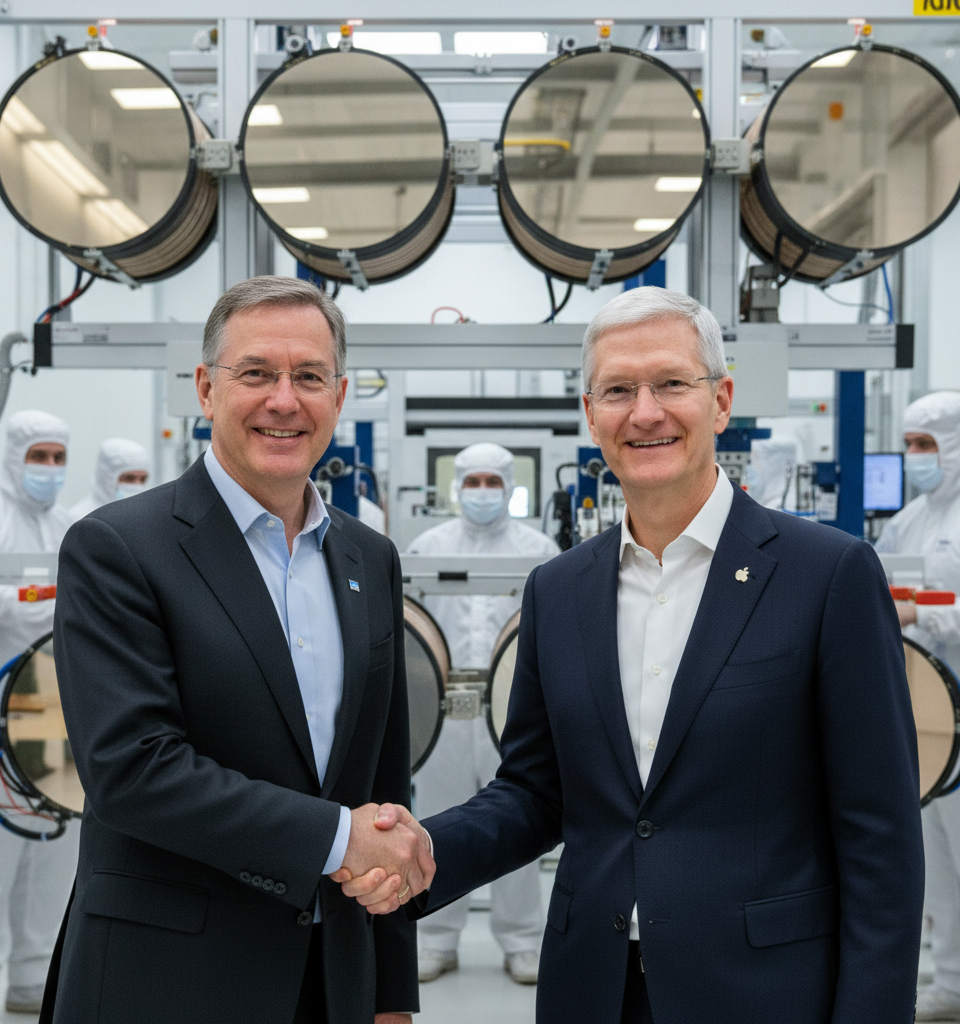
Intel, the veteran chipmaker, has reportedly secured a preliminary agreement to manufacture chips for Apple, marking a potentially pivotal moment in the semiconductor industry. This unconfirmed but widely speculated deal would see Intel's foundry services producing components for its former CPU rival, a move that harks back to an era when Intel supplied processors for Apple's Mac line. The implications of such an arrangement are vast, suggesting a strategic realignment for both tech giants amidst intense competition and a global push for diversified semiconductor supply chains.
Historical Context and Apple's Silicon Journey
This development is particularly notable given the historical relationship between the two companies. For years, Intel served as the primary silicon provider for Apple's Mac computers, a partnership that began in 2006. However, Apple embarked on an ambitious journey to design its own custom silicon, culminating in the highly successful M-series chips, which began replacing Intel processors in Macs in late 2020. This transition was lauded for delivering superior performance and power efficiency. For Apple to now consider Intel as a manufacturing partner, even for components distinct from the core M-series chips, underscores the complexities and supply chain pressures within the semiconductor industry. It also highlights Intel's renewed aggressive push into the foundry business, aiming to become a major contract chip manufacturer for external clients.
Key Details and Market Dynamics
While specific details of the preliminary agreement remain under wraps, industry speculation suggests it could involve non-core components or potentially future chip designs, rather than a direct replacement for Apple's critical M-series processors which are currently produced by TSMC. This move could be a strategic diversification for Apple, reducing its reliance on a single foundry and leveraging Intel's expanding manufacturing capabilities, particularly in the US and Europe. Intel, under CEO Pat Gelsinger, has invested billions in new fabs and advanced process technologies, including an anticipated $20 billion investment in new facilities in Arizona and Ohio, and another $33 billion in Europe. Its 'IDM 2.0' strategy hinges on offering foundry services to compete with dominant players like TSMC and Samsung.
Industry and Market Impact
Should this deal materialize, its impact on the semiconductor industry would be profound. For Intel, it represents a significant validation of its re-entry into the pure-play foundry business, potentially attracting other major tech clients and boosting its long-term revenue streams. Gaining a high-profile customer like Apple could accelerate Intel's path to reclaiming its manufacturing prowess. For Apple, it offers a potential avenue for supply chain resilience and diversification, mitigating risks associated with geopolitical tensions and concentrated manufacturing. The broader market could see increased competition in the foundry space, potentially influencing pricing and innovation across the chipmaking ecosystem. Shares of both companies have reacted cautiously to the unconfirmed reports, reflecting the early stage of the discussions.
Expert Perspectives
Semiconductor analysts are keenly watching these developments. "This isn't just about Intel building chips; it's about Intel building credibility," remarked Dr. Elise Thorne, a senior tech analyst at Nexus Insights. "Landing a client of Apple's caliber, even for ancillary components, sends a strong signal to the market that Intel Foundry Services is a serious contender. It's a strategic win that could open doors to numerous other major players." Others point to the geopolitical landscape. "Amidst calls for greater national self-sufficiency in chip production, an Intel-Apple partnership aligns with broader governmental efforts to localize crucial supply chains," noted tech policy expert Michael Chen. "This could be driven by more than just economies of scale; it's also about strategic security."
What's Next: Future Implications
The preliminary nature of the deal means that final terms and the scope of the partnership are still subject to negotiation. Observers will be closely watching for formal announcements from either company, which could detail the specific chip types involved, estimated production volumes, and the target process nodes. Should the deal proceed, it could signal a long-term strategic alliance with far-reaching consequences for technology development and global manufacturing strategies. It also sets the stage for intensified competition between Intel's foundry services and established leaders like TSMC, potentially driving further innovation and efficiency in chip production over the next five to ten years. The industry will be monitoring how Intel's manufacturing capabilities evolve to meet Apple's stringent quality and performance demands, a crucial test for its ambitious IDM 2.0 strategy.