A Company in Transition: Decades of Dominance and Recent Stumbles
For decades, Intel was synonymous with computing, powering the vast majority of the world's personal computers and data centers. However, the company faced a period of significant decline, losing market share to rivals like AMD in CPUs and being late to capitalize on the mobile revolution. The current turnaround, spearheaded by CEO Pat Gelsinger, involves a comprehensive overhaul of manufacturing capabilities, product roadmaps, and strategic investments. This renewed focus on core competencies, particularly in regaining process technology leadership and expanding foundry services, is critical to restoring Intel’s competitive edge in an increasingly complex and competitive landscape.
Key Details: Foundry, AI, and Financial Metrics
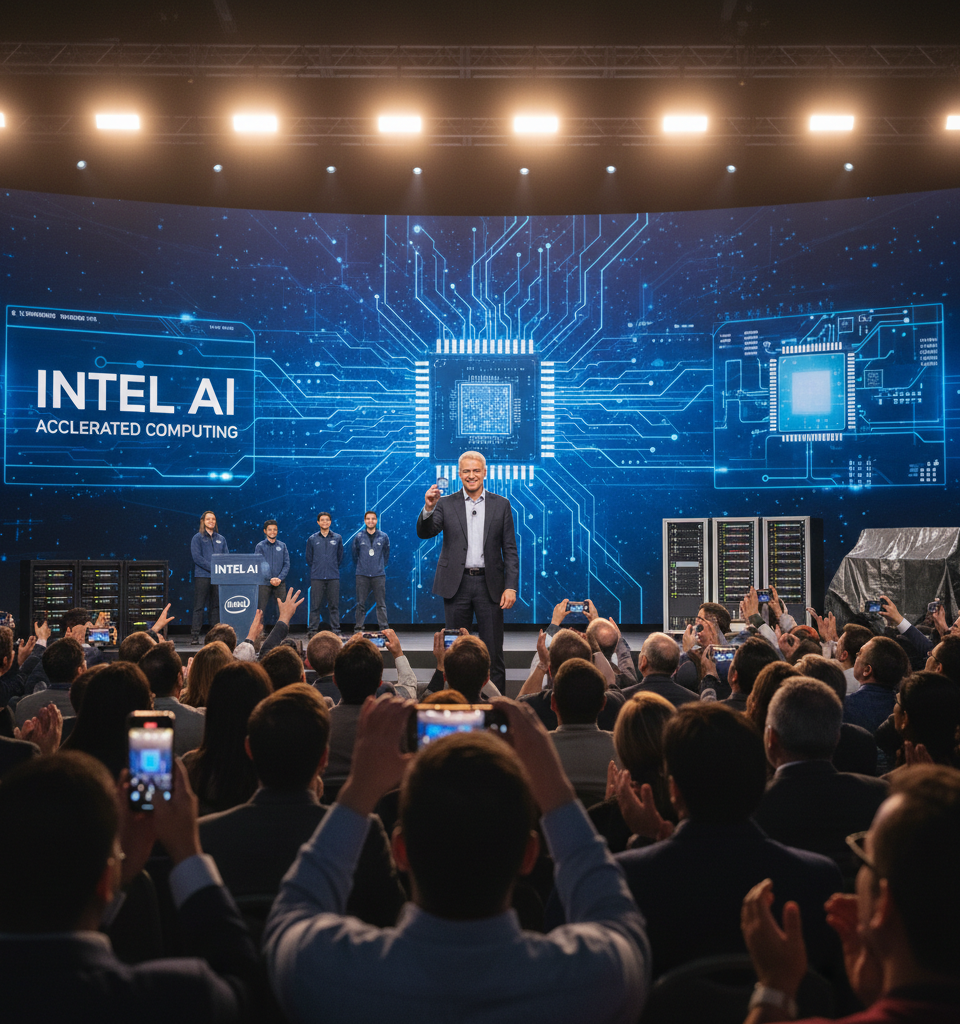
Recent earnings reports and strategic announcements underscore Intel's renewed vigor. The company’s IFS (Intel Foundry Services) division is gaining traction, signaling a viable pathway to compete with industry leader TSMC. Crucially, Intel's AI strategy, particularly with its Gaudi accelerators, is beginning to yield results, securing design wins and contributing to revenue growth in the data center segment. While specific financial figures for AI contributions are often embedded within broader segments, the company has emphasized the increasing demand for its AI-enabled CPUs and discrete AI accelerators. For instance, Intel recently projected its foundry business to reach profitability by 2027, highlighting the long-term nature of its strategic investments. The substantial stock appreciation, while impressive, began from a relatively depressed valuation, and continued growth will depend on consistent execution against ambitious targets.
Industry and Market Impact: Rebalancing the Semiconductor Ecosystem
Intel's resurgence, particularly in AI, has significant implications for the broader semiconductor ecosystem. A stronger Intel introduces greater competition in segments currently dominated by NVIDIA and to a lesser extent, AMD. This increased rivalry could lead to faster innovation, more diverse product offerings, and potentially more competitive pricing across the AI hardware market. Furthermore, Intel's drive to establish a robust foundry business in the Western hemisphere addresses critical geopolitical concerns about semiconductor supply chain concentration, adding a layer of strategic importance beyond mere market share.
Expert Perspectives: Cautious Optimism and Execution Risks
Analysts generally view Intel's strategic direction with cautious optimism. "Intel has made commendable progress in revamping its fabs and accelerating its AI initiatives," stated one prominent analyst from a major investment bank, "but the road ahead is still fraught with execution risks, particularly in achieving process parity with TSMC and consistently delivering best-in-class AI solutions." Experts frequently highlight the sheer capital intensity of the semiconductor industry and the ongoing battle for top-tier engineering talent as persistent challenges. The consensus is that while the vector is positive, sustained success requires flawless execution over several more years.
What's Next: Future Milestones and Competitive Landscape
Looking ahead, key milestones for Intel include the successful rollout of its Intel 18A process technology, scheduled for 2025, which CEO Gelsinger claims will restore process leadership. Further development and market penetration of its Gaudi AI accelerators, alongside continued expansion of its foundry services, will be critical. The competitive landscape remains fierce, with NVIDIA solidifying its lead in AI accelerators, and AMD making significant inroads in both CPU and GPU markets. Intel’s ability to consistently deliver on its aggressive product roadmap and financial targets will dictate whether its current progress translates into a full-fledged return to semiconductor leadership or merely a temporary reprieve in a dynamically evolving industry.
Conclusion: A Marathon, Not a Sprint
Intel's turnaround is a testament to the company's resilience and strategic recalibration. While the early victories, particularly in AI, are palpable and have resonated positively with investors, the journey is undoubtedly a marathon, not a sprint. The next several years will be crucial in determining whether Intel can truly reclaim its former glory and solidify its position as a dominant force in the high-stakes world of advanced semiconductors.