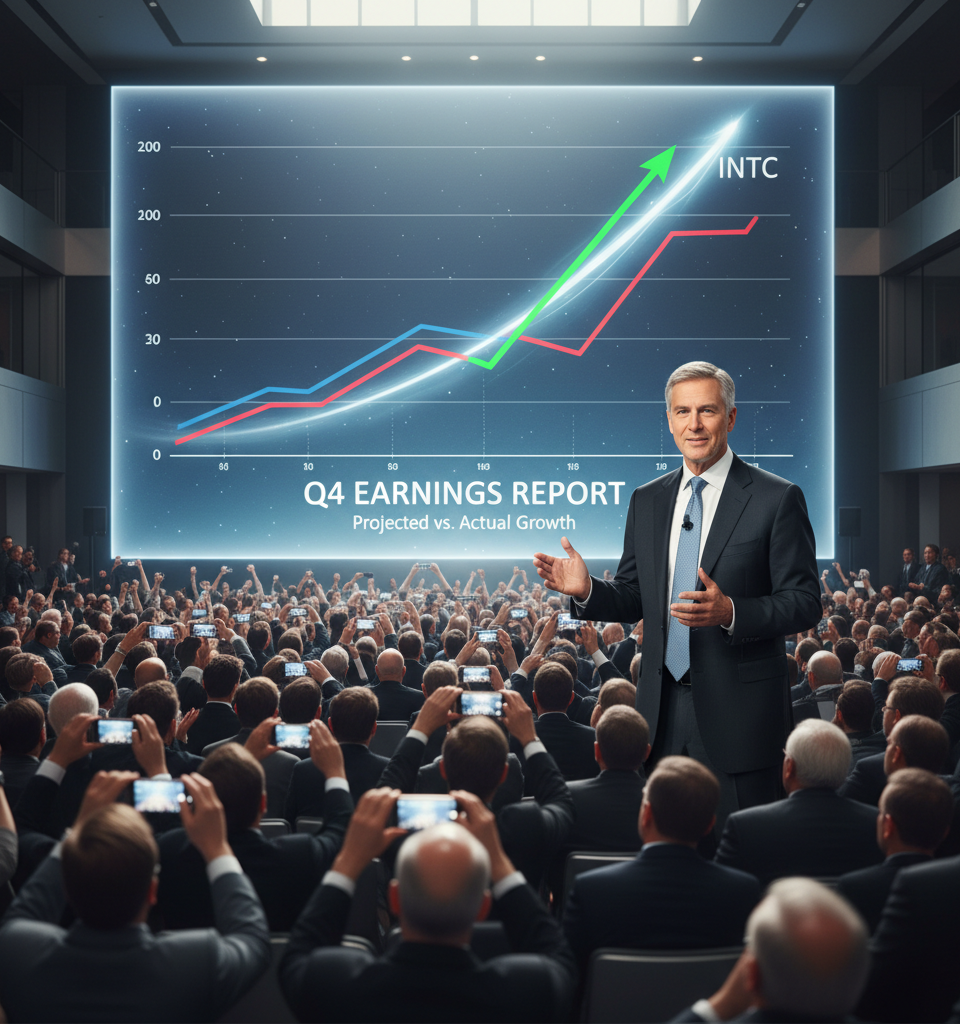
Intel Corporation, once a dominant force in the semiconductor industry, has recently seen its stock price skyrocket by an astonishing 490% over the past year. This exceptional performance has captivated investors and analysts alike, suggesting a profound belief on Wall Street that the company is on the cusp of a dramatic revival. Yet, beneath the surface of this remarkable financial ascent, a critical debate is unfolding: is the market's enthusiasm for Intel's resurgence truly reflective of its underlying business transformation, or has investor sentiment outpaced the tangible progress of its strategic overhaul?
The Challenging Road to Recovery
For nearly a decade, Intel grappled with an array of challenges, including manufacturing delays, fiercer competition from AMD and NVIDIA, and a perceived misstep in capitalizing on the mobile computing boom. The company's once-unassailable lead in chip manufacturing technology eroded, leading to significant market share losses, particularly in the lucrative data center segment. This period saw Intel's stock trading sideways for long stretches, often underperforming the broader technology sector. The recent surge, therefore, represents a dramatic shift in investor perception, driven by a new leadership team and ambitious plans to reclaim technological leadership, particularly in advanced chip manufacturing.
Dissecting the Surge: Expectations vs. Operations
The 490% stock increase translates into billions of dollars added to Intel's market capitalization, reflecting a profound shift in investor confidence. 0 strategy**, which aims to blend internal manufacturing with external foundry services, and aggressive investments in new fabrication plants (fabs) in the US and Europe. These initiatives are designed to restore Intel's process technology leadership and position it as a major foundry player for other companies.
However, critics point out that these capital-intensive strategies will take years to bear fruit, with significant financial outlays and execution risks. While the market has priced in much of this future potential, quarterly earnings and guidance have shown continued pressure on margins and revenue in some segments, indicating that the operational turnaround is still very much in progress.
Broader Market Implications for Semiconductors
Intel's dramatic stock movement sends ripples across the entire semiconductor industry. As a foundational player, its perceived resurgence could stimulate further investment in domestic chip manufacturing, aligning with national security interests and supply chain resilience efforts. A stronger Intel could intensify competition with rivals like TSMC and Samsung in foundry services, and with AMD and NVIDIA in CPU and GPU markets, potentially driving innovation and price competition. Conversely, if Intel's turnaround falters despite the stock's performance, it could lead to broader investor skepticism about capital-intensive industries and the long timelines required for technological shifts.
Analyst Sentiment: Cautious Optimism Amidst Valuation Concerns
Expert opinions on Intel's valuation are sharply divided. Many analysts acknowledge the strategic soundness of Gelsinger's vision and the long-term potential of his manufacturing roadmap. However, several prominent financial institutions and independent analysts have expressed concerns that the stock's current valuation, especially factoring in the colossal run-up, incorporates an overly optimistic timeline and execution flawless. They highlight metrics such as price-to-earnings (P/E) ratios and future cash flow projections, suggesting that the current price assumes near-perfect execution and a rapid return to market dominance, which may be challenging given the intense competition and complexity of chip manufacturing. Some have issued "hold" or even "underperform" ratings, despite the positive sentiment, due to these valuation discrepancies.
The Road Ahead: Execution, Technology, and Geopolitics
The future for Intel hinges on several critical factors. Successful execution of its IDM 2.0 strategy, particularly achieving five nodes in four years, is paramount. The company must also demonstrate clear progress in regaining market share in key competitive segments, especially data centers and high-performance computing. Beyond technological prowess, geopolitical factors and government subsidies for chip manufacturing will intricately shape Intel's trajectory. New fabs, such as those planned in Ohio, represent massive investments that require sustained government support and a robust talent pipeline. Investors will be closely watching for tangible improvements in financial performance, consistent roadmap delivery, and growing competitiveness against its well-established rivals, as the company strives to validate its impressive stock market gains with real-world results.