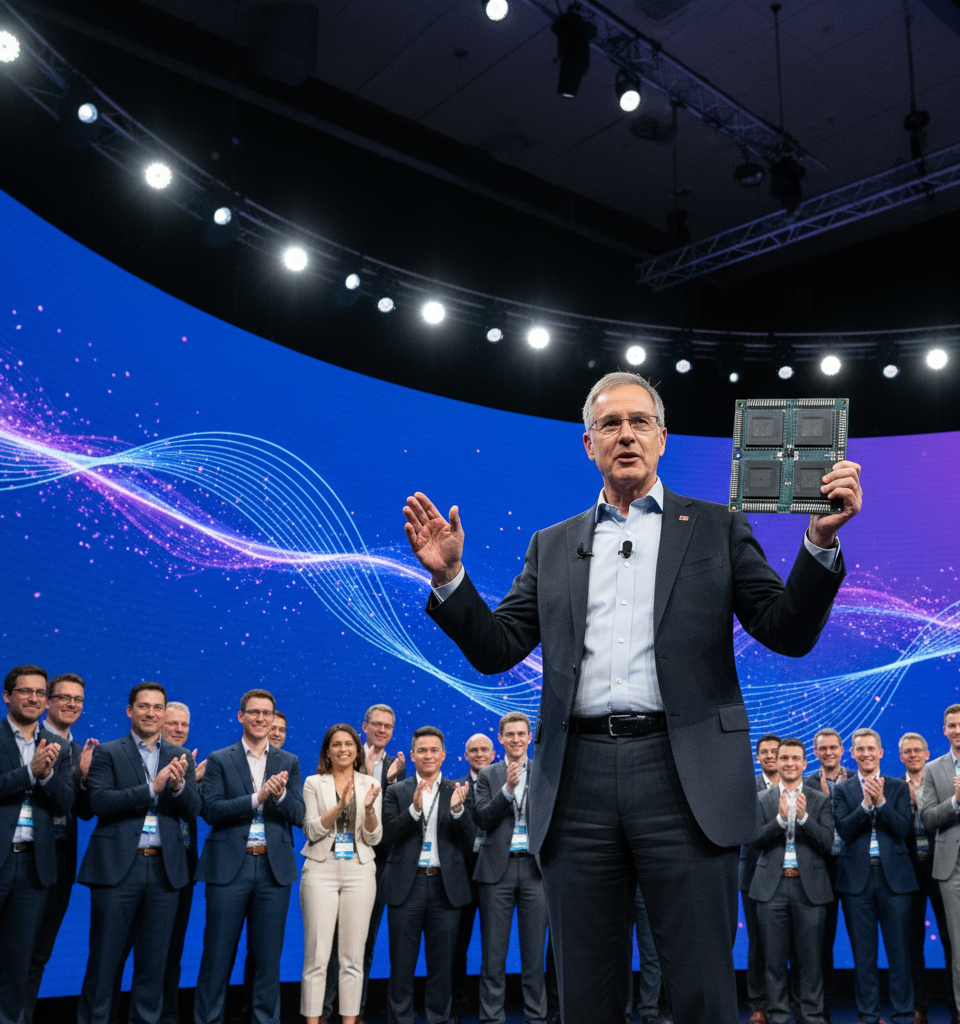
Intel Corporation has delivered an impressive first-quarter performance, outstripping analyst predictions for the sixth consecutive reporting period. The silicon giant announced revenues of $13.6 billion, significantly surpassing the consensus estimate of $12.4 billion by 9.4%. This robust financial showing is largely attributed to a surge in demand for its Central Processing Units (CPUs), particularly within the rapidly expanding artificial intelligence (AI) market, underscoring Intel's pivotal role in the evolving tech landscape. The company's stock has reflected this momentum, climbing over 80% year-to-date.
Unpacking the Performance Metrics Intel's **Data Center and
AI division** emerged as a primary growth engine, recording a substantial 22% increase in revenue, reaching $5.1 billion. This segment's strong performance highlights the escalating enterprise and cloud demand for high-performance computing capabilities essential for AI workloads. Furthermore, the company reported adjusted non-GAAP Earnings Per Share (EPS) of $0.29, a remarkable twenty-nine-fold beat over the slim 1-cent consensus estimate. These figures not only demonstrate Intel's operational efficiency but also its strategic alignment with dominant industry trends.
Historical Context and Market Relevance
Intel's consistent outperformance marks a significant turning point following a period of intense competition and market re-evaluation. Historically, Intel has been a dominant force in the CPU market, but recent years have seen increased rivalry from competitors and a shift towards more specialized processors. This latest string of earnings beats suggests a successful pivot and a reassertion of its competitive edge, particularly as the demand for AI-specific hardware intensifies. The company's ability to consistently exceed expectations indicates strong underlying operational improvements and effective market penetration strategies within key growth areas.
Industry and Market Impact
Intel's impressive results send a powerful signal across the semiconductor industry and broader technology sector. As a bellwether for chip manufacturing and innovation, its strong performance indicates a healthy and expanding market for computing hardware, particularly chips optimized for AI algorithms and data processing. The growing revenue from its Data Center and AI segment suggests that businesses are heavily investing in infrastructure to support AI initiatives, driving demand across the supply chain. This trend is likely to benefit other players in the ecosystem, from memory manufacturers to cloud service providers.
Expert Insights and Analyst Perspectives
Industry analysts have largely reacted positively to Intel's continued momentum. Many point to the company's refreshed product roadmap and strategic investments in AI-centric technologies as key drivers. "Intel is clearly executing well on its turnaround strategy, especially concerning its AI portfolio," noted one semiconductor analyst. "The beat on both top and bottom lines, coupled with strong guidance, demonstrates a solid foundation for sustained growth in a highly competitive arena." Others emphasize the importance of Intel's foundry services and its engagement with pioneering projects, such as the reported collaboration with Elon Musk on his planned Terafab chip project, which could position Intel at the forefront of next-generation chip manufacturing.
The Road Ahead: Future Implications
Looking forward, Intel is strategically positioned to capitalize on the sustained growth in AI and high-performance computing. The collaboration with figures like Elon Musk on advanced chip fabrication initiatives could unlock new revenue streams and technological breakthroughs. The company's continued investment in research and development, particularly in areas like advanced packaging and process technology, will be crucial. Future earnings reports will be closely watched for continued progress in market share gains, further diversification of revenue streams, and the successful rollout of upcoming product lines tailor-made for AI applications. The ability to maintain this pace of innovation and execution will determine Intel's long-term leadership in the rapidly evolving semiconductor landscape. Intel's journey from a challenging period to consistent outperformance underscores its resilience and adaptability. With the AI wave showing no signs of abating, the company's strategic focus on data center and AI solutions appears to be yielding substantial dividends, solidifying its position as a critical enabler of the digital future.