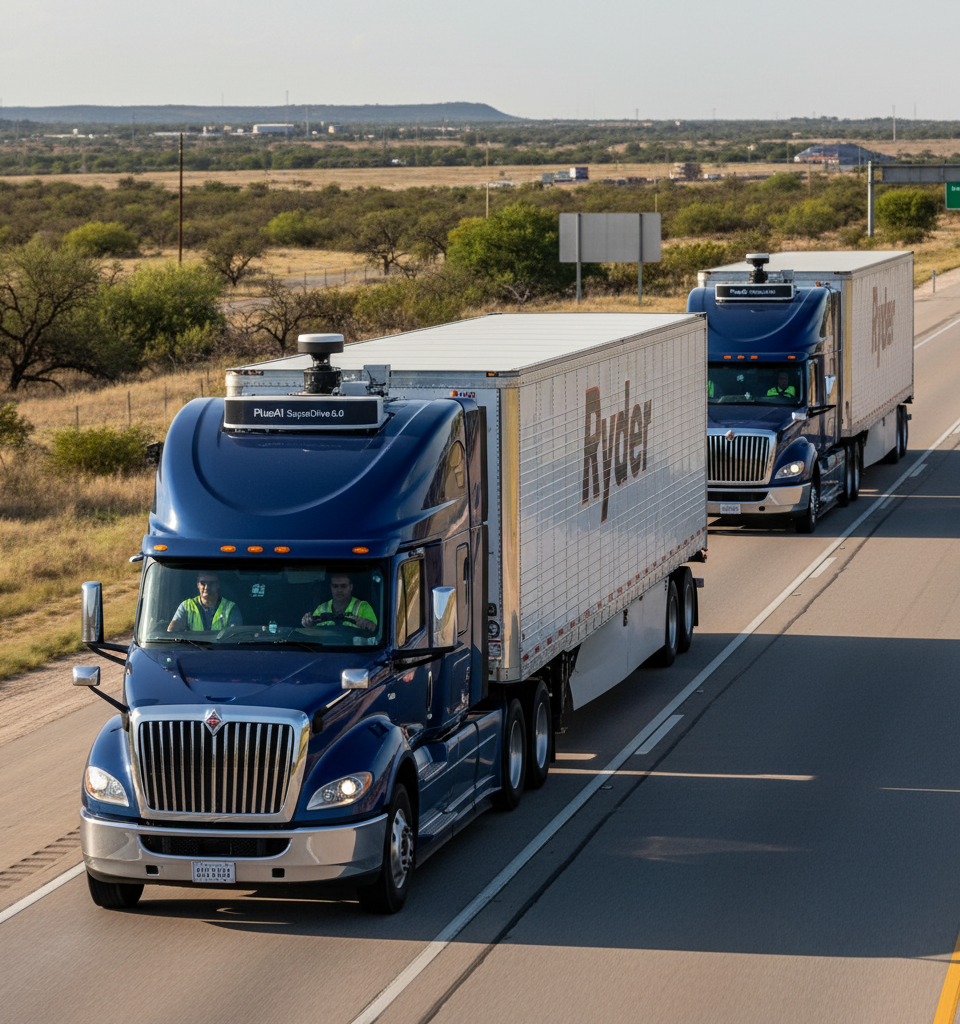
TEMPLE, TX — A strategic alliance between truck manufacturer Navistar's International brand, artificial intelligence driving technology developer PlusAI (Plus), and supply chain solutions provider Ryder System has officially launched a pioneering autonomous freight trial on a critical Texas logistics artery. Utilizing International LT series trucks integrated with PlusAI's SuperDrive 6.0 autonomous system, the initiative is actively hauling legitimate Ryder freight between Temple and Laredo, a roughly 200-mile corridor known for its heavy construction and vital cross-border trade. Initial operational data has revealed impressive metrics, including a 100% on-time delivery rate for the commercial loads and an remarkable 92% autonomous coverage during the trial runs.
This trial represents a crucial phase in the journey towards wider autonomous truck adoption, moving beyond mere technological demonstrations to real-world commercial operations. The chosen route, bridging key distribution hubs to the U.S.-Mexico border, is strategically significant, offering robust testing grounds for autonomous systems under diverse conditions, including varying traffic densities, road infrastructure challenges, and the complexities of long-haul logistics. For Navistar, this collaboration underscores its commitment to integrating advanced technologies into its platforms, while Plus aims to validate its Level 4 autonomous driving system under commercial pressures. Ryder, a titan in fleet management and supply chain, is keen to explore efficiencies and safety enhancements autonomous trucks could offer its extensive network.
The core of the technology being rigorously evaluated is PlusAI's SuperDrive 6.0, an advanced Level 4 autonomous driving system designed for heavy trucks. This system leverages a sophisticated array of sensors, including lidar, radar, and cameras, fused with high-definition mapping and predictive algorithms to enable autonomous operation on highways. The International LT trucks, specifically configured for this technology, are hauling actual Ryder freight, simulating the daily operational demands of a commercial trucking enterprise. While specific financial investments for this trial were not disclosed, such initiatives typically involve significant capital outlay in vehicle retrofitting, software development, and operational support infrastructure.
Industry Impact and Market Dynamics
The successful commencement and early results of this trial ripple across the entire logistics and transportation sector. With the trucking industry grappling with an persistent driver shortage—estimated to be over 80,000 drivers in the U.S. alone by the American Trucking Associations (ATA)—autonomous solutions are increasingly viewed not as a replacement for human drivers, but as a critical augment to address capacity constraints and improve operational efficiencies. Freight volumes continue to grow, driven by e-commerce and resilient supply chains, making the need for innovative solutions more acute than ever. This trial, particularly its focus on on-time delivery and high autonomous coverage, suggests a tangible pathway to alleviating these pressures.
Analysts are keenly observing these developments, recognizing the potential for disruptive innovation. "These early-stage commercial deployments are vital for proving the ROI and safety case for autonomous trucking," noted Dr. Elaine Thompson, a senior transportation analyst at Quantum Logistics Insights. "The 92% autonomous coverage rate on a challenging route like Temple-Laredo is a very strong indicator of the technology's maturity and its ability to handle real-world variables. The 100% on-time delivery figure, while preliminary, directly speaks to the efficiency gains that could fundamentally reshape long-haul logistics." Experts also highlight the importance of the partnership model, where truck OEMs, tech providers, and logistics operators converge to create holistic solutions rather than fragmented technologies.
Navigating Regulatory and Safety Hurdles
While the technological progress is evident, the broader commercialization of autonomous trucking still faces significant regulatory and public perception hurdles. States like Texas have been proactive in creating a framework for autonomous vehicle testing, but a consistent national regulatory standard is still evolving. Ensuring foolproof safety protocols, establishing clear liability frameworks, and addressing concerns about job displacement remain paramount. This trial, however, serves as valuable data collection for all stakeholders, informing future policy decisions and demonstrating the safety methodologies employed by PlusAI and its partners. The presence of a safety driver, as is standard in Level 4 trials, is crucial for mitigating risks and collecting comprehensive operational data under supervised conditions.
The Road Ahead: Scaling and Commercialization
Looking ahead, the focus will undoubtedly shift towards scalability and broader commercial deployment. The partners aim to expand the scope and scale of these trials, potentially introducing more routes, increasing fleet size, and gradually integrating the technology into broader operational frameworks. The next phase will likely involve refined data analysis, further optimization of the autonomous driving system, and continued engagement with regulatory bodies. The long-term vision is to establish a network of autonomous freight lanes, dramatically reducing operational costs, improving safety through reduced human error, and creating more predictable supply chain schedules. This Texas trial is not just a test of technology; it's a blueprint for the future of freight transportation.
The initial success of the International, PlusAI, and Ryder collaboration on the Texas corridor provides a compelling narrative for the advancement of autonomous freight. It underscores the industry's determined push toward a more efficient, reliable, and technologically advanced logistics ecosystem, setting a precedent for similar endeavors globally. The journey to fully autonomous, widespread commercial trucking is long, but this trial undeniably marks a pivotal and encouraging milestone on that path.