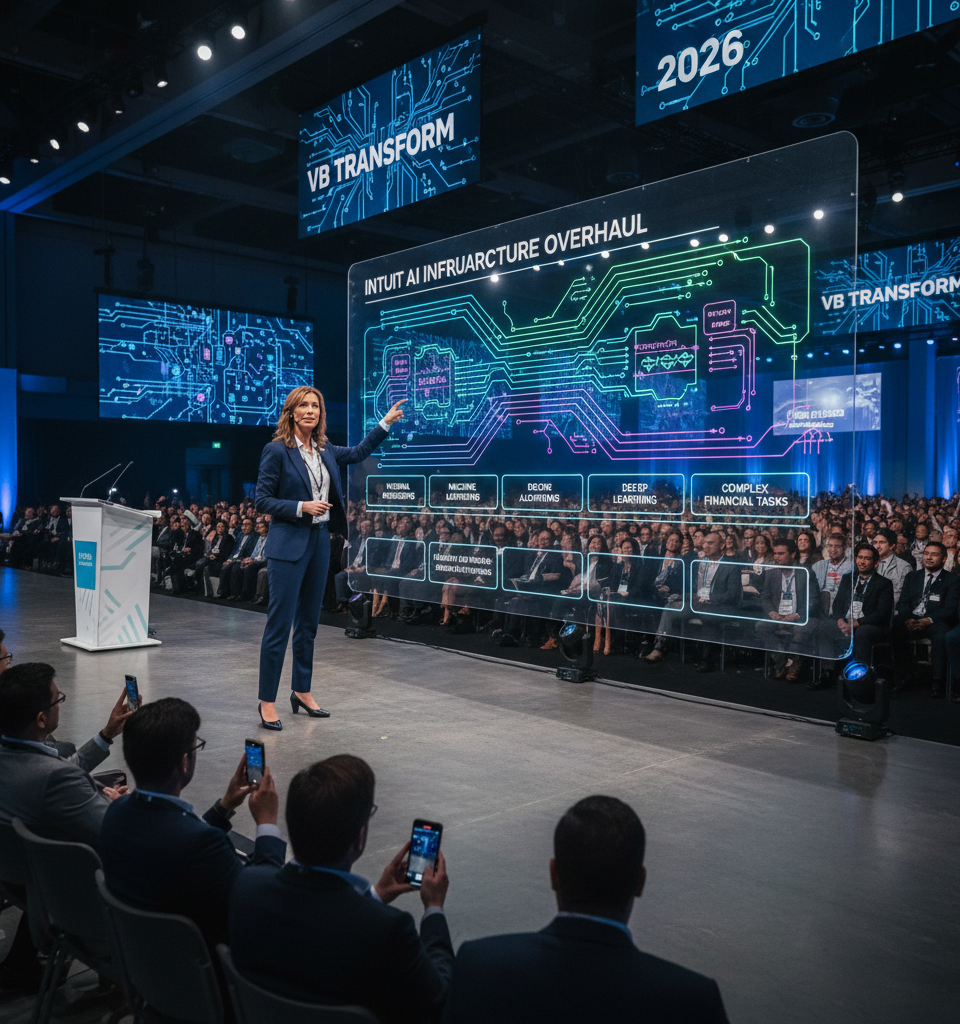
Intuit is set to reveal an extensive restructuring of its artificial intelligence infrastructure at the upcoming VB Transform 2026 conference. The financial software giant will demonstrate how it has re-engineered its core platform to support increasingly fast and intricate AI-driven tasks, a response to evolving customer demands that have outgrown the capabilities of traditional IT architectures.
The Need for Transformation
The impetus for this ambitious undertaking stems from a critical observation: customer expectations for AI interactions have moved beyond simple, rapid conversational exchanges. Users now demand complex, agentic AI-powered solutions, presenting a formidable challenge to legacy systems. Recognizing this shift, Intuit made a strategic decision to overhaul its technical foundation, moving away from a multi-agent setup that, while offering broad capabilities, was ultimately less suited for the granular precision and speed required by modern complex tasks.
A Granular Approach to AI Architecture
The core of Intuit's transformation involves a paradigm shift to a skill-and-tool-based architecture. This new framework emphasizes granular capabilities, allowing AI systems to perform highly specific functions and utilize specialized tools more effectively. A critical element of this re-engineering is the direct integration of human experts into the AI workflow. This hybrid approach ensures that while AI handles complex computations and data processing, human oversight and intervention can be seamlessly applied, enhancing accuracy, ethical considerations, and overall service quality. This represents a mature understanding of AI deployment, recognizing that the most robust solutions often combine automated efficiency with human intelligence and judgment.
Industry Context and Challenges
This move by Intuit reflects a broader trend within the technology industry, where companies are grappling with the limitations of early-generation AI deployments. Many enterprises initially adopted AI solutions that prioritized breadth over depth, leading to systems that could handle a wide range of basic interactions but struggled with nuanced, multi-step processes or situations requiring complex problem-solving. The 'agentic AI' concept – where AI systems can act proactively and autonomously to achieve goals – is pushing the boundaries of existing infrastructure, demanding greater computational power, more sophisticated contextual understanding, and robust error handling mechanisms. Intuit's strategy to address these challenges head-on positions it as a leader in evolving AI infrastructure.
Anticipated Revelations at VB Transform 2026
Attendees at VB Transform 2026 are expected to gain deep insights into the technical specifics of Intuit's revamped platform. The presentation will likely detail the architectural choices made, the engineering challenges overcome, and the measurable benefits already observed or anticipated from this overhaul. This includes discussions on performance metrics, scalability improvements, and the economic efficiencies achieved by optimizing AI operations. By sharing its journey, Intuit aims to provide a blueprint for other organizations facing similar infrastructural pressures in the rapidly advancing field of artificial intelligence.
Future Implications for AI Development
The implications of Intuit's infrastructure re-engineering extend beyond its own operations. This strategic pivot towards a granular, skill-and-tool-based architecture with embedded human expertise could set a new benchmark for enterprise AI development. It underscores the growing recognition that effective AI deployment in complex business environments requires continuous innovation in underlying infrastructure concurrently with advancements in AI models themselves. This approach suggests a future where AI systems are not just intelligent but also highly adaptable, precise, and collaborative, working in concert with human intelligence to drive superior outcomes.