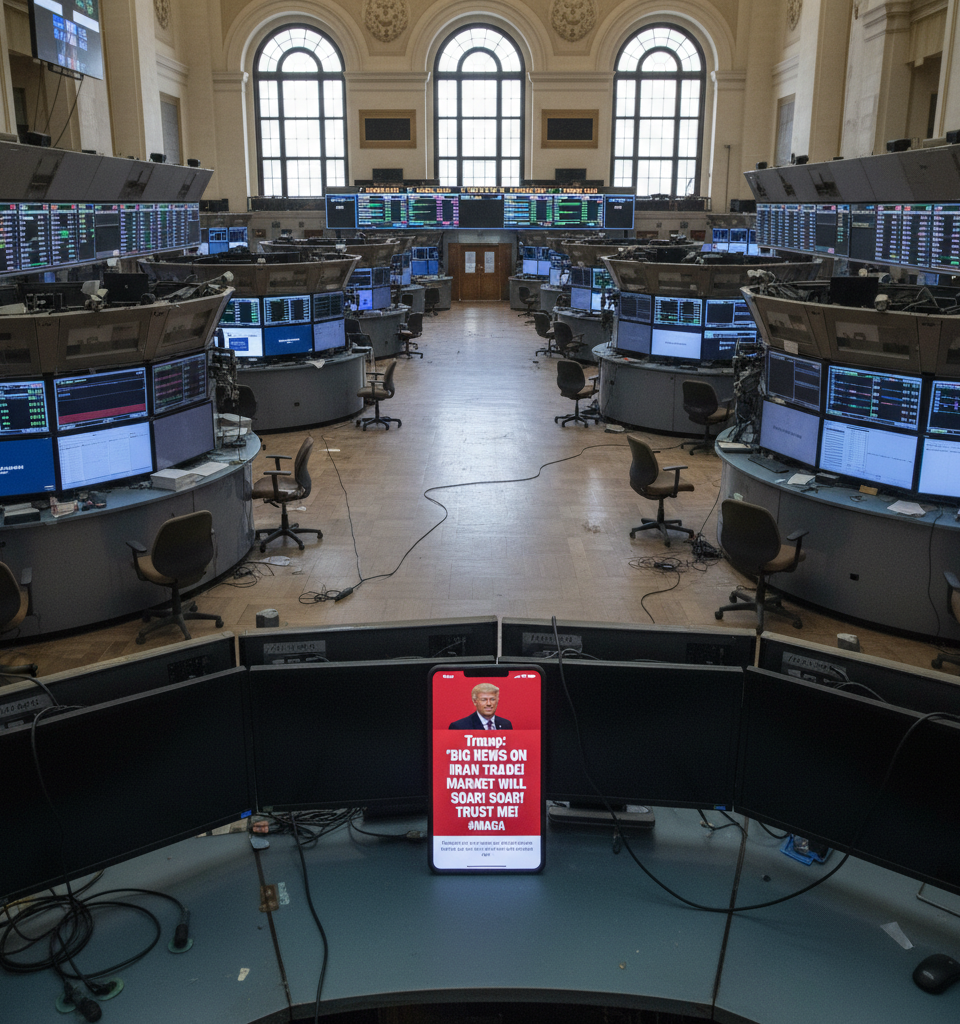
WASHINGTON D.C. — Former President Donald Trump's recent diplomatic gambit, a strategic pause in rhetoric and actions targeting Iran, has failed to deliver the anticipated stock market surge, leaving investors notably unimpressed. The highly publicized de-escalation, seemingly aimed at calming geopolitical jitters and boosting economic confidence, has been met with a muted response from Wall Street. This lukewarm reaction highlights a growing skepticism among market participants regarding the long-term impact of such political maneuvers, even as Trump himself reportedly hoped for a significant market upswing. Critics suggest that the temporary nature of the reprieve and underlying geopolitical instability continue to overshadow any fleeting sentiment boost.
This latest development unfolds against a backdrop of persistent global uncertainty, with the financial markets exhibiting heightened sensitivity to geopolitical flashpoints. Historically, perceived threats to Middle Eastern oil supplies or broader regional stability have often triggered swift and sometimes dramatic market downturns. Trump's administration had previously employed a combative stance towards Iran, culminating in sanctions and rhetorical provocations that often contributed to market volatility. The recent decision to de-escalate, framed by some as a strategic retreat or a moment of diplomatic reconsideration, was widely interpreted as an attempt to remove a significant geopolitical overhang and, by extension, encourage investor confidence.
Despite the former President's reported optimism, potentially even leveraging his Truth Social platform to amplify the perceived positive impact, market indicators stubbornly refused to budge significantly. Analysts point to the inherent short-term nature of the 'pause' as a key factor. Unlike a definitive resolution or a comprehensive diplomatic agreement, a mere reprieve offers little long-term certainty for investors who prioritize stability and predictability. There have been no concrete, quantifiable commitments from either side to suggest a lasting peace, leaving the underlying tensions unresolved and poised to resurface. The lack of detailed policy shifts or quantifiable economic benefits associated with the de-escalation has further compounded investor apathy.
Market Impact and Investor Skepticism
The broader market landscape reflects this cautious sentiment. While there was no immediate sell-off, major indices like the S&P 500 and the Dow Jones Industrial Average showed negligible positive movement directly attributable to the Iran news. The energy sector, often highly reactive to Middle Eastern geopolitics, also saw limited sustained impact, suggesting that traders view the current situation as a temporary abatement rather than a fundamental shift. This stands in contrast to past instances where significant geopolitical developments, both positive and negative, have directly influenced commodity prices and sector performance. Investor confidence, while not overtly negative, is clearly not being buoyed by this specific development, indicating a deeper concern about the macro environment.
Expert Analysis: Beyond the Headlines
Financial analysts and geopolitical experts agree that the market's subdued reaction is largely a function of perception versus reality. "Investors are looking for tangible, lasting solutions, not just temporary ceasefires," commented Dr. Evelyn Reed, a senior analyst at Global Capital Partners. "The underlying issues between the U.S. and Iran remain unresolved. A 'pause' merely delays potential future escalation, it doesn't eliminate the risk." Others, like independent economic consultant Mark Davison, noted, "The market has become quite adept at filtering out political noise from genuine economic signals. Unless there's a clear impact on earnings, supply chains, or global trade, these kinds of political gestures often fall flat." This professional consensus underscores the notion that sophisticated investors demand more than just headline-grabbing political shifts; they require fundamental stability and clarity.
The Road Ahead: What's Next?
The immediate future of U.S.-Iran relations, and consequently its market impact, remains highly uncertain. Without a comprehensive diplomatic framework or concrete steps towards de-escalation, the current 'pause' runs the risk of expiring rapidly, potentially leading to renewed tensions. Investors will be keenly watching for any substantive negotiations, clear policy directives, or evidence of a lasting shift in geopolitical strategy. The market's current response suggests that further significant market rallies tied to this specific issue will only materialize if a more permanent and verifiable resolution to the long-standing geopolitical friction can be achieved. Absent such developments, the financial community appears content to remain on the sidelines, largely unmoved by short-term political maneuvering.