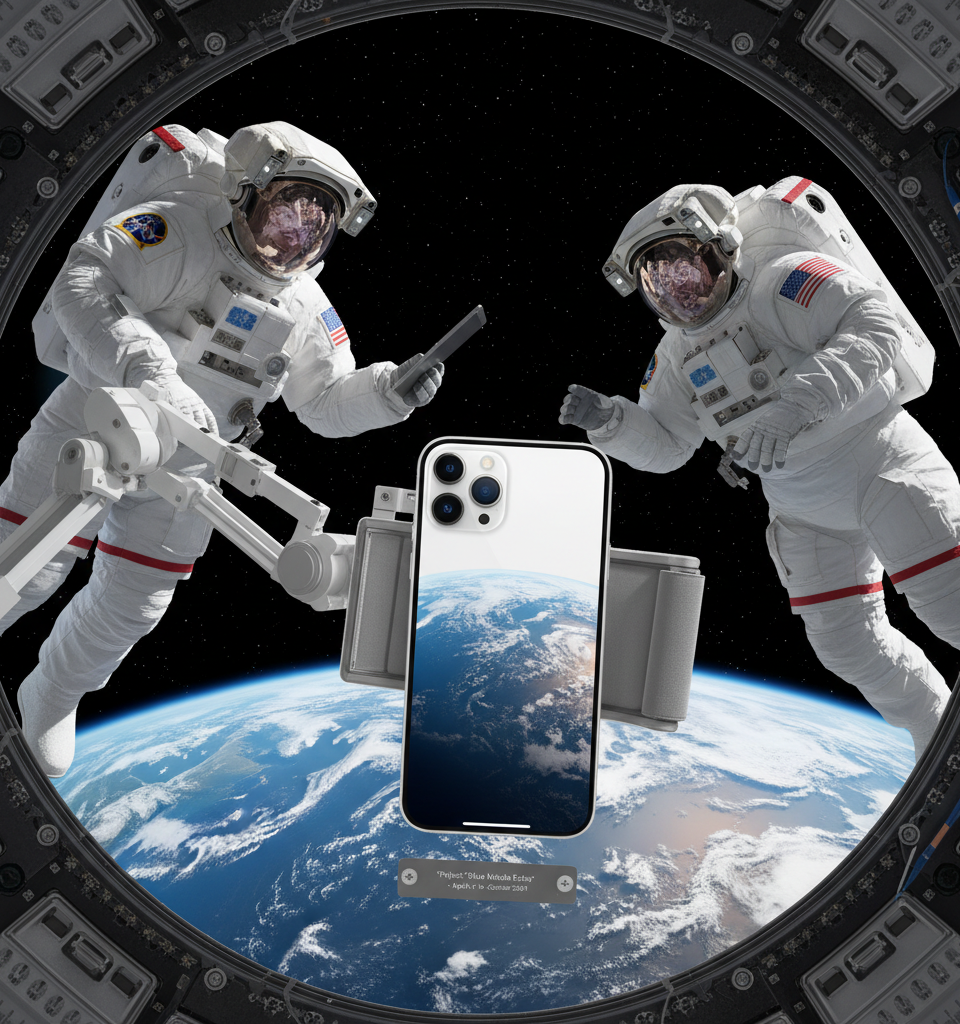
In a groundbreaking achievement that blurs the lines between consumer technology and aerospace engineering, a standard Apple iPhone has successfully captured and transmitted high-resolution photographs of Earth from low-Earth orbit. This unprecedented feat, executed as part of a specialized mission, represents the first time a commercial, off-the-shelf smartphone has independently operated and successfully imaged our planet from such a vantage point. The images, reportedly depicting Earth as a vivid blue marble against the inky blackness of space, have sent ripples of excitement through both the technology and space communities.
A New Frontier for Consumer Electronics
This accomplishment is more than just a publicity stunt; it underscores the astonishing advancements in miniaturization, sensor technology, and processing power embedded within modern smartphones. Historically, Earth observation from space has been the exclusive domain of highly specialized, multi-million-dollar cameras fitted onto dedicated satellites. The ability of a device, costing a fraction of these specialized systems, to perform a similar function has profound implications. It suggests a future where access to space-based imaging could become significantly democratized, potentially opening new avenues for research, education, and even citizen science projects that were previously unimaginable due to cost and complexity barriers.
Mission Specifics and Technical Prowess
While specific details of the mission payload and deployment method remain under wraps, initial reports indicate the iPhone was integrated into a compact, protective housing designed to withstand the harsh conditions of space, including extreme temperatures and radiation. The device's robust A-series chip, combined with its advanced camera array – featuring capabilities such as computational photography, deep sensor integration, and high dynamic range (HDR) imaging – allowed it to capture and likely process the visual data. The success hinges not just on the optical hardware, but also on the sophisticated software algorithms that optimize image quality under challenging lighting conditions. Analysts speculate the images were transmitted via a direct communication link or stored onboard for later retrieval, showcasing impressive power efficiency and data handling for a consumer device.
Shifting Sands in the Tech Landscape
This development poses a significant challenge and potential wake-up call for Apple's competitors, particularly those in the Android ecosystem. While Android manufacturers have consistently pushed boundaries in camera hardware and software, this specific orbital achievement currently stands unique to the iPhone. The immediate impact is likely to intensify the 'camera wars' in the premium smartphone segment, compelling other brands to not only match but potentially surpass Apple's iterative improvements with truly innovative applications of their own camera technologies. This could lead to increased R&D spending and more ambitious projects aimed at demonstrating comparable or greater technological prowess.
Expert Commentary on the 'Space Race' of Smartphones
Dr. Anya Sharma, a leading analyst in computational photography at TechSight Research, commented, "This iPhone mission isn't just about taking a picture; it's a testament to the unparalleled integration of hardware and software that Apple has achieved. It sets a new benchmark for what's possible with a 'pocket computer.' While other manufacturers have exceptional camera sensors, this demonstrates a critical capability beyond mere megapixels – robust engineering for extreme environments and reliable performance under pressure." She added, "We could see this fuel a new 'space race' among smartphone giants, not necessarily to send more phones to space, but to develop technologies that offer superior resilience, power efficiency, and imaging capabilities that could be applied across various demanding sectors, from industrial monitoring to advanced robotics."
The Road Ahead: From Orbit to Everyday Use
The immediate future will likely see Apple leverage this achievement heavily in its marketing campaigns, solidifying its image as an innovation leader. For the broader industry, the focus will turn to how these extreme-environment tests translate into tangible benefits for everyday users. Improved camera durability, enhanced low-light performance, and more resilient internal components could trickle down from such ambitious projects. Furthermore, the success may inspire closer collaborations between consumer electronics firms and space technology companies, exploring novel applications for high-volume, low-cost smart devices in various aerospace contexts, potentially leading to more affordable satellite constellations or advanced remote sensing platforms. The next frontier for smartphone technology may not just be in our pockets, but far above us, gazing back at Earth.