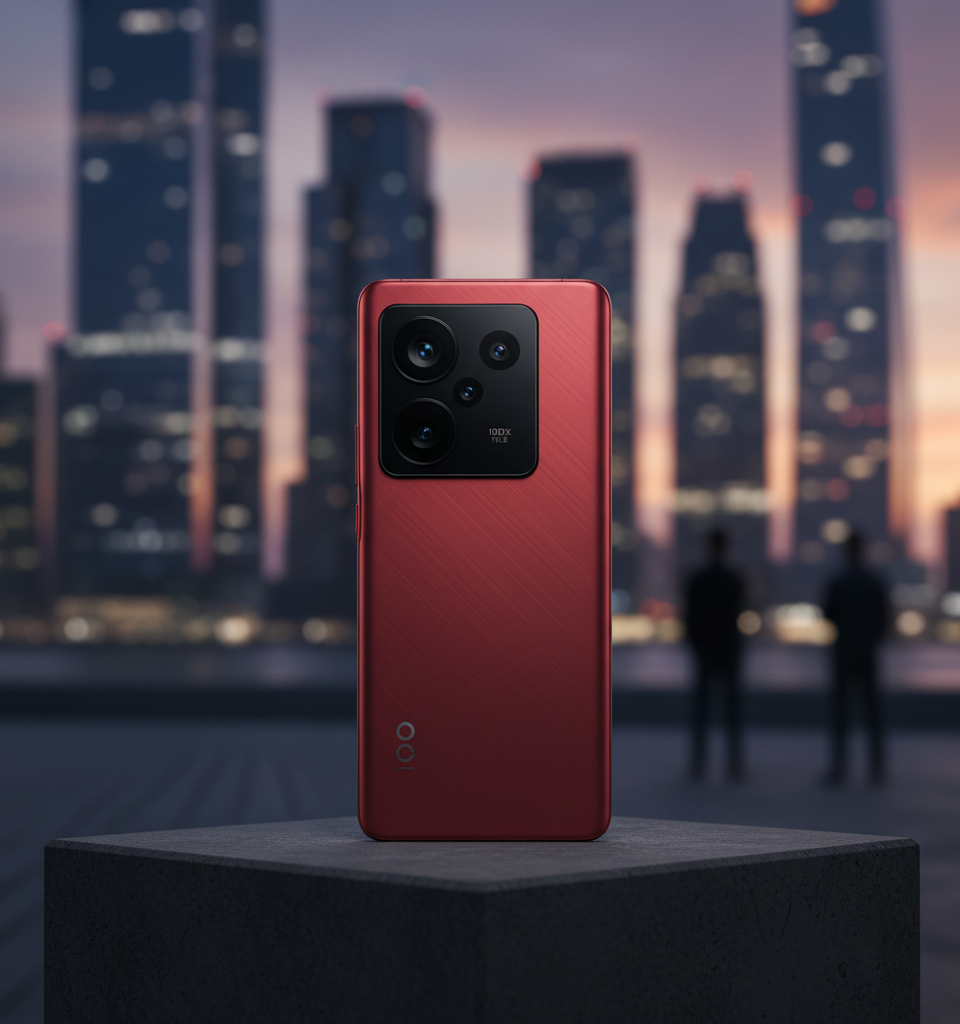
The revealed design of the iQOO 16 signals iQOO's strategic intent to capture market share through differentiated industrial design, a critical factor for competitive positioning among global smartphone manufacturers. This launch could influence component supplier negotiations and marketing strategies across the high-end mobile segment.
Following an initial teaser earlier this week, iQOO has now fully unveiled the rear design of its upcoming flagship smartphone, the iQOO 16. The company’s latest reveal offers a clear view of the device’s distinctive aesthetic ahead of its anticipated launch later this month. This new handset is expected to debut concurrently with the iQOO Pad Ultra, expanding iQOO's product ecosystem.
Design Innovations and Key Features
The most prominent feature highlighted in the reveal is the iQOO 16’s redesigned rear camera module. It presents a square-shaped configuration, featuring a pronounced raised lip that encircles the triple-camera array. This specific design choice distinguishes the iQOO 16 from its predecessors and current market competitors. The triple cameras themselves are arranged in a unique, non-symmetrical layout, suggesting a focus on both aesthetic novelty and potential functional innovation.
Adding to its distinctiveness, the LED flash is positioned outside the main camera module, situated in the top-right corner of the phone's rear panel. Within the camera module, the text “100x Tele” is visibly printed, indicating a significant zoom capability for one of the lenses. This suggests iQOO is aiming to position the iQOO 16 as a strong contender in mobile photography, particularly in the telephoto domain.
Market Context and Competitive Landscape
iQOO, as a sub-brand of Vivo, frequently targets the performance-oriented segment of the smartphone market. The emphasis on a unique camera design and advanced zoom capabilities suggests a strategy to appeal to power users and photography enthusiasts. The market for premium smartphones remains intensely competitive, with brands constantly seeking differentiating features in design, camera technology, and processing power. A distinctive visual identity, such as the one seen on the iQOO 16, can play a crucial role in brand recognition and consumer appeal in crowded retail environments.
The simultaneous launch of the iQOO Pad Ultra points towards a broader strategy to offer a cohesive ecosystem of devices. This approach is common among major technology companies, aiming to encourage brand loyalty and provide seamless user experiences across multiple form factors. The success of such a strategy often depends on the integration and performance synergy between the different devices.
Industry Implications and Future Outlook
The introduction of the iQOO 16 with its bold design and advertised camera features could intensify competition within the high-end smartphone sector. Other manufacturers may respond by accelerating their own design iterations or enhancing camera specifications to maintain market relevance. For component suppliers, a unique camera module design like this often requires custom manufacturing processes and specialized parts, potentially signaling future demand for specific types of optical components and sensor technologies.
Analysts will be closely monitoring the reception of the iQOO 16's design and its performance benchmarks once it officially launches. The “100x Tele” claim, in particular, will be scrutinized for its practical application and image quality, as high-zoom capabilities are a key battleground for smartphone innovation. The combined launch with the iQOO Pad Ultra will also offer insights into the brand's larger ecosystem play and its ambition to compete with established players in both the smartphone and tablet segments.