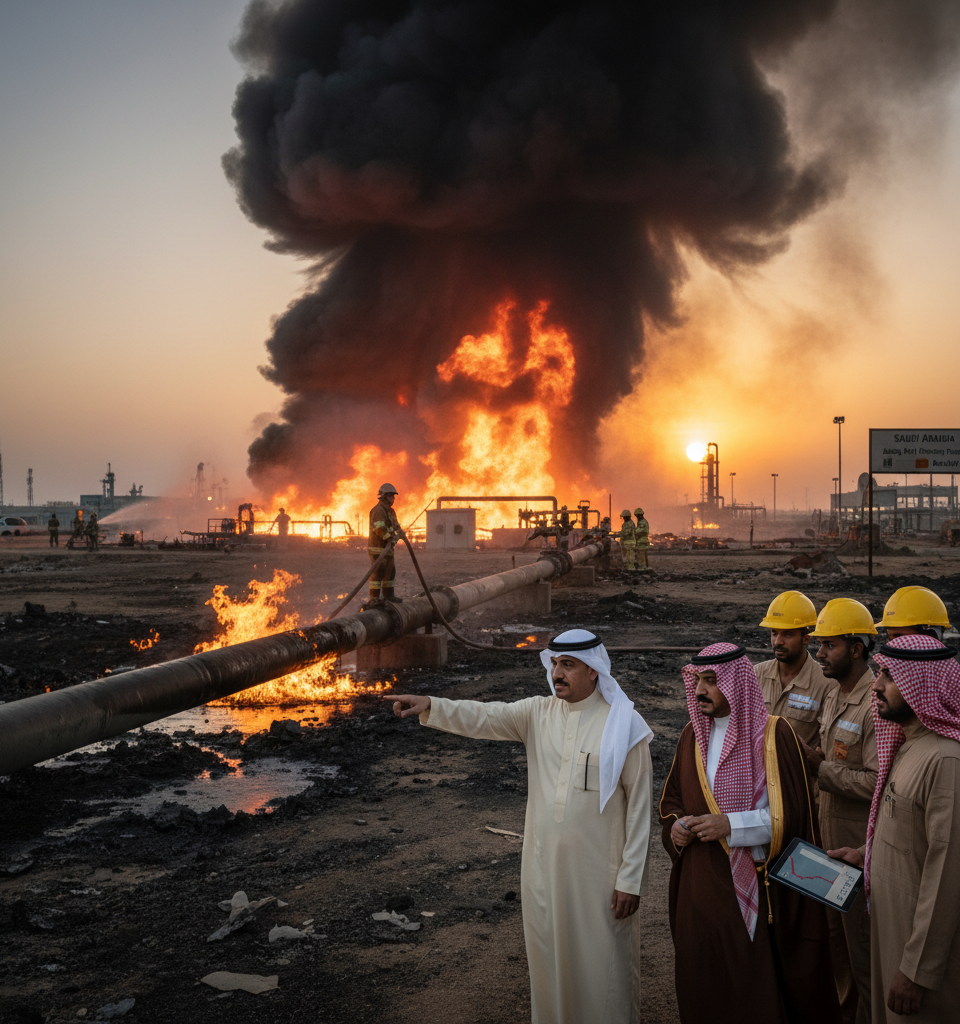
Riyadh, Saudi Arabia – May 19, 2026 – A series of coordinated Iranian attacks on vital Saudi Arabian oil pipeline infrastructure and key production facilities have substantially reduced the kingdom's oil output, according to initial assessments. The deliberate targeting of these assets follows earlier Iranian naval aggressions against oil tankers in the strategically critical Strait of Hormuz, intensifying concerns about the stability of global energy markets and the potential for a severe supply shock.
The assaults on Saudi soil represent a direct escalation in regional tensions, extending beyond the maritime domain into the heart of the world's largest oil exporter's operational capacity. This development is particularly alarming given Saudi Arabia's role as a swing producer, historically relied upon to stabilize prices and compensate for supply disruptions elsewhere. The immediate impact on its output threatens to create a significant deficit in an already strained international market, with far-reaching economic consequences globally.
Escalating Regional Tensions and Infrastructure Vulnerabilities
The attacks, which occurred over the past 72 hours, appear to have targeted multiple points along key crude oil transmission lines and processing centers within Saudi Arabia. While specific details regarding the extent of the damage remain under official review, preliminary reports indicate significant operational setbacks. The assaults on the pipeline network are particularly concerning as they not only disrupt the flow of crude but also compromise the logistical flexibility Saudi Arabia relies on to export oil from various terminals. Such tactical strikes illustrate a sophisticated understanding of Saudi Arabia's energy lifeline.
Today's events compound the already precarious situation stemming from Iran's recent actions in the Strait of Hormuz. Those earlier attacks on commercial shipping vessels had already injected substantial uncertainty into global supply chains, driving up insurance premiums and rerouting some maritime traffic. The Strait, a narrow chokepoint between the Persian Gulf and the Arabian Sea, is a conduit for approximately one-fifth of the world's total oil consumption. Any disruption there, coupled with direct hits on production and transport infrastructure, creates a dual threat to energy security on an unprecedented scale.
Global Market Repercussions and Supply Shock Fears
The immediate aftermath of these attacks is expected to be felt most acutely in international oil markets. Oil futures prices are already exhibiting substantial volatility, with analysts predicting a sharp upward trajectory in crude benchmarks such as Brent and WTI. The reduction in Saudi output directly diminishes overall global supply, while the heightened geopolitical risk premium will further inflate prices. This scenario poses a formidable challenge for economies worldwide, many of which are still grappling with inflationary pressures and seeking stable energy costs.
Energy commodity analysts are rapidly revising their supply forecasts, with many now anticipating a significant supply-demand imbalance. The cumulative effect of reduced Saudi output and the ongoing threat to shipping in the Strait of Hormuz could lead to a severe supply contraction, potentially pushing crude oil prices to levels not seen in years. Beyond the immediate price impact, there are growing concerns about the long-term reliability of Middle Eastern oil supplies, prompting a renewed focus on diversification and strategic reserves in consuming nations.
Diplomatic Fallout and International Response
The international community is expected to swiftly condemn these latest Iranian actions. Diplomatic efforts will likely intensify to de-escalate the burgeoning crisis, though the direct targeting of sovereign infrastructure within Saudi Arabia represents a considerable hurdle to peaceful resolution. Major global powers, including the United States, European Union, and Asian economic giants, are likely to initiate high-level consultations to assess the geopolitical implications and coordinate potential responses to safeguard global energy security. The question of whether these attacks constitute an act of war will undoubtedly dominate international discourse in the coming days.
The immediate near-term implications involve rapid assessments by Saudi Aramco and other relevant authorities to determine the full extent of the damage, the required repair timelines, and the precise impact on production volumes. Simultaneously, global energy agencies and major consuming nations will be closely monitoring the situation, potentially considering releases from strategic petroleum reserves to mitigate the immediate supply crunch. The coming weeks will be critical in determining whether this latest escalation can be contained or if it foreshadows a prolonged period of instability for global energy markets.