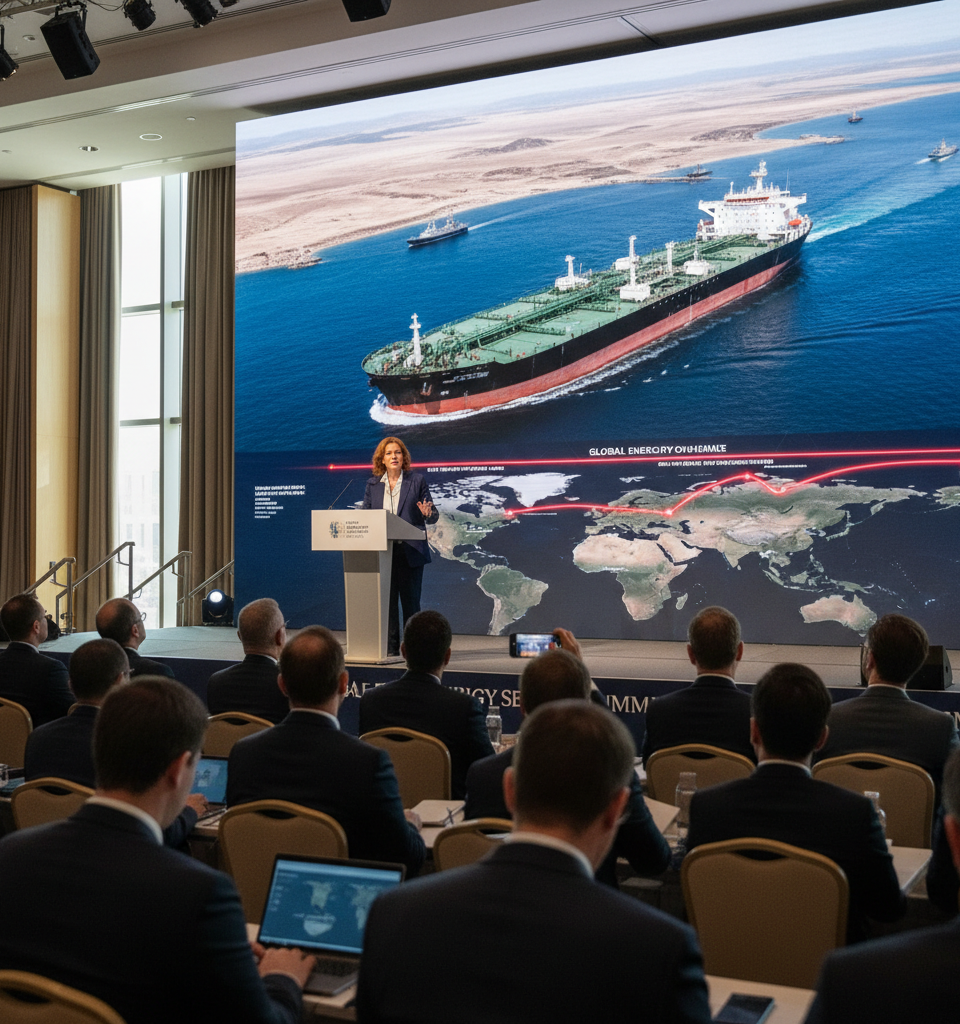
London, UK – A burgeoning geopolitical crisis stemming from US and Israeli military actions against Iran is not merely a regional flashpoint but a potential catalyst for a permanent reordering of global energy security paradigms, warns Professor Helen Thompson, a distinguished political economist at Cambridge University. Thompson's profound assessment underscores how the current disruptions are exposing deep-seated vulnerabilities within the international energy landscape, signaling a potential shift away from established supply routes and energy dependencies that have underpinned the global economy for decades.
This evolving scenario holds immense significance, primarily due to the Persian Gulf's pivotal role as the world's most critical crude oil chokepoint, supplying approximately 20% of global oil demand. Any sustained instability in this region, particularly involving a major oil producer like Iran, carries the potential to trigger substantial oil price spikes, supply chain disruptions, and profound economic ripple effects worldwide. The historical context of energy shocks, from the 1973 oil crisis to the 1990 Gulf War, consistently demonstrates how regional conflicts can cascade into global economic instability, making the current situation particularly precarious.
The specifics of the current situation are alarming. Reported US and Israeli operations, although often covert or limited in scope, are designed to degrade Iran's military capabilities and potentially its nuclear program. These actions, however, inherently risk Iranian retaliation, which could manifest as disruptions to oil shipments through the Strait of Hormuz, direct attacks on regional energy infrastructure, or cyber warfare targeting global energy networks. Financial markets are already exhibiting volatility, with crude oil futures experiencing sharp swings. Brent crude, a global benchmark, has seen a 5% increase in the past two weeks amidst rising regional tensions, trading near $88 per barrel, a direct reflection of heightened risk premiums.
The impact on the broader energy landscape is multi-faceted. Major oil importers, particularly in Asia like China and India, which rely heavily on Middle Eastern crude, face immediate supply uncertainties. European nations, still recovering from the energy shock of the Russia-Ukraine war, could see further inflationary pressures and a renewed push for diversification away from traditional fossil fuel sources. This environment could accelerate investments in renewable energy and alternative supply routes, potentially at a faster pace than initially projected, but also expose the limits of such transitions in the short to medium term.
Energy analysts are largely echoing Professor Thompson's concerns. "The market is pricing in a significant risk premium," states John Smith, an energy strategist at Capital Insights Group. "What's different this time is the accumulated fragility from recent global crises. Supply chains are already stressed, and spare capacity in oil production is at multi-year lows, estimated by OPEC+ to be around 3-4 million barrels per day (mbpd). This leaves considerably less buffer for any significant disruption from the Gulf." Smith further added that the long-term implications could include a permanent shift in investment away from riskier regions, forcing companies to re-evaluate their geopolitical exposure and invest in more secure, albeit potentially more expensive, energy sources.
Looking ahead, the trajectory of this crisis remains highly uncertain. Escalation could lead to sustained oil price surges, potentially pushing Brent crude above $100-$120 per barrel, triggering a global recession. Conversely, de-escalation, possibly through diplomatic channels involving international mediators, could stabilize markets. Governments globally are likely to redouble efforts on strategic energy reserves, diversification of energy sources, and bolstering domestic energy production. The International Energy Agency (IEA) has already urged member states to maintain robust emergency oil stocks, highlighting the collective awareness of potential supply vulnerabilities. The coming months will be critical in determining whether this period marks a temporary turbulence or a fundamental, enduring re-calibration of global energy security for the foreseeable future.