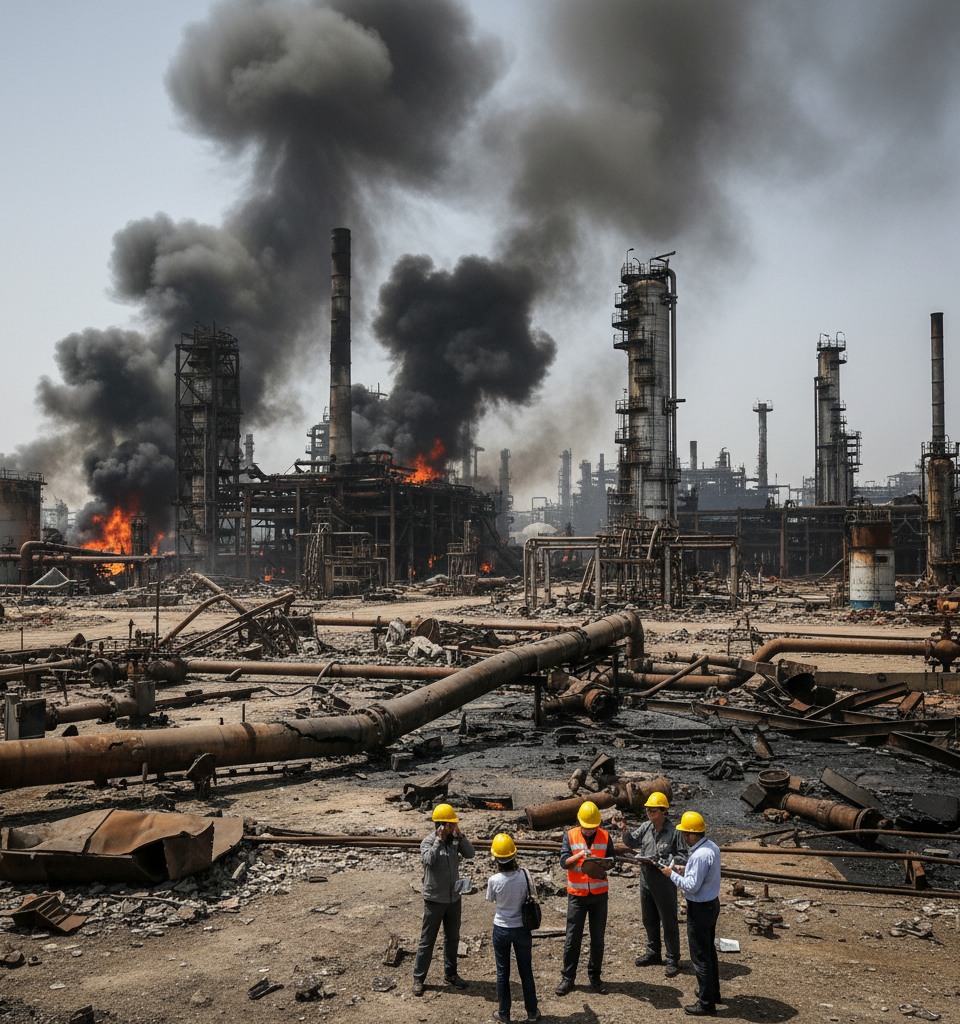
Recent geopolitical tensions and conflicts within Iran have caused an estimated $25 billion to $58 billion in damage to the nation's critical energy infrastructure, according to a sobering new report from Rystad Energy. The detailed analysis, released earlier this week, underscores the devastating economic toll of the unrest and warns that restoring production capabilities to pre-conflict levels could take a period spanning several years, with profound implications for both the regional economy and global energy supply chains.
The Crippling Cost of Conflict
This extensive damage estimate highlights the severe vulnerability of energy assets in volatile regions and the long-term consequences of armed conflict. Iran, a major player in the global oil and gas industry, relies heavily on its vast network of exploration, production, refining, and transportation infrastructure. The destruction of these facilities not only curtails current output but also erodes future potential, forcing a costly and time-consuming reconstruction effort. This situation is particularly critical given Iran's historical role as an OPEC member and its substantial proven reserves, making any disruption felt across international markets.
Key Figures and Ruined Assets
The Rystad report meticulously details the breadth of the damage, identifying key areas such as oil fields, gas processing plants, pipelines, and export terminals that have sustained significant hits. While specific incident reports are often difficult to verify independently due to security concerns and information restrictions, Rystad's methodology likely incorporates satellite imagery, seismic data, and ground intelligence to assess the scale of destruction. The estimated range of $25 billion to $58 billion reflects the varying degrees of damage, from partial operational disruption to complete demolition, and includes the cost of both physical repairs and lost production revenue. Industry sources, requesting anonymity due to the sensitivity of the information, have corroborated that the scale of damage is indeed substantial, particularly in southwestern provinces.
Global Market Repercussions
The prolonged nature of repairs and the reduction in Iran's energy output are poised to have a tangible impact on global energy markets. A significant reduction in Iranian oil and gas exports would tighten global supply, potentially driving up prices for crude oil and natural gas. This comes at a time when the world is already grappling with inflationary pressures and the ongoing energy transition. For major importing nations, the sustained absence of Iranian supply necessitates a scramble for alternative sources, potentially increasing reliance on other producers and exacerbating geopolitical complexities.
Expert Analysis: A Protracted Road Ahead
Energy analysts widely agree that the path to full recovery for Iran's energy sector will be arduous. "This isn't merely about replacing a few damaged components; it's about rebuilding complex industrial ecosystems," noted Dr. Elara Vance, a senior energy economist at a London-based think tank. "Funding for such massive reconstruction will be a major challenge, particularly under existing sanctions regimes. Furthermore, attracting foreign expertise and investment will be an uphill battle given the continued instability." She emphasized that even with significant resources, the sheer engineering challenge of rehabilitating advanced energy facilities could easily span five to ten years.
Future Implications and Geopolitical Tensions
Looking ahead, the long-term implications extend beyond mere economic costs. The crippled energy sector could further destabilize Iran's internal economy, potentially exacerbating social and political tensions. Externally, reduced Iranian oil supply might push other major producers, particularly within OPEC+, to compensate, further complicating global oil market dynamics. The geopolitical landscape surrounding Iran, already fraught with complexities, is likely to intensify as nations assess the long-term implications of a weakened, yet still critically important, energy player.
The Unfolding Recovery Challenge
While the immediate focus remains on assessing the full extent of the damage, the coming months and years will witness Iran grappling with the monumental task of reconstruction. The severity of the estimated damage, as highlighted by Rystad, serves as a stark reminder of the immense human and economic cost of conflict, particularly when vital infrastructure is targeted. The world will be watching closely to see how Iran, and the global energy market, adapt to this costly setback.