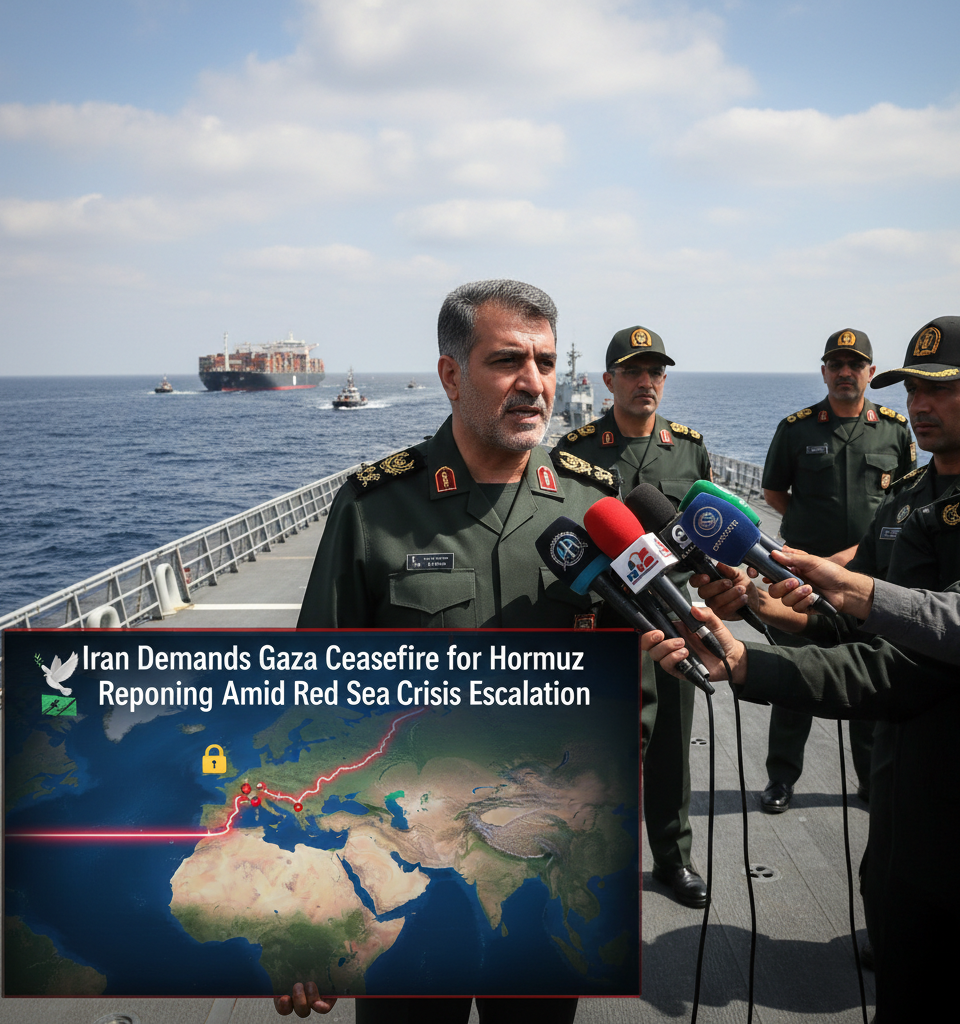
TEHRAN, Iran – January 25, 2024 – In a significant escalation of regional tensions, Iran today declared an explicit and non-negotiable condition for the potential reopening of the strategically vital Strait of Hormuz: an immediate and lasting ceasefire in the Gaza Strip. This pronouncement, delivered by a senior Revolutionary Guard Corps (IRGC) official to state media, directly links critical global energy pathways to the ongoing Israeli-Hamas conflict, sending ripples of concern through international shipping and energy markets. The announcement comes as disruptions in the Red Sea, primarily due to Houthi attacks, continue to re-route cargo and drive up shipping costs.
Geopolitical Nexus: Hormuz, Gaza, and Global Trade
The Strait of Hormuz, a narrow waterway between Iran and Oman, is arguably the world's most critical oil chokepoint, through which approximately 20% of the world's total petroleum liquids consumption and a third of all seaborne traded oil passes daily. Its closure, even temporarily, would send crude oil prices soaring and create an unprecedented energy crisis. Iran's latest demand fundamentally intertwines its national security and regional influence with the humanitarian crisis in Gaza, signaling its willingness to leverage its control over a vital global artery to achieve its geopolitical objectives. This move echoes past threats but is now explicitly tied to an external conflict, marking a dangerous new phase in Middle East instability.
Iran's Overt Condition and Red Sea Warning
The declaration, attributed to Brigadier General Mohammad Reza Naqdi, Deputy Coordinator of the IRGC, stated unequivocally: "The Strait of Hormuz will remain closed to all international shipping until a permanent ceasefire is established in Gaza." He further warned that alternative routes, specifically referencing the Red Sea, would also face Iranian intervention if the Gaza conflict persists. This explicit threat expands Iran's perceived zone of influence and escalates the potential for direct confrontation with international naval forces. Data from Lloyd's List Intelligence indicates that shipping transiting the Suez Canal and Red Sea has fallen by over 40% since November 2023, with major carriers like Maersk and MSC rerouting vessels around the Cape of Good Hope, adding 10-14 days and millions in fuel costs per journey.
Broader Market Repercussions and Energy Security Concerns
The implications for global markets are profound. Brent crude futures, already trading above $80 per barrel, are highly sensitive to Middle East instability. A closure, or even the credible threat of closure, of Hormuz could push prices well past $100, impacting inflation globally and potentially triggering an economic downturn. Industries reliant on just-in-time supply chains, from automotive to electronics, face further disruptions. Shipping insurance premiums for the Persian Gulf and Red Sea corridors have already surged by over 300% in recent weeks, transferring significant costs to consumers worldwide. This situation underscores the fragility of current global energy and trade architectures.
Expert Analysis: A Dangerous Deterrent or Escalation?
Security analysts are divided on Iran's true intentions. Dr. Elena Petrova, a geopolitical expert at the Atlantic Council, suggests, "This is a calculated, high-stakes gambit by Tehran to exert maximum pressure on the international community, particularly the United States, to compel Israel to end its Gaza operations. It's a deterrence strategy, but one fraught with extreme risks of miscalculation." Conversely, Captain John Davies (ret.), a maritime security consultant, warns, "Any attempt to physically impede passage through Hormuz would be met with an overwhelming, multinational response. This is not a bluff to be taken lightly; it's a direct challenge to the freedom of navigation and would invite severe repercussions, potentially leading to a regional conflagration beyond anything we've seen in decades." The current rhetoric indicates a heightened risk of unintended consequences.
What Lies Ahead: Diplomacy, Escalation, or Coercion?
The immediate future hinges on diplomatic efforts to de-escalate the Gaza conflict. Should the conflict persist, Iran's threat places immense pressure on international actors. The United States Fifth Fleet, headquartered in Bahrain, maintains a significant presence in the Persian Gulf to ensure the free flow of commerce. Any Iranian action to impede shipping would likely trigger a robust military response. The coming weeks will test the resolve of all parties, determining whether this Iranian declaration is a successful act of coercive diplomacy or a dangerous precursor to a more expansive regional conflict, with global economic ramifications potentially reaching trillions of dollars. International bodies, including the UN Security Council, are expected to weigh in on the implications of this new development, underscoring the urgent need for a resolution to the ongoing instability.