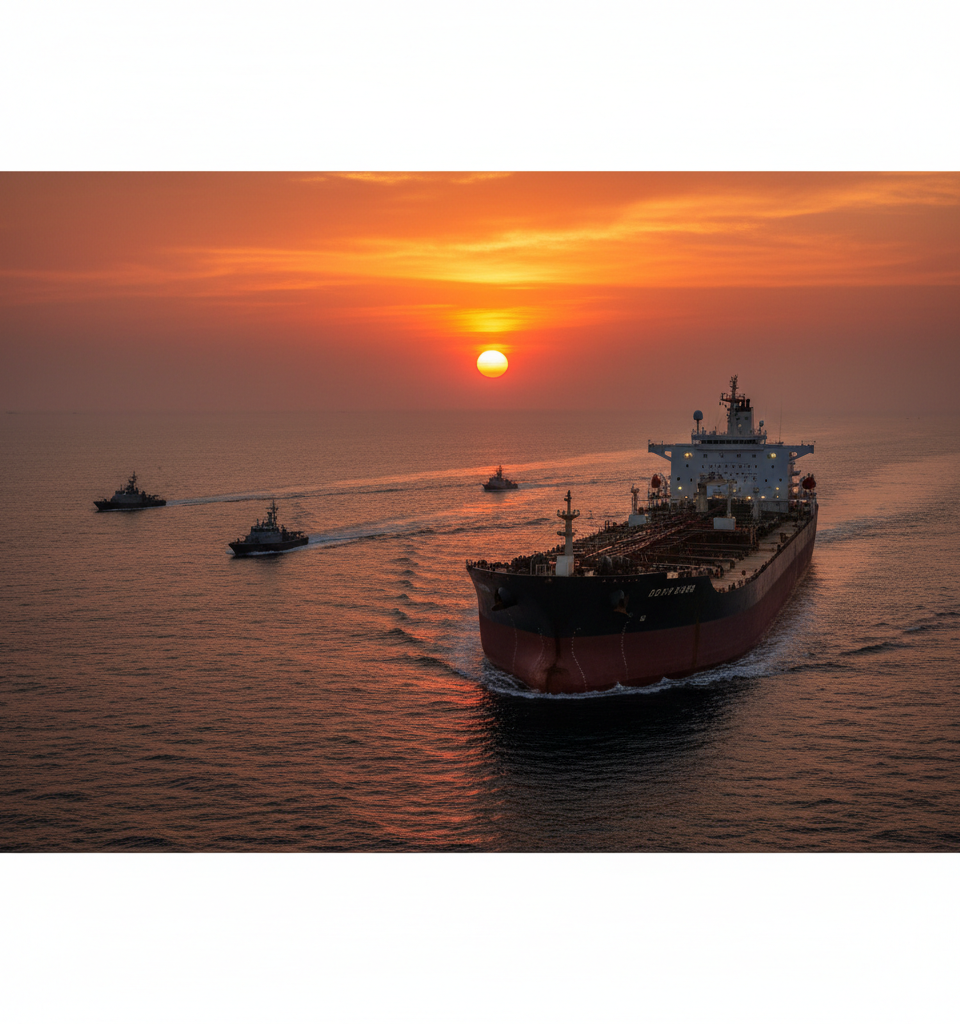
ABU DHABI, UAE – Even in the immediate aftermath of a cessation of hostilities, Iran is remarkably maintaining a stringent economic and strategic chokehold on the Strait of Hormuz, the world's most vital oil transit chokepoint. This persistent pressure is forcing sovereign nations, particularly those heavily reliant on energy exports and imports, into a precarious position: striking expedient deals with Tehran that risk putting them at odds with the United States and its allies. The development underscores the enduring geopolitical volatility of the Persian Gulf and the complex calculations facing international players.
A Historical Nexus of Conflict and Commerce
For decades, the Strait of Hormuz, a narrow waterway connecting the Persian Gulf with the Arabian Sea and beyond, has been a flashpoint. Its strategic importance cannot be overstated; approximately one-fifth of the world's total petroleum liquids consumption, roughly 21 million barrels per day (bpd) in 2022, transits through this chokepoint. Historically, Iran, situated along the Strait's northern coast, has used its geographical advantage to project power, often threatening to close the passage during periods of heightened tension or as leverage against international sanctions. The current situation, however, is distinct, manifesting as a subtle yet effective economic blockade rather than overt military interdiction, demonstrating a tactical shift in Tehran's regional engagement strategy following recent de-escalation efforts.
The Unseen Grip: Tactics and Economic Fallout
Iran's leverage is multifaceted. Beyond direct naval patrols, Tehran is reportedly implementing complex and often arbitrary administrative and customs regulations, significantly delaying vessel movements and increasing operational costs for shipping companies. Sources within the maritime industry, speaking anonymously due to the sensitivity of the matter, cite instances of inexplicable vessel detentions and bureaucratic hurdles that can stretch transit times by days, sometimes weeks. This uncertainty translates into higher insurance premiums and logistical disarray. For example, maritime insurance rates for voyages through the Strait have seen a reported increase of 15-20% in the last quarter, adding millions of dollars annually to operating expenses for major shipping lines. Furthermore, specific commercial agreements with Iranian entities are increasingly becoming a prerequisite for smoother passage for certain national flags, creating a de facto toll system.
Reshaping Global Energy and Trade Architectures
This Iranian strategy has profound implications for global energy markets and international trade. Nations heavily dependent on Gulf oil and gas, from China and India to various European economies, are now confronting a difficult choice: either absorb increased costs and unreliability or engage directly with Iran to secure preferential treatment. This engagement often involves circumventing U.S. sanctions or offering concessions, whether economic or diplomatic. Such bilateral deals risk fragmenting existing international unified fronts against Iran's nuclear program or its regional interventions, simultaneously undermining U.S. efforts to isolate the Islamic Republic. Energy diversification initiatives, while long-term solutions, are being accelerated, but immediate reliance on the Strait remains unavoidable for many.
Expert Insights: A Calculated Gambit
According to Dr. Eleanor Vance, a senior fellow at the Institute for Gulf Studies, "Tehran has masterfully transformed a traditional military threat into a sophisticated economic and diplomatic lever." She adds, "By not overtly closing the Strait, but rather making its passage sufficiently burdensome and unpredictable, Iran is compelling nations to bargain directly. This not only generates revenue and diplomatic recognition but also implicitly challenges U.S. hegemony in the region without firing a single shot."
The Diplomatic Tightrope and Washington's Dilemma
For the United States, this situation presents a significant diplomatic challenge. While reaffirming its commitment to freedom of navigation, Washington is hesitant to escalate tensions through direct military confrontation following recent de-escalation with Iran. The risk of disrupting global energy supplies and fracturing alliances with energy-dependent partners is too high. Instead, the U.S. is expected to increase diplomatic pressure on its allies to resist Iranian overtures and explore alternative shipping routes or energy sources, a complex and often slow process. The recent trilateral security pact between the U.S., UK, and Australia (AUKUS) is seen by some analysts as an indirect effort to bolster regional maritime security, though its direct impact on the Strait of Hormuz remains limited.
Future Uncertainties and Escalating Stakes
The future trajectory of this situation hinges on multiple factors: the effectiveness of U.S. diplomatic counter-efforts, the economic resilience of nations facing Iran's pressure, and Iran's own domestic political and economic imperatives. Should Tehran's economic stranglehold persist or intensify, it could lead to a permanent re-calibration of global maritime trade routes, potentially driving up energy costs worldwide and fostering a new era of geopolitical realignment in the Middle East. The delicate balance maintained by the recent ceasefire could easily unravel if the economic pressures become unsustainable, raising the specter of renewed confrontation in this perpetually volatile region.