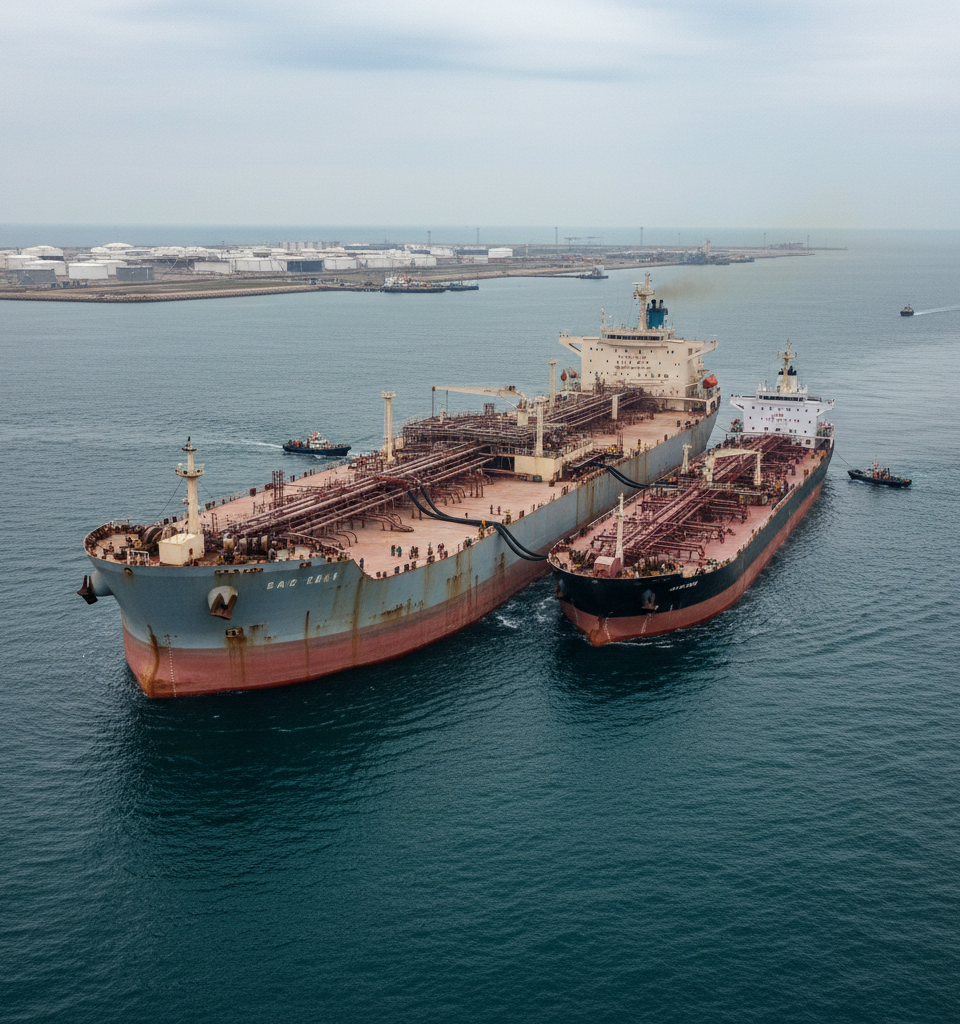
Tehran has commenced a deliberate and strategic reduction in its crude oil output, a move designed to mitigate an impending storage crisis exacerbated by stringent U.S. sanctions. Rather than awaiting the complete saturation of its onshore and floating storage facilities, Iranian authorities are proactively cutting production, seeking to maintain operational flexibility and avoid a complete shutdown of oil wells. This action underscores Iran's sophisticated, albeit challenging, adaptation to sustained economic pressure from Washington.
This current predicament is a direct consequence of the Trump administration's 2018 withdrawal from the Joint Comprehensive Plan of Action (JCPOA) and the subsequent re-imposition of sweeping sanctions. The U.S. policy aims to drive Iran's oil exports to zero, severely curtailing its primary source of foreign exchange earnings. For a nation heavily reliant on oil revenues, the inability to sell crude translates directly into economic hardship, making the management of unsold oil a paramount concern. Historically, Iran has utilized its extensive network of onshore tanks and National Iranian Tanker Company (NITC) vessels for floating storage, but these have finite limits.
Key details emerging from recent analyses suggest Iran's current production hovers around 2.0-2.1 million barrels per day (bpd), a significant decline from pre-sanction levels that often exceeded 3.5 million bpd. Exports are estimated to be as low as 100,000-200,000 bpd in some periods, a fraction of their historical averages. Industry sources and satellite imagery recently indicated that Iranian floating storage capacity is reaching critical levels, with reports of over 100 million barrels of crude and condensate currently held in limbo. This proactive production cut is a direct response to these burgeoning storage challenges, aiming to extend the viability of its oil infrastructure without resorting to uneconomic well shutdowns that are difficult and costly to reverse.
The broader global oil market watches Iran's maneuvers with keen interest, though the immediate impact on international prices is limited given the excess supply conditions and diminished global demand. However, Iran's strategic adjustments highlight the broader geopolitical risks inherent in the Middle East's energy landscape. Any significant, unexpected disruption or resolution in Iran's oil saga could send ripples through the market, particularly if it affects the Strait of Hormuz, a crucial chokepoint for global oil transit. For other sanctioned nations, Iran's tactics offer a case study in resilience and adaptation under extreme duress.
Expert Analysis
Energy analysts widely interpret this move as a strategic necessity rather than a sign of surrender. "Iran is playing a waiting game," states Dr. Sarah Jenkins, a Middle East energy expert at the Institute for Global Affairs. "They are optimizing their limited options to keep their oilfields operational and ready for a potential return to the market, should a diplomatic breakthrough occur. Shutting down too many wells has significant restart costs and can even cause permanent damage to reservoirs." Other analysts point to the intricate balance Iran must strike between maintaining production capabilities and avoiding the image of a defeated economy.
Future Implications
The immediate future portends continued strain for Iran's oil sector. The effectiveness of this strategy hinges on the duration of U.S. sanctions and Iran's ability to maintain its production infrastructure without significant deterioration. Should sanctions persist indefinitely, Iran may eventually face the unavoidable decision of more extensive and potentially irreversible well closures. Conversely, any thawing of U.S.-Iran relations, particularly under a new U.S. administration, could see a rapid, albeit challenging, reintegration of Iranian crude into the global market, potentially shifting market dynamics. The long-term objective for Tehran remains the preservation of its oil industry's core capacity, ensuring it can rapidly ramp up exports should political circumstances permit, underscoring the high-stakes gamble currently underway.
This proactive reduction strategy reveals Iran's deep understanding of its oil infrastructure and its determination to withstand external pressures. It reflects a calculation that the immediate economic pain of lower production is preferable to the long-term, potentially catastrophic, damage of an immobilized oil sector. The world watches to see how long Iran can maintain this delicate balancing act.