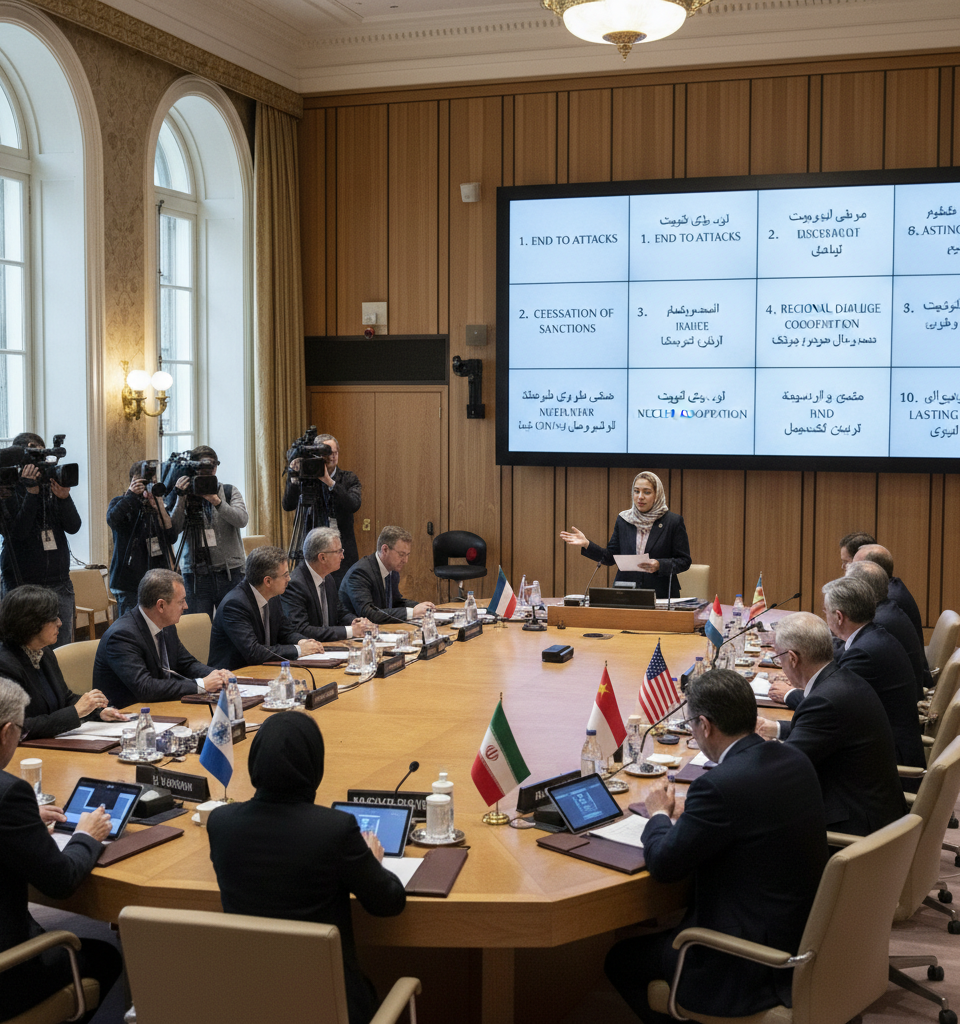
TEHRAN – As the deadline set by President Trump for potential new actions against the Islamic Republic loomed, Iran has formally transmitted a detailed ten-point proposal. These conditions, conveyed through Pakistani intermediaries, represent Tehran's outlined prerequisites for de-escalation, signaling a strategic effort to preempt further aggressive measures or renewed hostilities.
The transmission of these demands through a neutral third party underscores the heightened diplomatic activity behind the scenes and the severe nature of the looming deadline. The timing suggests a direct correlation between the U.S. administration's stated intentions and Iran's proactive diplomatic maneuvers. This development unfolds against a backdrop of persistently strained relations between Washington and Tehran, following a period marked by escalating rhetoric and sporadic confrontations. The Pakistani mediation highlights the critical role of regional actors in facilitating communication when direct channels remain fraught or insufficient.
Core Demands: An End to Aggression and Sanctions
While the full specifics of the ten points have not been publicly disclosed, sources familiar with the matter indicate that the core demands include an immediate cessation of all forms of attacks against Iranian assets and interests, both overt and covert, and a comprehensive lifting of economic sanctions. The emphasis on ending sanctions suggests that Tehran views these punitive measures as a primary driver of current tensions and a fundamental impediment to any genuine diplomatic breakthrough. Historically, Iran has consistently linked its willingness to negotiate with the removal of sanctions, which it views as economic warfare.
The U.S. administration, under President Trump, has maintained a "maximum pressure" campaign, arguing that sanctions are a means to compel Iran to renegotiate its nuclear program and regional activities. Iran, conversely, has characterized the sanctions as illegal and a violation of international law. The proposal thus represents a direct challenge to the fundamental tenets of the current U.S. policy, positioning a substantial shift in approach as a precondition for any reciprocal concessions from Tehran.
Broader Implications for Regional Stability
The ripple effects of this Iranian proposal extend far beyond the immediate U.S.-Iran dynamic. Regional stability in the Middle East is precariously balanced, and any misstep or escalation could have devastating consequences. Neighboring countries, particularly those with strong U.S. alliances, will be closely watching how Washington responds to these demands. The ongoing maritime security concerns in the Persian Gulf, the proxy conflicts across the Levant, and the broader energy market stability are all directly impacted by the trajectory of U.S.-Iran relations.
Energy markets, in particular, remain highly sensitive to geopolitical shifts in the region. A perceived increase in the likelihood of military confrontation or disruption to oil shipping lanes could trigger significant price volatility. Conversely, a clear path towards de-escalation, however remote it may seem, could inject a degree of stability into global energy forecasts. Investors and commodity traders are keenly observing these diplomatic maneuvers, understanding that sustained tension or armed conflict could severely impact global supply chains and economic growth.
The Unfolding Diplomatic Calculus
The immediate future hinges on the U.S. administration's evaluation of Iran's ten-point proposal. Whether Washington views these demands as a genuine overture for negotiation or as an untenable set of preconditions will dictate the next phase of this protracted crisis. Should the U.S. dismiss the proposal outright, the risk of escalation following President Trump's looming deadline would undoubtedly intensify. Conversely, if the demands are seen as a basis for further dialogue, even if initially rejected, it could open a fragile window for more nuanced diplomatic engagement.
While details of internal discussions within the U.S. administration remain under wraps, analysts suggest that any significant shift in policy would require careful consideration of both domestic political implications and international alliances. The ball, momentarily, appears to be in Washington's court, as the world awaits its response to Tehran's conditions for averting what many fear could be a perilous escalation.