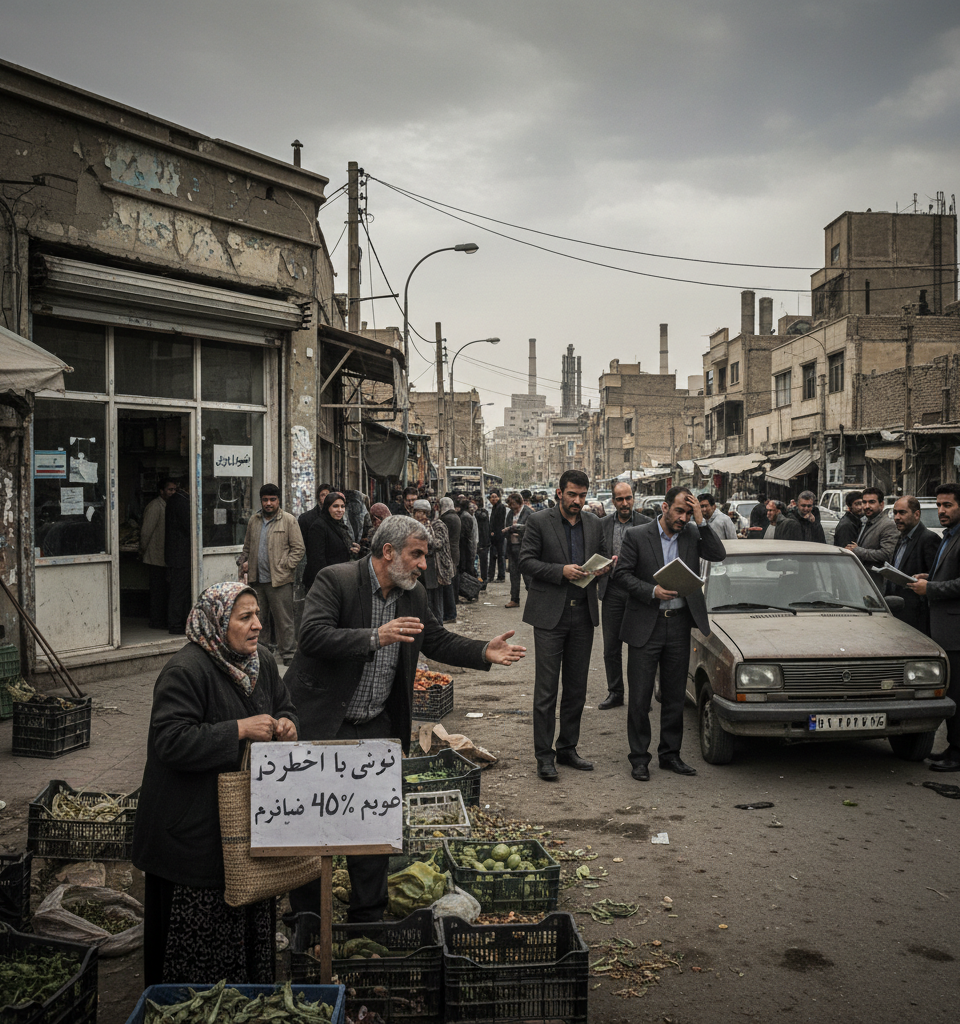
TEHRAN – Iran's economic infrastructure is facing an unprecedented challenge, marked by spiraling inflation and growing concerns among government officials. Prices for essential goods and services have reportedly surged by an alarming 40% since the onset of the current geopolitical tensions, pushing the nation towards a critical juncture. The prolonged pressure from international sanctions continues to hamstring the country's financial mechanisms, with an anonymous Iranian official quoted by Reuters warning of an impending "disaster" if these punitive measures are not alleviated.
This economic deterioration represents perhaps the most significant threat to the stability of the Iranian regime. Decades of international isolation, exacerbated by renewed and expanded sanctions related to its nuclear program and regional activities, have profoundly impacted the daily lives of ordinary Iranians. The current inflationary spike, directly linked to the recent conflict, underscores the profound vulnerability of an economy heavily reliant on oil exports and largely cut off from global financial systems. This environment creates fertile ground for domestic unrest and challenges the government's capacity to maintain social cohesion through economic provisions.
Escalating Inflation and Payroll Concerns
The reported 40% increase in prices since the war's commencement paints a grim picture for Iranian households and businesses. Such a dramatic rise in inflation erodes purchasing power, devalues savings, and makes basic necessities unaffordable for a growing segment of the population. The official's candid admission to Reuters highlights an internal acknowledgment of the severity of the crisis, particularly the profound worry about the government's foundational responsibility: making payroll. Failure to compensate public sector employees, including military personnel and civil servants, could trigger widespread discontent and complicate the regime's control.
Broader Economic and Social Implications
The persistent economic stagnation and hyperinflation have far-reaching implications beyond mere financial metrics. Businesses struggle with import costs, supply chain disruptions, and a shrinking domestic market, leading to closures and job losses. The private sector, already beleaguered by state control and corruption, faces an increasingly inhospitable operating environment. Socially, the crisis is likely to exacerbate inequality, push more families into poverty, and potentially fuel dissent that has historically challenged the authorities during periods of economic hardship. Education and healthcare services, often underfunded even in better times, are likely to suffer further cutbacks.
The Sanctions Dilemma
The core of the current economic predicament, as articulated by the Iranian official, lies squarely with the comprehensive international sanctions regime. These sanctions target oil exports, banking transactions, and access to crucial technologies, severely limiting Iran's ability to generate foreign currency earnings, conduct international trade, and attract foreign investment. While Iranian authorities have attempted to implement a "resistance economy" strategy, aimed at achieving self-sufficiency, the acceleration of inflation suggests these measures are proving insufficient against the sustained pressure. The implicit call for sanctions relief underscores the regime's recognition that its current economic trajectory is unsustainable without external engagement.
What Lies Ahead
Looking forward, the immediate prognosis for Iran's economy remains challenging. Without a significant shift in either international relations or domestic economic policy, the current trends are likely to persist, if not worsen. The inability to manage inflation and meet fundamental financial obligations could precipitate a deeper crisis, potentially leading to social upheaval or a hardening of the regime's stance against its perceived external adversaries. The international community watches closely, with the potential lifting of sanctions often tied to Iran's compliance with nuclear agreements and de-escalation of regional tensions. The coming months will be critical in determining whether Iran can navigate this severe economic storm or if the dire warnings of a "disaster" come to pass.