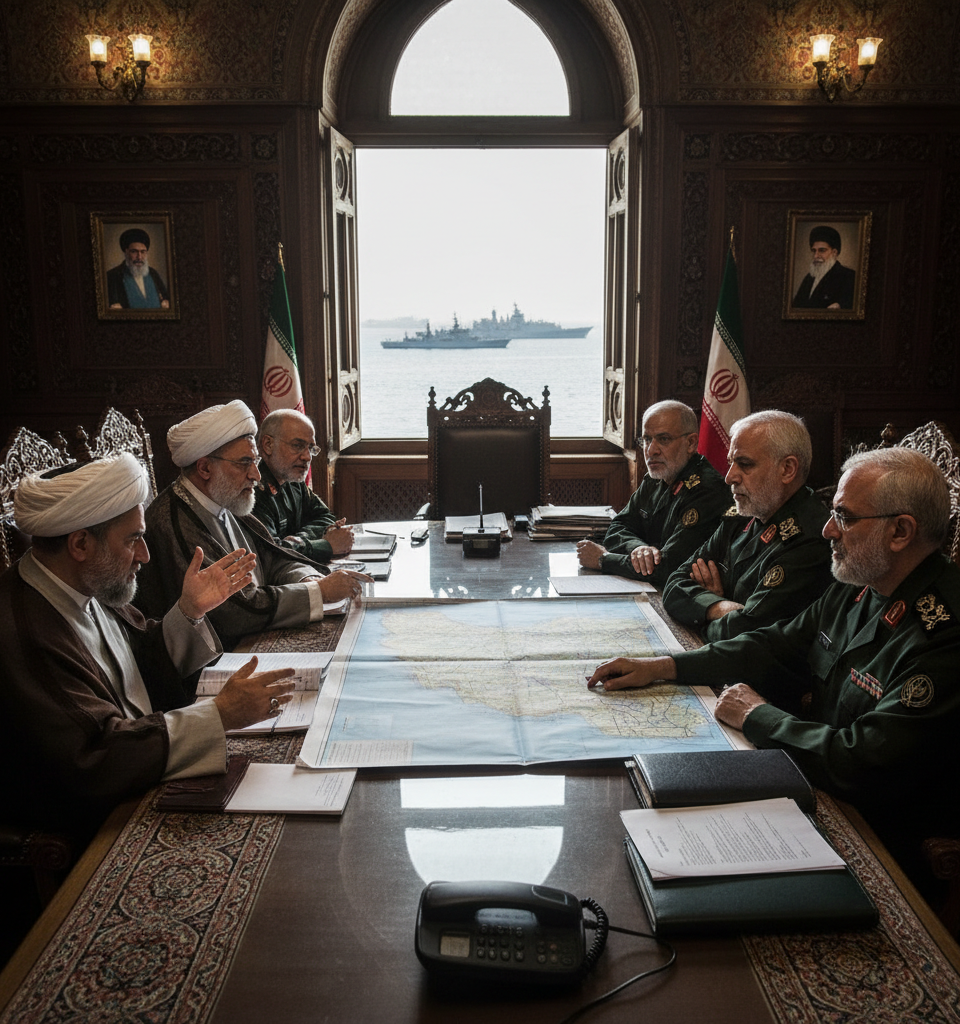
TEHRAN – A fierce internal dispute within Iran's ruling establishment has erupted following criticism from the Islamic Revolutionary Guard Corps (IRGC) directed at Deputy Foreign Minister Abbas Araghchi over his handling of the Strait of Hormuz situation. This public disagreement, detailed in a recent assessment by the Institute for the Study of War (ISW), underscores significant and widening divisions within the Iranian government as the United States intensifies its economic sanctions and naval presence in the region.
The public nature of this rebuke is highly unusual and signals a deepening struggle for influence and strategic direction at a time of acute external pressure. The Strait of Hormuz, a critical chokepoint for global oil shipments, has become a focal point of recent confrontations, elevating the stakes for Iran's leadership. The US policy of 'maximum pressure,' aimed at crippling Iran's oil exports and curtailing its regional influence, appears to be translating into profound internal destabilization, forcing different factions to openly contest the nation's response.
Escalating Internal Conflict
The ISW noted on Friday that the IRGC's pointed criticism of Araghchi is "reflective of broader divisions within the Iranian regime." While Araghchi has historically been associated with a more diplomatic approach, often advocating for engagement with Western powers, the IRGC represents the hardline core of the revolution, prioritizing military strength and resistance. This ideological clash is now manifesting in direct challenges to policy, with sources close to Tehran's political circles indicating a struggle for control over Iran's foreign policy narrative and retaliatory strategies.
The specific details of Araghchi's perceived missteps by the IRGC remain somewhat oblique in official statements, but analysts suggest it relates to perceived concessions or a lack of assertive action during recent maritime incidents in the Strait of Hormuz. The IRGC, particularly its naval arm, views itself as the primary guardian of Iranian sovereignty and has consistently pushed for a more confrontational stance against perceived American aggression. The public airing of grievances suggests that traditional back-channel negotiations and consensus-building mechanisms within the regime may be faltering under duress.
Broader Implications for Global Shipping
The internal strife has significant implications beyond Iran's borders, directly impacting the stability of global energy markets and international shipping. Uncertainty surrounding Iran's unified response to US sanctions, coupled with the potential for more unpredictable actions from various factions, could sustain or even escalate volatility in oil prices. Tanker rates have already seen spasms of increase in response to perceived threats in the region, and continued internal discord only serves to heighten these anxieties for carriers and insurers alike.
Industry leaders and maritime security experts are closely monitoring these developments. A fragmented leadership in Iran could lead to less predictable decision-making regarding the Strait of Hormuz, increasing the risk of miscalculation or accidental escalation. This environment presents a formidable challenge for companies reliant on the free passage of goods through the region, potentially driving up operational costs and necessitating re-evaluation of supply chain resilience.
Expert Commentary on Regime Dynamics
"The fight between different factions has started," commented a senior analyst at a Washington-based think tank, preferring anonymity due to the sensitivity of the issue. "This is not just a disagreement over tactics; it's a fundamental debate over Iran's future and its relationship with the outside world. The economic pressures applied by the US are exacerbating these existing fissures, forcing internal players to choose sides more overtly than before." Experts believe supreme leader Ali Khamenei will ultimately have to intervene to re-establish a unified front, but the delay in doing so indicates a deep-seated challenge.
Previous instances of internal political jostling in Iran have typically been managed discreetly, behind closed doors. The current overtness is a stark indicator of the perceived threat level and the intensity of the debate over how to navigate the US sanctions. Some analysts posit that the IRGC's public critique might also be a tactical move to consolidate its own power and influence within the regime, particularly as public discontent over economic hardship grows.
What Lies Ahead for Iran
The immediate future will likely see continued jockeying for position within Iran's political and military ranks. The resolution of this internal dispute will be critical in determining Iran's future actions in the Strait of Hormuz and its broader foreign policy posture. Should the hardline factions gain greater ascendancy, a more confrontational approach towards the US and its allies could be anticipated, further rattling the region.
Conversely, if more pragmatic elements manage to regain their footing, there might be a renewed, albeit cautious, push for diplomatic off-ramps, though these appear increasingly distant given the current environment. The ability of the current leadership to present a unified front will be essential in navigating the relentless pressure from Washington and maintaining any semblance of stability, both domestically and internationally. The world watches keenly to see which faction will ultimately prevail in shaping Iran's response to an increasingly tightening blockade.