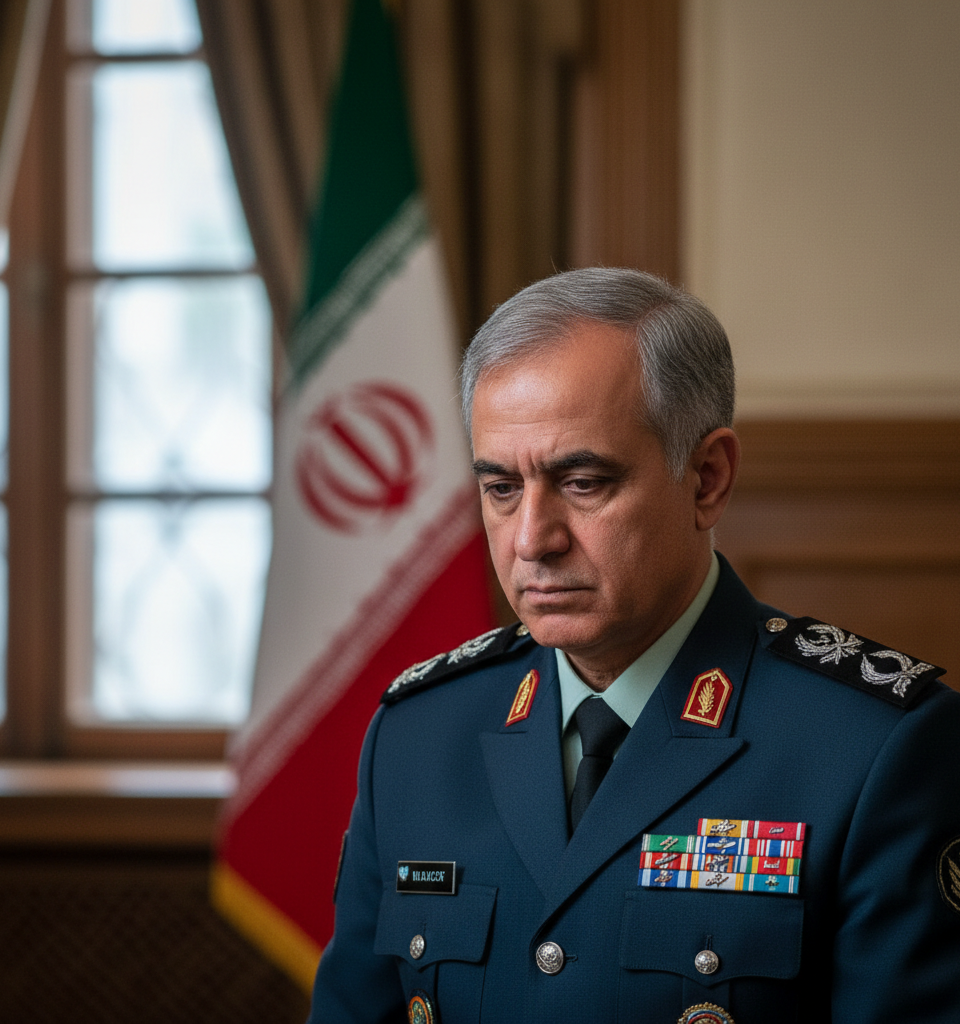
TEHRAN, Iran – The Islamic Republic of Iran's intelligence and security architecture has been plunged into further uncertainty following the overnight assassination of a prominent intelligence chief on Monday. This high-profile killing marks the fifth such high-ranking official to either be removed or perish under suspicious circumstances within the past six months, signaling a period of unprecedented internal turmoil and external pressure on one of the world's most opaque security systems. The deceased, whose identity has been withheld by Iranian state media pending further investigation, occupied his critical post for a mere four months, a tenure emblematic of the recent instability plaguing Tehran's strategic leadership.
A Troubling Pattern of Instability
This alarming frequency of leadership turnover and sudden deaths within Iran's intelligence and military echelons points to a deeper malaise. Historically, commanders and intelligence heads in Iran have enjoyed long tenures, often spanning several years or even decades, fostering continuity and deep institutional knowledge. The current rapid succession of leadership changes, particularly those culminating in violent deaths, suggests active internal power struggles, effective external sabotage, or a combination of both. This fragmentation at the top jeopardizes the effectiveness and cohesion of an apparatus vital to the regime's survival, both domestically and internationally.
Key Incidents and Their Implications
While details surrounding Monday's assassination remain scant, it follows a series of impactful events. Previous incidents over the past half-year include the sudden demise of a Revolutionary Guard aerospace commander in May, officially attributed to a 'heart condition,' though widely doubted by international observers. Earlier, in March, a high-ranking officer in the Quds Force, the extraterritorial arm of the IRGC, was reported killed in an 'accident' in Syria. These events, coupled with other abrupt dismissals and disappearances, weave a narrative of an intelligence community under duress. The identity of the slain chief and the methodology of the attack will be crucial in determining whether this was an internal purge or the work of foreign adversaries, particularly Israel, which has openly targeted Iranian nuclear and military figures in the past.
Geopolitical Ripples and Regional Impact
The instability within Iran's security establishment carries significant implications for regional and global geopolitics. A weakened or fractured Iranian intelligence apparatus could either lead to more unpredictable and aggressive actions as various factions vie for control, or it could diminish Iran's ability to exert influence through its proxy networks in countries like Lebanon, Syria, Iraq, and Yemen. This uncertainty could embolden adversaries, potentially escalating proxy conflicts and increasing the risk of miscalculation in an already volatile Middle East. Oil markets, which reacted with a marginal 0.5% uptick following initial reports, remain sensitive to any developments that could disrupt regional stability and, consequently, global supply chains.
Expert Analysis: A Multi-faceted Challenge
Security analysts are offering diverse perspectives on the recent events. Dr. Sarah Javanmardi, a senior fellow at the Institute for Middle East Studies, suggests, "This isn't merely a string of unfortunate events; it strongly indicates systemic vulnerabilities. Whether it's internal factionalism exacerbated by succession struggles, or highly sophisticated external operations, the regime is demonstrably struggling to maintain its customary iron grip." Other experts point to the ongoing protests and dissent within Iran, suggesting the events could be a symptom of broader internal pressures challenging the legitimacy and authority of the clerical establishment. The narrative of 'accidents' and 'heart conditions' increasingly strains credibility, especially given the history of covert assassinations targeting Iranian figures.
The Road Ahead: Increased Vigilance and Potential Escalation
Looking ahead, the immediate aftermath is likely to see intensified internal investigations and potentially a significant crackdown on perceived dissidents within Iran. Externally, the regime is expected to project an image of strength amidst adversity, possibly by intensifying its rhetoric against perceived enemies. The coming months will be critical in observing whether Iran can stabilize its security leadership or if this trend of instability will persist, leading to further destabilization. International powers, particularly the P5+1 nations engaged in nuclear negotiations, will be closely monitoring these developments, as a less predictable Iran poses greater challenges for diplomatic engagement and regional security. The risk of retaliatory actions against perceived orchestrators of these assassinations also remains a significant concern, raising the specter of broader regional conflict.